
Images provided by ClarkDietrich.
Demand for low‑embodied‑carbon building materials has never been greater. New legislation and code updates spotlight LEC compliant products. And manufacturers are embracing these standards, says Adam Shoemaker, CSI, CDT, LEED AP BD+C, director of corporate sustainability for ClarkDietrich, a member of the Steel Framing Industry Association (SFIA), in a Construction Specifier article.
With the growing demand for LEC steel, Shoemaker says it’s easier than ever to specify LEC cold-formed steel (CFS) framing to reduce the environmental impact of their projects. But to meet specific accreditations and standards, specifiers need to source strategically to meet specific accreditations or standards requirements, he writes in the article, “Specifying Low Embodied Carbon Steel Framing.”
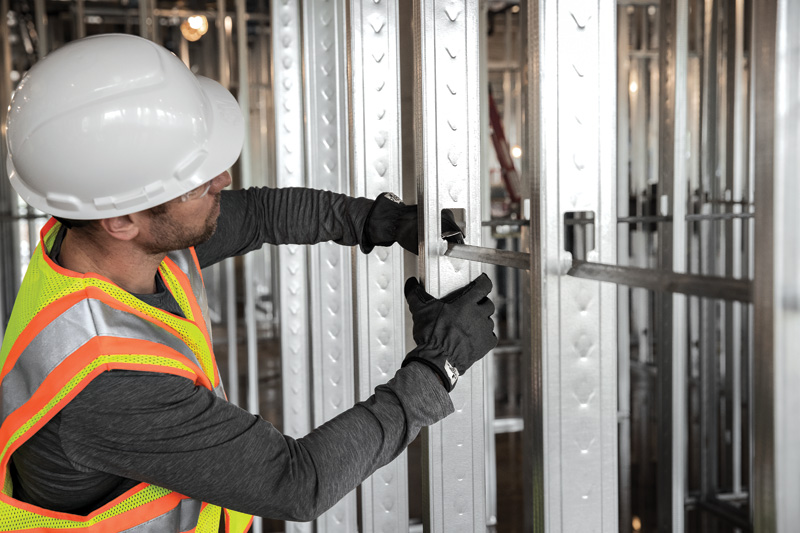
With the growing demand for LEC steel, it’s easier than ever to specify LEC cold-formed steel (CFS) framing to reduce the environmental impact of their projects.
Specifying LEC Steel
When specifying LEC steel, look for readily available third-party EPDs, LCAs and EPD optimization reports that compare the LEC product against a baseline product, says Shoemaker.
“Some manufacturers even have a dedicated sustainability platform to make finding product environmental data simple and streamlined,” Shoemaker says.
The EPA announced a new labeling program for LEC construction materials that will identify “clean” products in a centralized public registry, streamlining the sourcing and procurement of LEC materials.
The federal government is not the only agency encouraging the use of LEC materials. The initiative has flourished at the state level as well through the Federal-State Buy Clean Partnership. Now spanning 13 states—California, Colorado, Hawaii, Illinois, Maine, Maryland, Massachusetts, Michigan, Minnesota, New Jersey, New York, Oregon and Washington—the Federal-State Buy Clean Partnership prioritizes LEC materials in state‑funded projects.
The Steel Framing Industry Association (SFIA) has released a revised Environmental Product Declaration for Cold-Formed Steel (CFS) Framing, a must-have tool for contractors, building owners, architects and others who strive to deliver advanced building designs that meet the latest LEED™ and other sustainable rating systems, programs and standards.
The new SFIA EPD for CFS Framing — SCS-EPD-07103 (version Apr. 11, 2025, valid through May 27, 2026) — can be seamlessly integrated into project specifications as an option with company-specific EPDs. SFIA offers the SFIA Specifications Review Service for steel framing, which is a completely free checkup.
The SFIA Environmental Product Declaration (EPD), version April 11, 2025, is valid through May 27, 2026.

Balancing EAF and BOF Supply
Steel production has evolved over time to be more efficient, with modern advancements leading to more sustainable products, Shoemaker says.
LEC steel is made with high percentages of recycled content and processed at an electric arc furnace mill, resulting in up to 30 percent less embodied carbon than steel produced using different raw material inputs. LEC steel framing has data to back this up, including environmental product declarations, lifecycle assessments and more.
While a LEC perspective would have all steel ideally coming from EAF mills, basic oxygen furnace mills also have a benefit in today’s market, Shoemaker says. According to Shoemaker, there is currently not enough steel being recycled to supply the total market demand for new steel products, and maintaining a balance between EAF and BOF sources supports a resilient supply chain. Thus, BOF sources help mitigate price volatility and allow for quick and flexible adaptation to demand.
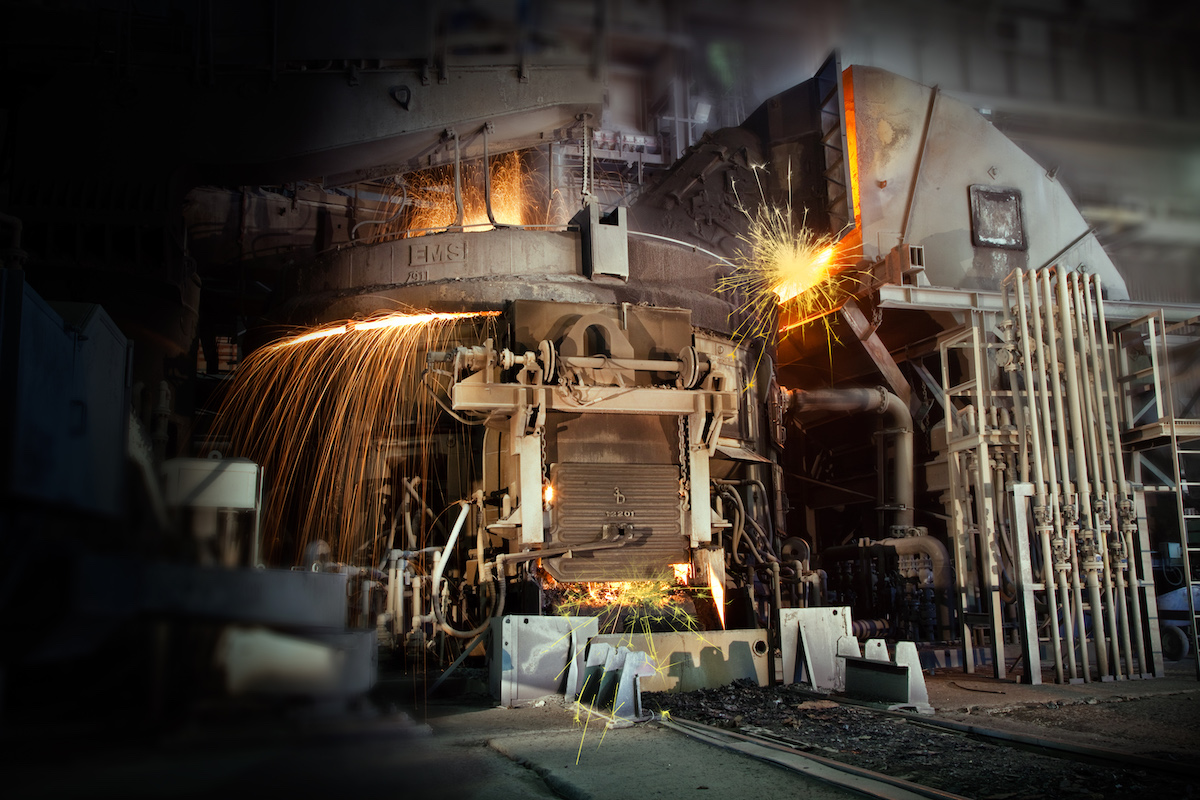
A Nucor electric arc furnace. Photo courtesy of Nucor
LEC in Project Specifications
Specifiers frequently inquire as to the proper placement of LEC CFS framing requirements within their project specifications, says Shoemaker. While LEC criteria can appear throughout the specifications, it is best to concentrate on the following 3 critical sections:
- Sustainable Design Requirements—01 81 13: This section is a natural fit for LEC, as it directly addresses environmentally conscious building practices
- Cold-Formed Metal Framing—05 40 00: Since this section deals specifically with CFS, including LEC requirements here ensures they are seen by those directly involved with the framing process
- Non-Structural Metal Framing—09 22 16: If the LEC steel is primarily for non-structural applications, this section is the most relevant
“Referencing the GSA IRA Limits for Low Embodied Carbon Steel Cold-Formed and Galvanized products provides a standardized baseline for everyone involved,” says Shoemaker. “This avoids confusion and ensures everyone is on the same page regarding these evolving standards.”
For ease of use, Shoemaker suggests placing LEC requirements directly within sections 05 40 00 or 09 22 16 to ensure project teams sourcing and installing the steel products see the requirements clearly without having to delve into the broader sustainable design section.
The Sustainability Revolution
The surge of government-supported initiatives, such as Buy Clean, is just the tip of the sustainability revolution iceberg for the building sector.
“As more programs increase the demand for lower embodied carbon materials, steel mills and manufacturers should strive to continue to evolve their practices to better address the need for less carbon-intensive processes,” says Shoemaker.
Read the full article from the Construction Specifier.
Additional Resources
- Steelmaking Innovations Support a Greener Future for Cold-Formed Steel Framing
- Achieving Low Embodied Carbon with Cold-Formed Steel Framing Systems (On-Demand Course)
- ClarkDietrich Launches SustainabilityPRO, Publishes Corporate Sustainability Report