
November 24, 2026 — Wildfires burned nearly 9.5 million acres across the United States in 2026 through Nov. 20 — 46% above the 10-year average. Meanwhile, new research suggests fire risk to U.S. structures could nearly triple by 2060.
How is the construction industry responding?
Researchers are investigating the fire performance of building assemblies. Developers are exploring noncombustible construction to reduce insurance costs. Industry organizations are refining material testing requirements.
Throughout 2026, BuildSteel™ reported on these developments and the role of cold-formed steel (CFS) framing in addressing fire risk. Here are 10 stories that highlight advances in fire research, building design and construction, along with emerging trends that could shape the industry in 2027.
Header image provided by CEMCO, an SFIA member.
Advances in Steel Framing and Fire Safety
1. Fire Risk Could Triple by 2060
New research in Nature Communications projects that fire risk to U.S. buildings could nearly triple by 2060.
Virginia Iglesias of the University of Colorado Boulder led the research team. Researchers combined historical fire records, development patterns and climate projections to assess future risks to buildings.
Without additional adaptation measures, researchers project fires could damage or destroy 133,200 to 449,100 structures between 2024 and 2060.
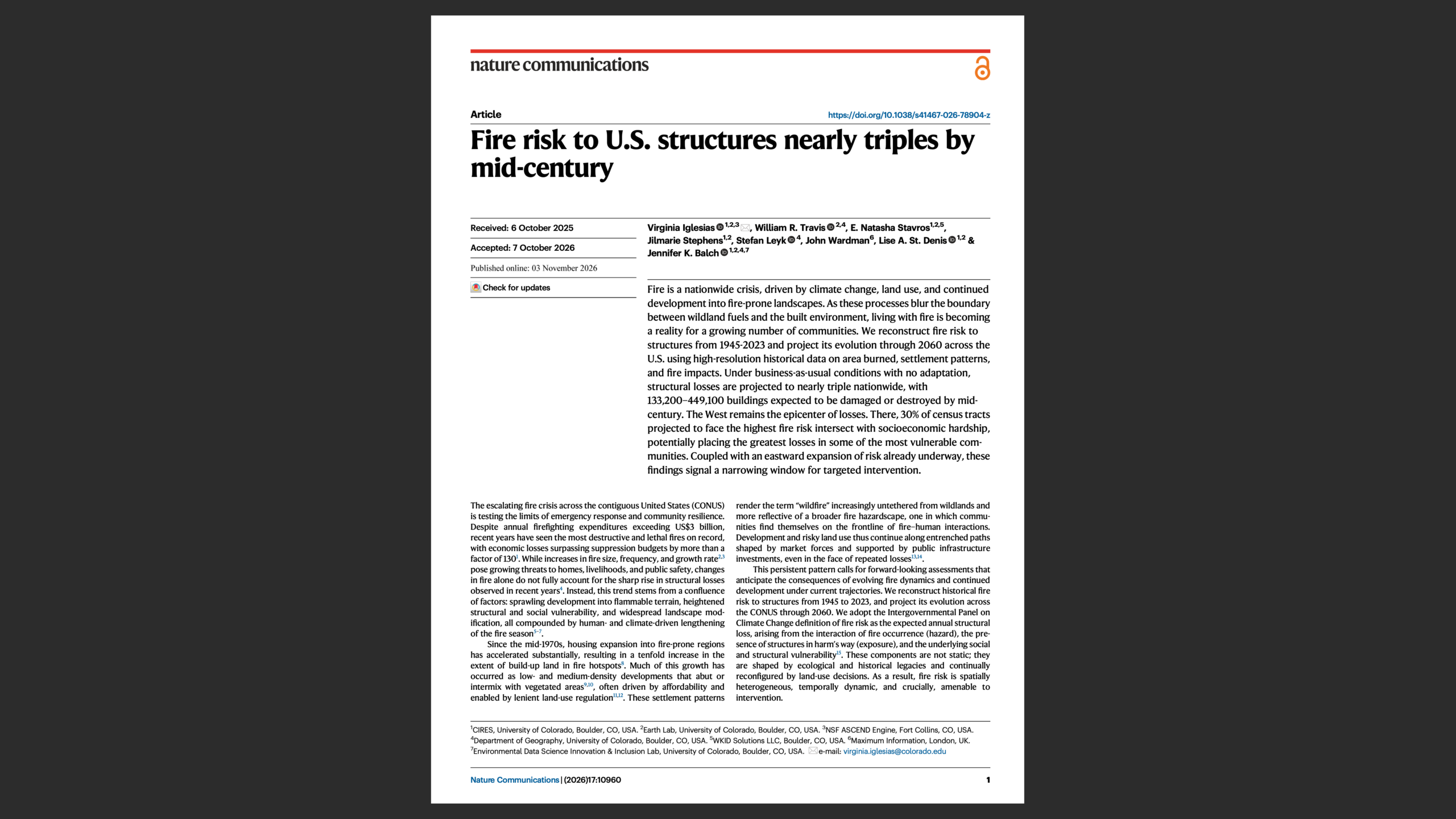
New research published in Nature Communications projects that fire risk to U.S. buildings could nearly triple by 2060.
The study identifies several regional trends:
- Western United States: Annual structural fire risk could increase 2.2 to 3.7 times, depending on the climate model. California remains a major center of projected structural losses
- Central United States: The study projects increasing fire risk across 84.1% of census tracts by 2051–2060
- Eastern United States: Fire risk is expanding into areas with historically lower exposure, creating new challenges for communities
Researchers recommend building retrofits, defensible space, climate-informed building codes and improved land-use planning to address future risks.
Although the study did not evaluate framing materials, it provides important context for material selection and fire-resilient construction.
CFS framing offers a noncombustible structural option for residential, commercial and institutional buildings. However, steel framing alone does not make a building resistant to wildfires. Designers must also consider exterior cladding, roofing, openings and surrounding vegetation as part of a comprehensive mitigation strategy.
2. Homebuilders Embrace Noncombustible Construction
Wildfire exposure continues to influence residential construction and rebuilding decisions across the United States.
- Wildfire-resilient homes: California homebuilder Metricon Homes developed its Firesafe Home designs for houses and accessory dwelling units. The designs incorporate CFS framing to address wildfire exposure
- Rebuilding in Pacific Palisades: Architects are exploring alternative structural systems to rebuild homes in wildfire-prone communities. One approach includes a steel-and-foam core between concrete panels
- Insurance-driven material selection: Arizona homeowner Mike Lynch encountered insurance challenges while planning a home in mountainous terrain. His property carried an ISO fire protection rating between 9 and 10, indicating extremely limited fire protection. Lynch switched from wood to CFS framing, allowing the project to move forward
3. Insurance Costs Influence Material Selection
Insurance considerations continued to influence construction decisions throughout 2026. Developers examined how structural material selection affects construction-phase and long-term property insurance costs.
For example, the developer of a six-story hotel project switched the structural design to CFS framing, securing a builder’s risk premium of approximately $92,000. That premium is nearly 80% less than the $450,000 premium for comparable wood framing.
In relating the story, Clay Arvola, vice president at insurance brokerage Lockton Companies, identified the key trends:
- Wood-framed construction: Typical rates outside catastrophe-exposed areas ranged from $0.30 to $0.40 per $100 of insured value
- Steel-framed construction: Comparable rates ranged from approximately $0.15 to $0.20 per $100 of insured value
- Potential savings: Arvola reported insurance savings ranging from 30% to more than 50% for many CFS framed projects
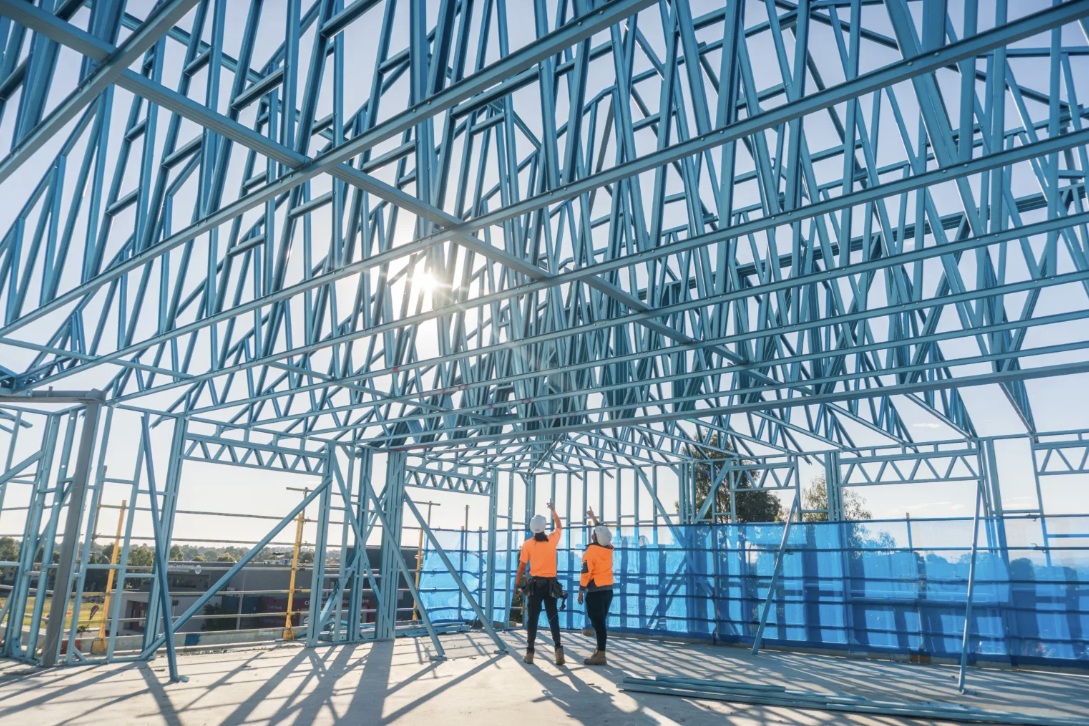
From an underwriting standpoint, cold-formed steel’s (CFS) noncombustible nature and ability to maintain structural integrity during fire exposure reduces fire growth risk and lowers the likelihood of total loss during construction.
Similarly, SFIA member Scottsdale Construction Systems also points to potential insurance savings during and after construction.
Noncombustible steel framing helps reduce fire risk before permanent fire protection systems become operational. Precision manufacturing, shorter construction schedules and improved quality control may further reduce insurance costs.
When comparing structural systems, developers should look beyond material and labor costs. Factoring in builder’s risk premiums and long-term property insurance early in design provides a clearer picture of project economics.
Surge in Fires: The Case for Steel Framing
Download this free article brief exploring the rise of fires in mid-rise wood construction across the U.S., highlighting incidents in California and Texas. The report outlines the key advantages of steel framing as a noncombustible alternative to significantly reduce fire hazards.

4. CFS10 Researchers Investigate Fire Following Earthquakes
The May 2026 CFSEI Expo in Long Beach, California showcased “an unprecedented dataset” that included examining “building resilience to post-earthquake fires.”
The findings were presented during the May 19, 2026, CFSEI Expo keynote session, “Advancing Cold-Formed Steel in Mid-Rise Building Systems in High Seismic Zones: Accomplishments of the CFS-NHERI and CFS10 Capstone Programs.”
The CFS10 project involved the design, construction and testing of a full-scale, 10-story CFS building. Researchers conducted experiments at the University of California, San Diego’s outdoor shake-table facility.

Backed by Steel Framing Industry Association (SFIA), UC San Diego researchers tested a 10-story cold-formed steel (CFS) structure with 18 simulated earthquakes and a controlled burn. The building stood strong — a breakthrough for building taller and safer with steel framing.
Following seismic testing, researchers conducted fire experiments within selected compartments of the building. The experiments involved burns lasting nearly 90 minutes, with natural cooling. Researchers collected data on temperatures, floor deflections and structural response during fire exposure.
During some experiments, researchers observed floor deflections approaching 2.5 inches, according to Tara Hutchinson, Ph.D., S.E., professor of structural engineering at UC San Diego.
The research addresses several important considerations for building professionals:
- Multiple hazards: Understanding structural responses to successive extreme events
- Assembly performance: Examining how earthquake damage influences subsequent fire behavior
- Engineering models: Using full-scale experimental data to support analytical model development
- Functional recovery: Assessing building damage and recovery following extreme events
The experiments provided a rare opportunity to investigate fire performance within a structure that had experienced earthquake simulations. Researchers continue to analyze the data, which could inform future engineering practices, performance-based design methods and building code development.
5. Bushfire Research Examines Steel-Framed Walls
Research from Queensland University of Technology in Australia advanced the understanding of CFS wall performance during bushfires.
Limited experimental data presents challenges for engineers evaluating exterior wall systems under extreme thermal exposure. QUT researchers developed numerical models to evaluate heat transfer through CFS exterior wall assemblies.
The team validated its models against experimental results involving 6 CFS wall configurations. These configurations included different cladding materials, plasterboard thicknesses and stud spacing.
Researchers subsequently evaluated 7 exterior wall systems using 2 bushfire temperature curves.
The study produced several findings:
- Exterior cladding: Autoclaved aerated concrete panels provided the greatest thermal protection across the conditions the researchers evaluated
- Steel cladding: Steel cladding delayed temperature increases and reduced temperatures on the fire-exposed side
- Stud temperatures: The simulations recorded a maximum hot-flange temperature of 456°C (853°F)
- Material properties: Researchers reported reductions below 20% in steel yield strength and elastic modulus
- Post-fire recovery: Researchers identified opportunities for targeted repairs rather than complete replacement in many wall systems
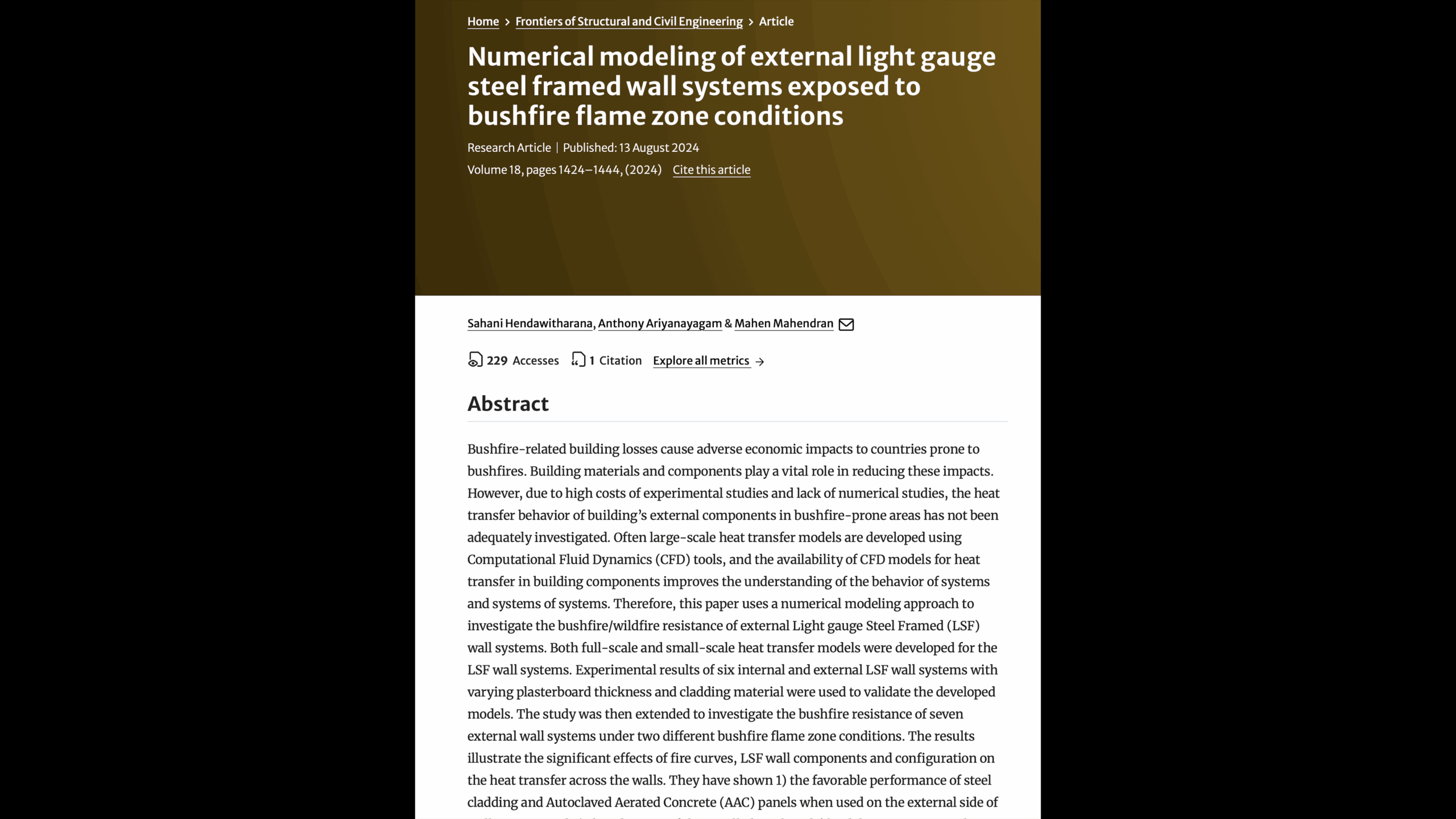
The researchers also developed a smaller numerical model to reduce computation time while maintaining agreement with full-scale behavior.
The study demonstrates how exterior cladding and assembly design influence structural temperatures during bushfire exposure.
Steel remains noncombustible, but elevated temperatures can reduce its strength and stiffness. Engineers must account for these effects when designing structural systems for fire exposure.
The validated models offer engineers additional tools for evaluating exterior CFS wall performance under severe thermal conditions.
6. ASTM E136 Clarifies Noncombustibility Testing
On January 1, 2026, ASTM E136 clarifying language took effect to resolve inconsistent interpretations of noncombustibility testing. The clarification removes ambiguity in the pass-fail criteria without changing the standard’s technical requirements.
ASTM E136 uses a vertical tube furnace to evaluate how building materials respond to elevated temperatures. Technicians attach thermocouples to the specimen’s surface and center. They then place the specimen inside a furnace operating at 750°C (1,382°F).
The previous language left laboratories uncertain whether both temperature measurements had to meet the specified limit. And some laboratories interpreted the language differently from the standard’s original intent.
The ASTM E05 committee approved clarifying language for ASTM E136-2022, the edition referenced in the 2024 International Building Code.
ASTM E136-2022 now specifies that neither thermocouple may exceed 30°C (54°F) above the stabilized furnace temperature. The test also evaluates flaming behavior and specimen weight loss.
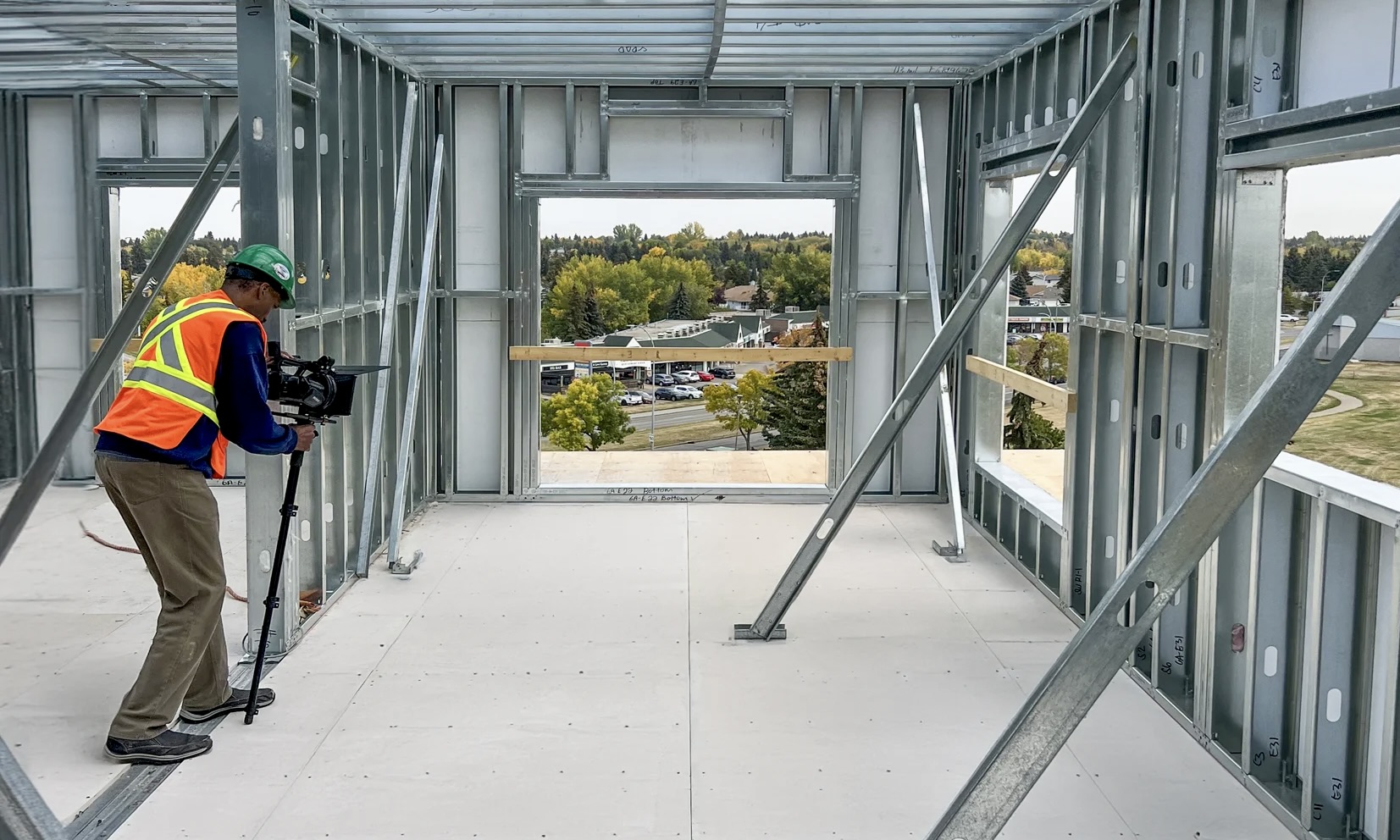
Builders and designers should specify noncombustible floor panels that comply with ASTM E136 to help ensure assemblies meet code requirements. Image courtesy of NEXGEN, an SFIA member.
Consistent testing requirements benefit several groups within the construction industry:
- Testing laboratories: Apply uniform criteria when evaluating building products
- Manufacturers: Better understand requirements for demonstrating material noncombustibility
- Designers: Make informed decisions when specifying building materials
- Code officials: Evaluate product compliance using clearer requirements
The clarification carries implications for sheathing, cladding and other materials within CFS framing systems. Designers must distinguish individual material classifications from the fire-resistance ratings of complete assemblies.
Clearer testing requirements support consistent product evaluation and greater confidence when specifying noncombustible materials.
7. SFIA Seeks Better Data on Fire Losses
Following the Southern California wildfires, Don Allen, executive director of the Steel Framing Industry Association (SFIA), emphasized the need for closer collaboration among construction organizations and insurance providers. Writing in his The Steel Deal column for Walls & Ceilings, Allen outlined SFIA’s efforts to improve industry data.
- SFIA established a Data Task Group to look beyond traditional steel shipment statistics and examine how builders use CFS framing
- Allen envisions a forecasting tool similar to the American Institute of Architects’ Architecture Billings Index. A steel framing industry index could help manufacturers anticipate demand and identify emerging construction trends
- SFIA met with leaders from the Metal Construction Association, the Metal Roofing Alliance and the National Ready Mixed Concrete Association to discuss data-driven building practices

SFIA is partnering with insurers to improve fire-loss data and highlight how steel framing reduces fire spread and property damage.
“Our next step is engaging the insurance industry,” Allen says. “We need their partnership to gather better data on fire losses in steel-framed structures.”
Such data could help insurers, designers and developers better understand how construction material choices influence property losses. The findings could ultimately influence insurance coverage and premiums for noncombustible construction.
2026 Fire Safety and Industry Trends
Beyond BuildSteel’s 2026 coverage, several industry reports offer insights into wildfire activity, property risks and the economic benefits of mitigation.
8. U.S. Wildfires Burn 9.5 Million Acres
Across the United States in 2026, wildfires significantly exceeded historical averages, according to the National Interagency Fire Center.
As of November 20, 2026, 70,127 wildfires burned nearly 9.5 million acres nationwide, NIFC reported. Both figures substantially exceeded the 10-year averages for the same period.
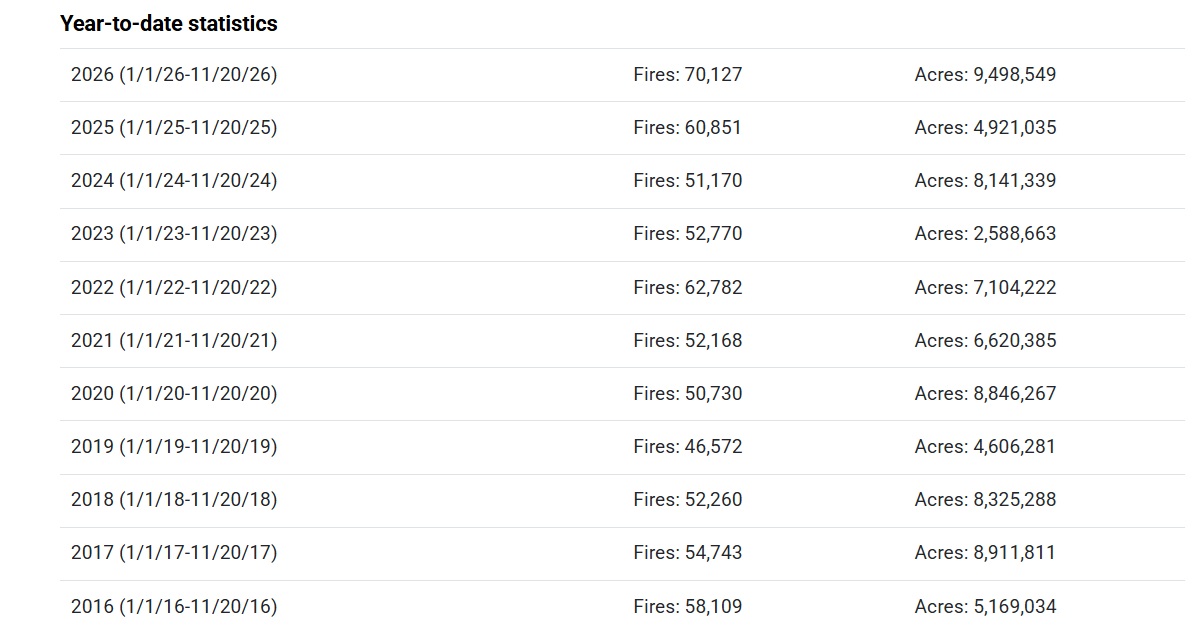
U.S. year-to-date wildfire activity, 2016–2026, through November 20 of each year. Source: National Interagency Fire Center, National Fire News, November 20, 2026.
NIFC statistics from January 1 through November 20 include:
- Acres burned: Nearly 9.5 million in 2026 versus the 10-year average of 6.5 million
- Fire frequency: 30% above the 10-year average
- Acreage burned: 46% above the 10-year average
Wildfire activity slowed across much of the country in November, but fires persisted in southern and eastern states. Land management agencies prescribed burns to reduce vegetation and mitigate future wildfire risks.
National acreage totals do not directly measure fire exposure or property damage in developed communities. However, above-average wildfire activity underscores the importance of local risk assessments when planning construction in fire-prone areas.
9. 2.5 Million U.S. Properties Face Wildfire Risk
More than 2.5 million properties across 10 western U.S. states face moderate or greater wildfire risk. Their combined estimated reconstruction value approaches $1.4 trillion.
The figures come from the 2026 Wildfire Risk Report, which property data and analytics company Cotality released in August.
California accounts for the largest share of wildfire exposure. Yet nearly half of the at-risk properties lie outside California, underscoring the geographic extent of wildfire risk.
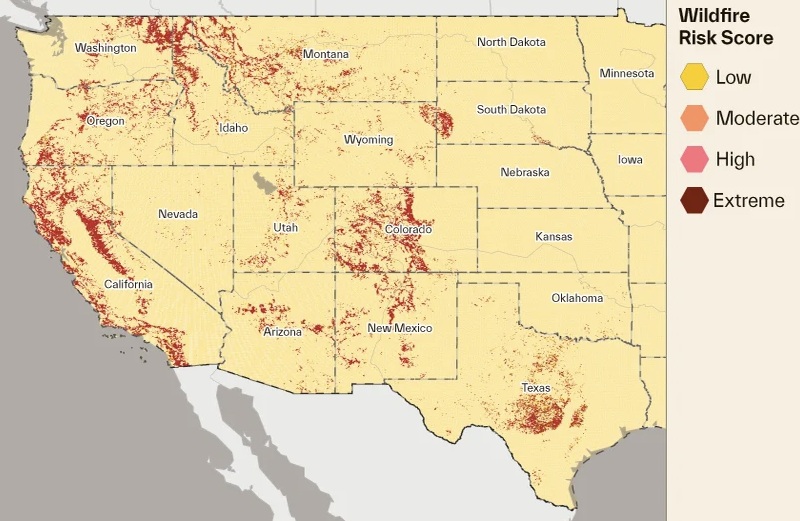
Wildfire risk across the western and central United States, ranging from low to extreme. Source: Cotality, 2026 Wildfire Risk Report.
Key findings include:
- California: 1.28 million at-risk properties with an estimated reconstruction value of $850 billion
- Colorado and Texas: Nearly 560,000 at-risk properties with a combined reconstruction value of $252 billion
- Seven additional states: At-risk properties representing a combined reconstruction value of $277 billion
- Los Angeles metropolitan area: Nearly 250,000 at-risk properties with an estimated reconstruction value of $209 billion
- Austin metropolitan area: More than 100,000 at-risk properties with an estimated reconstruction value of $49.2 billion
The reconstruction values represent the estimated cost of rebuilding exposed properties rather than projected wildfire losses.
For builders, developers and insurers, property-level risk information can support decisions involving site selection, construction practices and mitigation investments. The geographic distribution of at-risk properties demonstrates that wildfire exposure extends well beyond California.
10. Wildfire Standards Could Cut Losses by a Third
Rebuilding Southern California communities to higher wildfire safety standards could reduce projected wildfire losses by one-third. The California Department of Insurance and the National Association of Insurance Commissioners released the findings in March 2026.
The study examined nearly 30,000 homes within the perimeters of the January 2025 Palisades and Eaton fires. Researchers modeled the economic benefits of rebuilding to Insurance Institute for Business & Home Safety (IBHS) Wildfire Prepared Home standards.
Researchers identified potential reductions in average annual losses under two rebuilding scenarios:
- Wildfire Prepared Home Base: 31% reduction
- Wildfire Prepared Home Plus: 35% reduction
The IBHS program addresses roof protection, building features and defensible space. The Base designation focuses on ember protection. The Plus designation adds protection against radiant heat and direct flame contact.
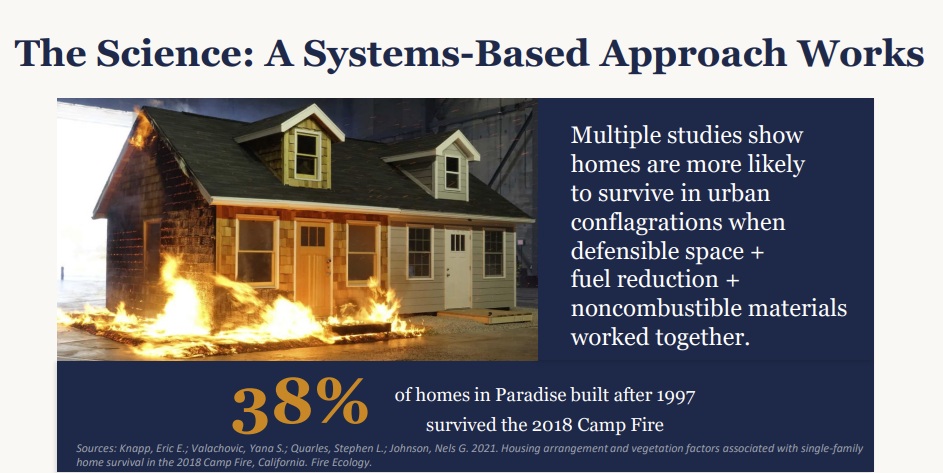
A systems-based approach combining defensible space, fuel reduction and noncombustible building materials can improve home survival during wildfires. Source: California Department of Insurance, Wildfire Safety and Insurability Briefing, March 27, 2026.
The study accounts only for property-level improvements. It excludes additional benefits from improved firefighting response and reduced fire spread between neighboring homes. The findings have implications for insurance costs and availability. California now requires insurers to account for wildfire mitigation measures in their pricing models.
For builders and developers, the findings reinforce the economic value of incorporating wildfire mitigation strategies into building design.
Advancing Fire-Resilient Construction in 2027
Research and testing in 2026 expanded our understanding of building performance under extreme fire conditions. Meanwhile, rising wildfire risks and insurance costs underscored the need for fire-resilient construction.
Building professionals can address fire risks through material selection, proper assembly design, construction practices and long-term planning.
CFS framing provides a noncombustible structural option for residential, commercial and institutional construction. Potential insurance savings provide another reason for developers to consider steel framing when evaluating project economics.
Looking ahead to 2027, continued research, better fire-loss data and closer collaboration with insurers could advance noncombustible construction.
Additional Resources
- Cold-Formed Steel Makes Homes Safer—and Insurable—in Wildfire Country
- Cold-Formed Steel Framing Passes 10-Story Earthquake Challenge in Landmark Tests
- Steel Framing Proves Itself Noncombustible in Southern California Blazes