
November 17, 2026 — This Steel Framing Worldwide, Update #28, explores three cold-formed steel (CFS) framing applications. Projects include Canadian homes, affordable housing construction in India and United States Air Force dormitories.
Steel Framing Expands Canadian Homebuilding
A Canadian homebuilder is expanding its use of cold-formed steel (CFS) framing in residential construction. Cantiro Homes is using CFS to build single-family homes and townhouses in Edmonton, Alberta, Canada. Following a successful pilot home in 2024, the company expanded the approach to 18 homes in 2025.
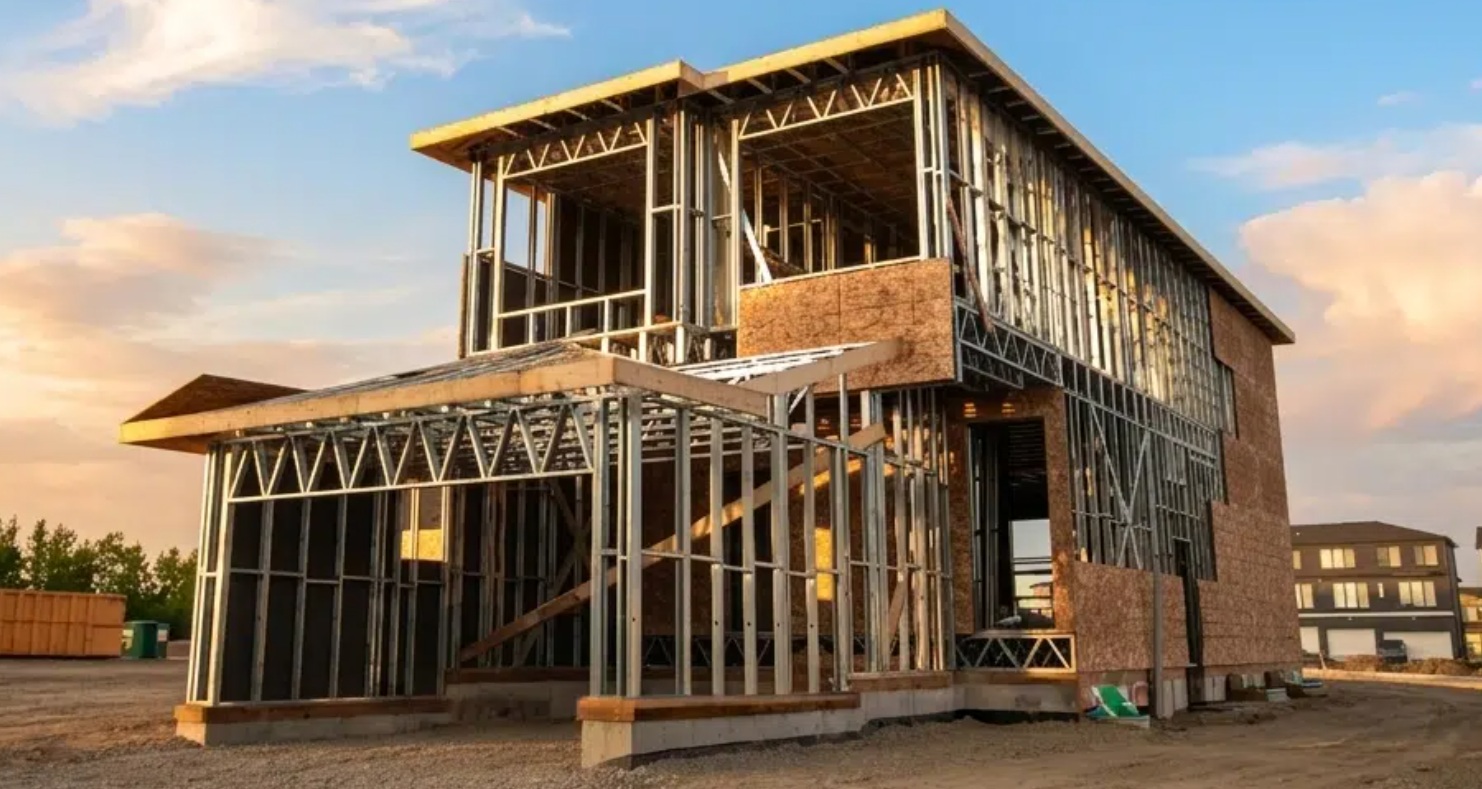
Cantiro Homes is expanding its use of cold-formed steel (CFS) framing for single-family homes and townhouses in Edmonton, Alberta, growing from a 2024 pilot home to 18 homes in 2025.
Cantiro points to several advantages of CFS framing:
- Durability: Steel resists fire, moisture and pests
- Flexibility: Lighter framing allows taller walls and wider floor spans
- Installation: Predrilled openings and open-web flooring make plumbing, electrical and ductwork installation easier
- Cost: Cantiro reports that its steel-framed homes cost the same as comparable wood-framed houses
Cantiro also highlights a difference in raw material sourcing. Lumber requires harvesting trees, while steel can come from recycled vehicles..
“The amount of lumber required to build one single-family home would equate to about 3 acres of trees and 27 to 30 years of tree growth …” says Gary Hoeft, Cantiro vice president of homes. “With steel, the equivalent comparison would be 6 to 7 recycled cars.”
The builder expects to complete 90 to 100 steel-framed homes in 2026. Plans call for that number to reach 300 in 2027.
CFS Framing Supports Affordable Housing in India
A housing development in Agartala, India, uses cold-formed steel (CFS) framing to provide affordable homes for low-income families. The Light House Project belongs to India’s Global Housing Technology Challenge, which promotes alternative residential construction methods.
The development will house 1,022 families in apartments measuring 320 square feet. The project has an estimated construction cost of $17.1 million. Two residential blocks opened in October 2026, providing 278 housing units.
Agartala is 1 of 6 Indian cities selected to demonstrate alternative housing technologies. The project demonstrates how CFS framing can support large-scale affordable housing construction.
Steel Framing Modernizes Air Force Housing
The U.S. Air Force is using cold-formed steel (CFS) framing to modernize aging dormitories at Edwards Air Force Base in California. The project transforms a 1950s-era dormitory into apartment-style housing. It forms part of a broader initiative to improve living conditions for military personnel.
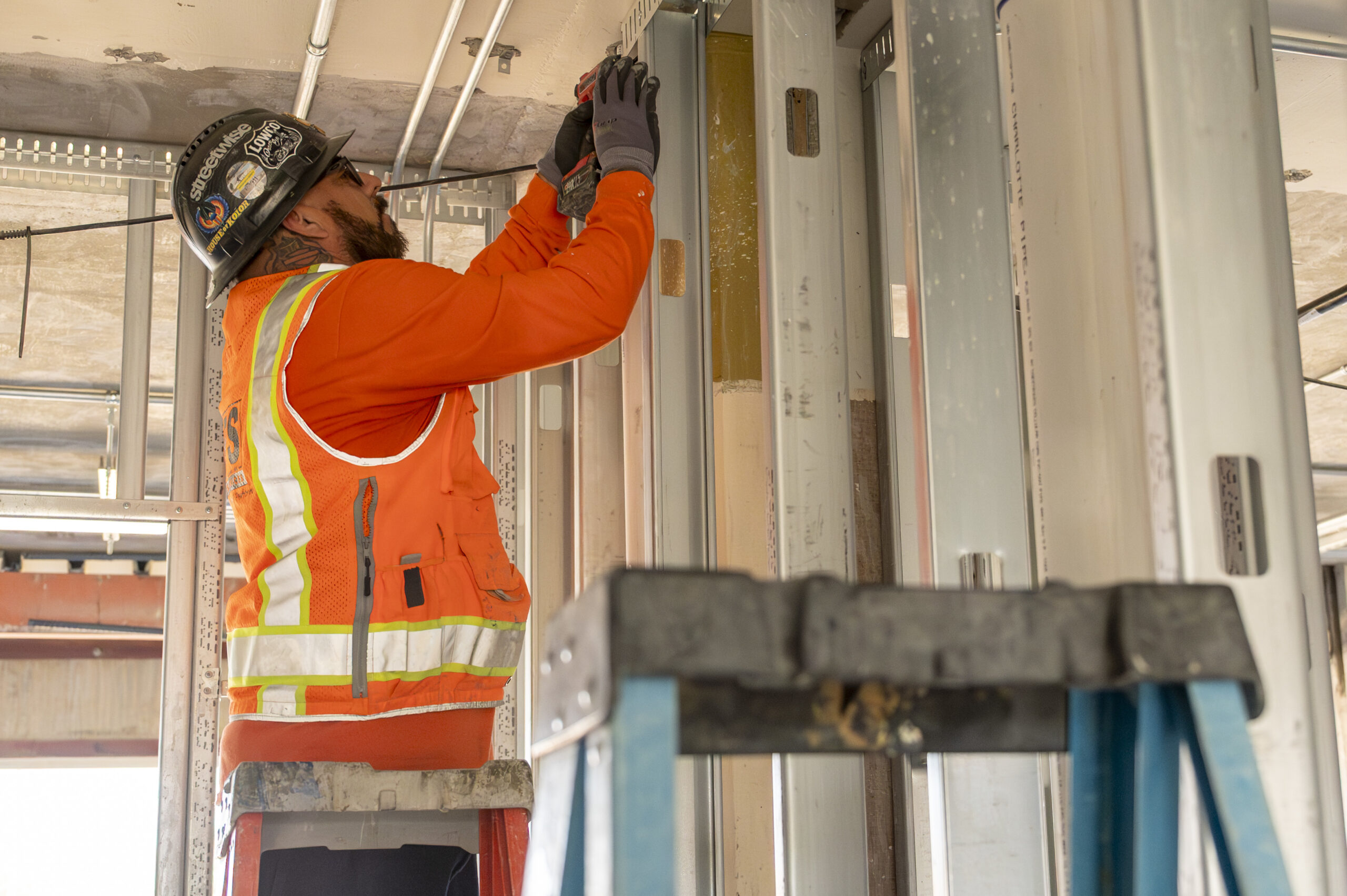
Daniel Hernandez of HPS Mechanical secures vertical steel studs to a ceiling track inside a dormitory at Edwards Air Force Base, California.
CFS framing helps establish new interior layouts as the Air Force replaces outdated dormitory configurations. The renovated housing follows the military’s “Dorms-4-Airmen” standard, providing private bedrooms within shared apartment-style suites. Residents will have access to kitchens, living areas and in-unit laundry facilities.
The modernization program began in 2016. Work began on the final dormitory in 2025. The project demonstrates how steel stud framing supports interior reconfiguration as military facilities adapt to changing housing standards.
Additional Resources
- Update #27: Cold-Formed Steel Framing in Military Facilities and University Housing
- Update #26: CFS Benefits on Display in Coastal Australia, Nova Scotia and Rural Colombia
- Update #25: Cold-Formed Steel Framing Supports Community Center, Waterfront Condominium and Residential Development
- Update #24: Cold-Formed Steel Advances Historic Renovation, Veterans Housing and Net-Zero School
- Update #23: Cold-Formed Steel Advances Aquarium Design, Fire Resilience and Storm Recovery