
Cold-Formed Steel Shapes Seattle Aquarium Expansion
The Seattle Aquarium Ocean Pavilion brings a two-story expansion to the Seattle waterfront. The project adds marine life exhibits and educational spaces while meeting demanding waterfront performance requirements. Cold-formed steel (CFS) played a key role in the interior construction, supporting the building’s distinctive design and durability.
CFS framing helped create sweeping radius walls, a large circular west-facing window and custom soffits. The project required precise coordination to achieve the building’s complex geometry while meeting demanding waterfront performance requirements. Durable construction and tight tolerances supported the project’s long-term performance.
Construction teams managed limited site access through carefully scheduled deliveries, with materials lifted by crane and installed the same day. Through detailed planning, clear communication and collaborative problem-solving, the team met aggressive deadlines and delivered a high-quality facility. The project earned the 2026 Outstanding Projects of the Year Award from The Northwest Wall and Ceiling Bureau.
Steel Trusses Strengthen Fire-Resilient Home Design
A new accessory dwelling unit in Los Angeles demonstrates how cold-formed steel (CFS) strengthens homes in wildfire-prone communities. The project sits in a high-risk Wildland-Urban Interface zone. CFS roof trusses helped create a durable roof system that improves long-term resilience.
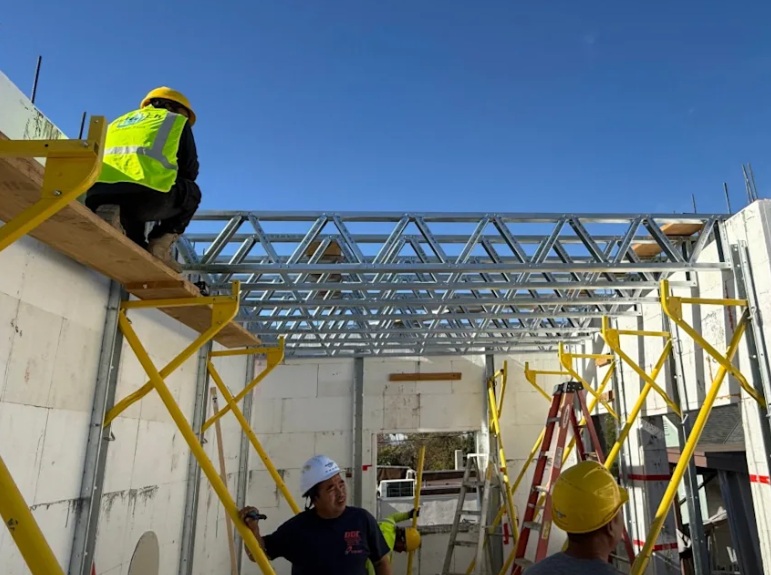
A Los Angeles accessory dwelling unit uses cold-formed steel (CFS) roof trusses to create a durable, fire-resilient roof system.
The roof system uses CFS trusses, a metal deck and lightweight concrete to improve fire resistance. Closed-cell spray insulation eliminates traditional attic vents that can admit embers during wildfire events. The roof assembly reduces vulnerabilities while supporting efficient construction.
The 1,150-square-foot home demonstrates how CFS supports resilient residential design without significantly increasing construction costs. The project reportedly matched the cost of a comparable wood-frame accessory dwelling unit.
Steel Framing Meets Growing Climate Challenges
Extreme weather continues to challenge builders across hurricane and storm-prone regions. Developers can improve resilience by selecting cold-formed steel (CFS) for demanding conditions. CFS delivers strength, durability and reliable performance during severe weather. Rebuilding efforts in the Bahamas and planned projects in Puerto Rico highlight its value for resilient construction.
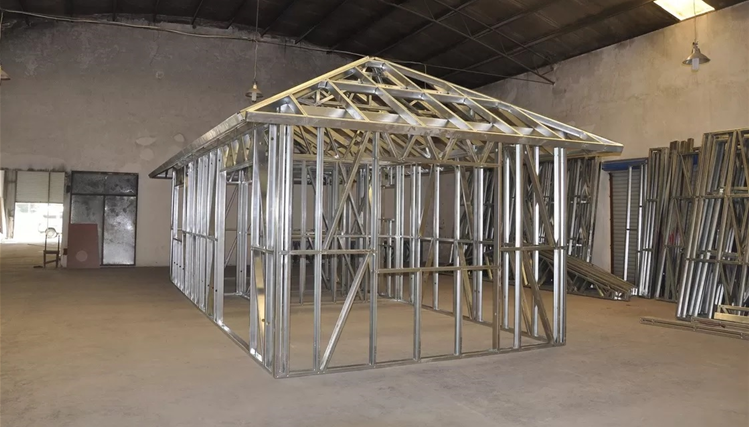
DreamWeaver has proposed a cold-formed steel (CFS) fabrication facility in Puerto Rico to expand local housing production following hurricanes and earthquakes.
CFS resists Category 5 hurricane winds through engineered framing systems and strong connections. It maintains structural integrity without warping, rotting or retaining moisture. Protective coatings improve corrosion resistance and extend service life. High wind resistance, long-term durability and dependable structural performance make CFS a strong choice for disaster-resilient buildings. The material’s lower risk profile may also reduce insurance costs.
A planned manufacturing facility in Puerto Rico will support housing recovery after hurricanes and earthquakes. Steel-framed homes exceed local emergency building code requirements and meet enhanced seismic standards. The homes assemble quickly and require simpler foundations because of their lighter weight. Experience in hurricane and earthquake regions continues to demonstrate steel’s value for resilient housing.
Additional Resources
- Update #22: Cold-Formed Steel Supports Wildfire Rebuilding, Courthouse Acoustics and Micro Homes
- Update #21: Cold-Formed Steel Supports Award-Winning Church, Affordable Housing and a Noted Training Center
- Update #20: Cold-Formed Steel Used for Resilient Housing, Scalable Infrastructure and Modular Floor Systems
- Update #19: Cold-Formed Steel Used for Apartment Project, Pickleball Complex and Fire Station
- Update #18: Cold-Formed Steel Accelerates Housing Projects in Pennsylvania, New Jersey and Brazil