
Cold-formed steel (CFS) framing delivers exceptional durability, dimensional stability and long-term performance. Strategic building design and protective metallic coatings minimize corrosion. They also allow CFS framing to provide reliable service for generations.
The following information is based on technical guidance prepared for BuildSteel by SFIA member Arkitech America. H. Çağatay Alıca with engineering services at Arkitech Advanced Construction Technologies, explains the design practices, coatings and moisture management strategies that help maximize the longevity of CFS framing.
Built for Long-Term Performance
Proper moisture management plays a critical role in the long-term performance of CFS framing. Modern building designs reduce the risk of interstitial condensation. They keep steel components above the dew point and provide effective moisture control.
Protective zinc or zinc-aluminum galvanized coatings provide a physical barrier against moisture. They also offer sacrificial cathodic protection. This combination protects exposed cuts and scratches from corrosion.
When properly designed and installed within the building envelope, CFS framing has a predicted service life ranging from 300 to more than 1,000 years. Unlike organic building materials, CFS does not absorb moisture, warp, shrink or support mold growth. It also maintains its dimensional stability and can outlast common building components such as OSB sheathing.
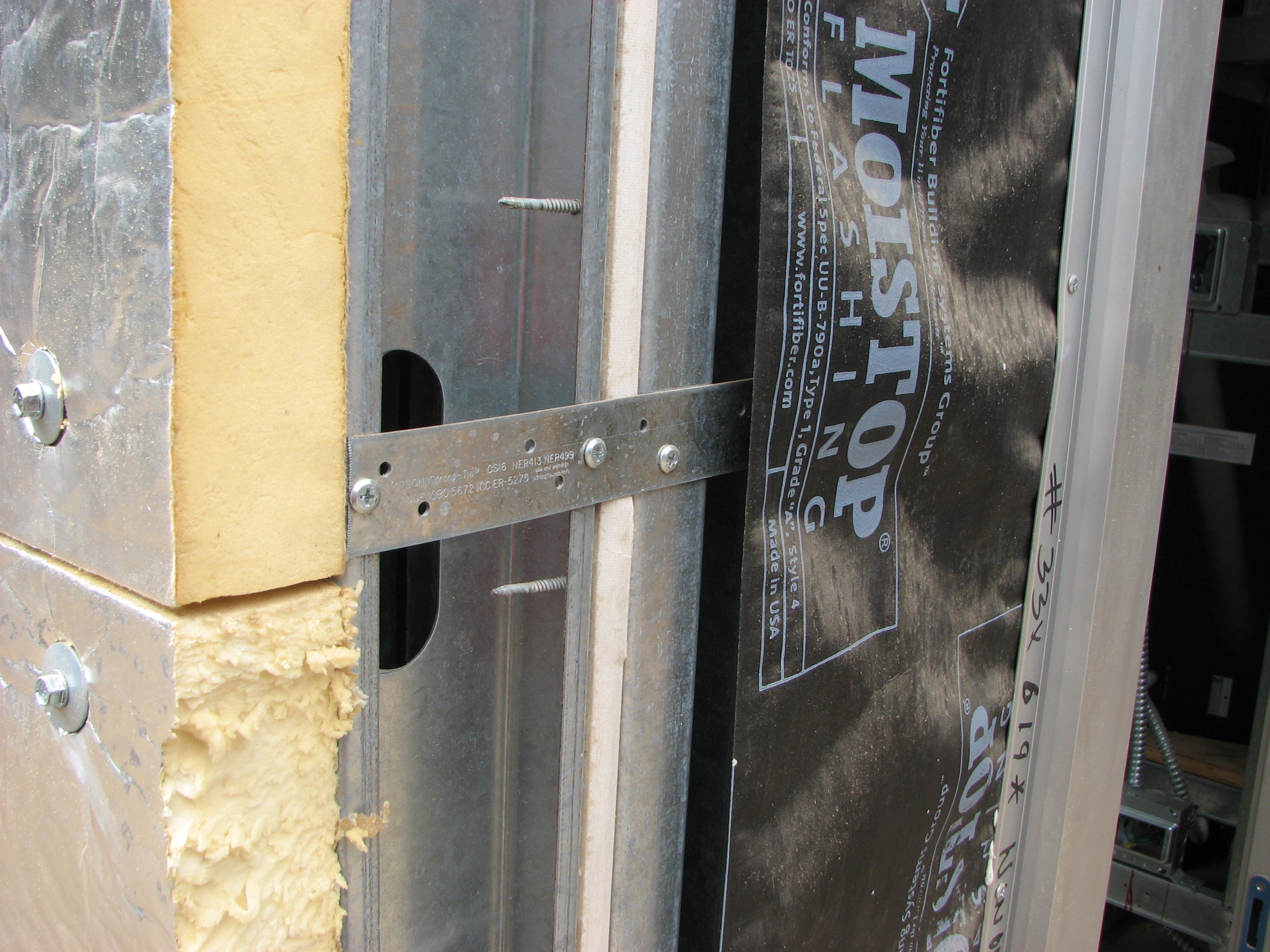
Cold-formed steel (CFS) framing uses zinc or zinc-aluminum galvanized coatings to create a protective barrier against moisture and corrosion.
Understanding Corrosion Protection
Moisture and condensation primarily influence the durability of CFS framing. However, protective metallic coatings, strategic building design and the inorganic nature of CFS effectively mitigate these effects.
Corrosion occurs only when moisture acts as an electrolyte. Understanding how moisture affects steel helps designers maximize the long-term performance of CFS framing.
CFS members typically use zinc or zinc-aluminum galvanized coatings to prevent corrosion. These coatings provide a physical barrier that prevents moisture from contacting the steel substrate.
The zinc coating also provides sacrificial cathodic protection. When the base steel is exposed at a cut edge or scratch, the surrounding zinc protects the steel sacrificially. Because zinc is more electronegative than steel, it corrodes continuously. This action protects the adjacent steel. As a result, exposed steel will not corrode at cut edges or scratches as long as the surrounding zinc coating remains.
The corrosion rate of zinc correlates with the “time of wetness” and air pollutant concentrations. Rainfall can wash away protective corrosion products. Moisture from condensation typically evaporates and leaves behind a stable patina, such as zinc carbonate, that slows further degradation.
In climate-controlled indoor environments, standard galvanized coatings can protect framing for centuries. Partially sheltered exterior areas may remain damp longer and require more robust protection.
Design Practices That Maximize Durability
Modern CFS construction often uses “warm frame” design. This approach keeps the steel within the building’s thermal envelope. Maintaining the steel above the dew point minimizes the risk of interstitial condensation.
Research indicates that galvanized steel in a properly maintained warm frame application has a predicted design life exceeding 200 years.
Wet storage stain, often called “white rust,” can occur when closely stacked galvanized sheets trap moisture before installation. This rapid formation of zinc hydroxide is unsightly but typically remains superficial. Once the material dries and is installed, the coating continues to provide long-term protection.
Moisture can also affect how CFS interacts with adjacent materials. Galvanic corrosion between CFS and dissimilar metals, such as copper, requires an electrolyte to be present.
Fresh concrete is alkaline and can attack zinc, but the reaction ceases after the concrete cures. Designers should also provide barriers when CFS contacts certain pressure-treated wood products containing corrosive chemicals.
As an inorganic material, CFS does not absorb moisture. It does not warp, shrink or expand like organic framing materials.
In flood conditions, CFS does not retain water, allowing the structure to dry more quickly. It also does not support mold or mildew growth, contributing to healthier indoor environments.
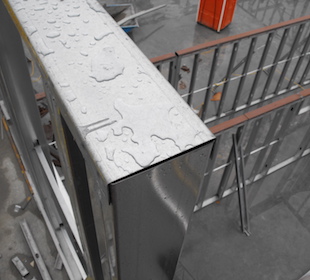
Protective metallic coatings, proper building design and the inorganic nature of cold-formed steel (CFS) framing work together to minimize the effects of moisture and condensation.
How Long Does CFS Framing Last?
Studies demonstrate the exceptional longevity of galvanized steel framing in residential applications. The National Association of Home Builders Research Center found that zinc-coated steel within the building envelope has a predicted service life ranging from 300 to 1,000 years.
Monitoring in rural, urban and industrial environments found corrosion rates so low that a standard 10 µm zinc coating could last more than 300 years.
Even in semi-exposed areas, the predicted design life remains substantial. Studies estimate approximately 200 years for insulated roofs and 100 years for uninsulated roofs. Proper moisture control, including weather-resistive barriers and ventilation, remains essential to keeping framing dry and maximizing service life.
CFS Framing vs. OSB
Oriented strand board is a standard sheathing material for CFS structures. While CFS framing can last for centuries, OSB typically has a predicted service life of 60 to 100 years, depending on moisture management.
Maintaining OSB moisture content below 20% helps prevent fungal decay and structural strength loss. Using 11 mm OSB as a shear diaphragm meets industry standards, including AISI S240, when protected from extreme wetting cycles during and after construction.
References
- National Association of Home Builders Research Center: Research cited in this article found that zinc-coated steel within a building envelope has a predicted service life ranging from 300 to 1,000 years.
- AISI S240: This North American standard establishes requirements for cold-formed steel structural framing. As noted in this article, 11 mm oriented strand board (OSB) used as a shear diaphragm meets the requirements of AISI S240 when protected from extreme wetting cycles during and after construction.
Additional Resources
- SFIA 158: Introduction to Galvanized Steel – Coatings, Corrosion and Durability (On-Demand Course)
- Expert Sources Say Steel Framing is the Ideal Anti-Mold Solution
- 10 Reasons to Frame Your Next Project with Steel