
Wildfires are reshaping residential construction across North America, especially in fire-prone regions. Longer fire seasons and persistent drought conditions continue to increase wildfire intensity and frequency. Builders now prioritize fire-resilient design and noncombustible materials to reduce ignition risk and protect homes.
Cold-formed steel (CFS) framing plays a critical role in wildfire mitigation. The noncombustible structural system resists flame spread and maintains structural integrity during extreme heat exposure. Builders increasingly specify CFS framing to strengthen structural performance and improve resilience in wildfire-prone areas.
Communities rebuilding after major fires must balance safety, speed and affordability. Homebuyers, insurers and public officials now demand construction methods that reduce risk and improve long-term durability. Builders increasingly specify CFS framing and strategic site planning to deliver safer homes.
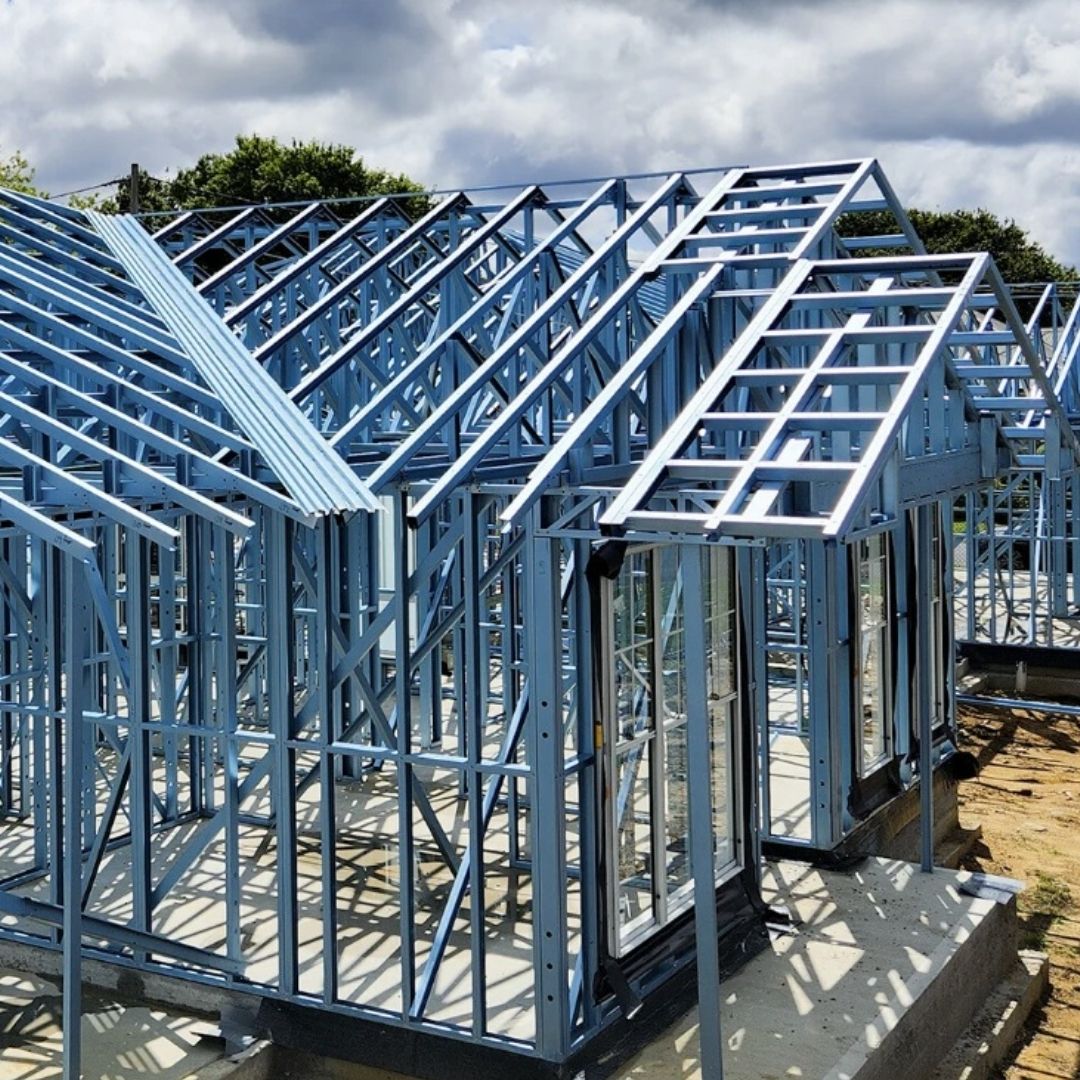
Cold formed steel (CFS) framing delivers noncombustible strength and dependable fire performance for homes built to last. Image provided by FRAMECAD, an SFIA member.
Guidance For Rebuilding After Wildfires
Communities recovering from wildfire damage face difficult rebuilding decisions. Builders must deliver housing quickly while improving protection against future wildfire events.
California has taken a leading role in developing rebuilding guidance. In April 2025, the U.S. Green Building Council California released the California Wildfire Rebuilding Guide. The guide provides practical strategies for homeowners and builders reconstructing homes in wildfire-prone areas. Experts from CAL FIRE, the National Fire Protection Association and the Insurance Institute for Business & Home Safety contributed to the document.
The USGBC wildfire rebuilding guide targets suburban and urban communities, like Altadena and Pacific Palisades, where wildfire risk intersects with the potential for earthquakes and extreme heat. Residential builders in these regions must address multiple potential hazards while working within the tight constraints of their residential projects.
“The guide outlines cost-effective, sustainable rebuilding strategies at the community scale,” according to an article in Forbes. “The guide is tailored for areas with defined lot lines and limited space, where rebuilding must be efficient and disaster-conscious.”
Steel Improves Wildfire Structural Performance
Structural materials play a critical role in wildfire resilience. Combustible framing increases ignition risk and accelerates structural failure during fire exposure.
Noncombustible materials can significantly reduce these risks. CFS framing provides strong structural performance while resisting ignition.
Steel does not burn, rot or attract pests. These properties improve long-term durability and reduce maintenance requirements.
CFS framing also maintains structural stability during high heat exposure. This performance helps structures withstand fire conditions longer, which protects occupants.
CFS Helps Homeowner Obtain Insurance
Homeowners increasingly recognize the value of these characteristics in wildfire-prone regions. Structural materials now directly influence insurance availability and property risk.
One homeowner encountered this challenge while building in Arizona’s mountainous terrain. The property carried an ISO fire insurance rating between 9 and 10, indicating extremely limited fire protection.
“I’m in one of the most dangerous fire zones in Arizona,” says Arizona homeowner Mike Lynch, who built his home using CFS framing.
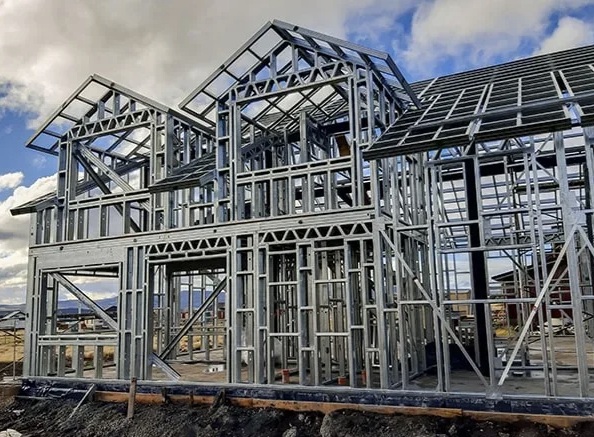
Companies like SFIA member Scottsdale Construction Systems are leveraging advanced roll-forming technology to deliver homes built with noncombustible cold-formed steel (CFS) framing.
Lynch originally planned to build with wood framing. A change in fire risk ratings threatened his ability to obtain insurance coverage.
“We had a wood-framed house designed and into the county for approval,” says Lynch. “I put a halt to it when they changed our ISO rating – homeowners around here were losing their insurance.”
Lynch switched to CFS framing to address those risks. The noncombustible structural system improved fire resistance and allowed the project to move forward.
This experience reflects a growing trend. Builders and homeowners increasingly select steel framing to improve fire performance and maintain insurability in high-risk areas.
The Steel Framing Advantage
Cold-formed steel (CFS) leads the way as the preferred framing material for prefabricated structures for multiple reasons. CFS is:
- A pre-engineered material that can be cut to exact lengths
- Dimensionally stable and does not expand or contract with changes in moisture content
- Lightweight compared to wood and concrete
- Resilient and will not warp, split, crack or creep when exposed to the elements
- Sustainable and 100% recyclable
- Durable and has a high tensile strength
- Non-combustible and is a safeguard against fire accidents
AI And Data Improve Wildfire Planning
Advanced data analytics now helps builders evaluate wildfire risk before construction begins. Property risk analysis platforms use large datasets and artificial intelligence to identify wildfire exposure at the parcel level.
Builders can analyze vegetation, topography, climate patterns and historical fire behavior during the earliest planning stages.
These insights allow project teams to design safer communities from the start. Builders can adjust site layouts, select noncombustible materials and incorporate wildfire-resistant construction strategies based on measurable risk data.
20% Insurance Premium Reduction
Risk modeling also shapes insurance decisions. Insurers increasingly evaluate mitigation measures when underwriting new policies. Builders who integrate wildfire-resistant design features can improve a project’s insurability and reduce long-term costs.
“It’s estimated that completing all 12 California-required mitigation actions can lead to a 20% insurance premium reduction,” says Jamie Knippen, senior product manager at Cotality, a property data analytics firm.
These incentives encourage builders to prioritize wildfire-resistant design and noncombustible structural systems such as CFS framing. Data-driven planning helps reduce wildfire exposure while strengthening the economic case for resilient construction.
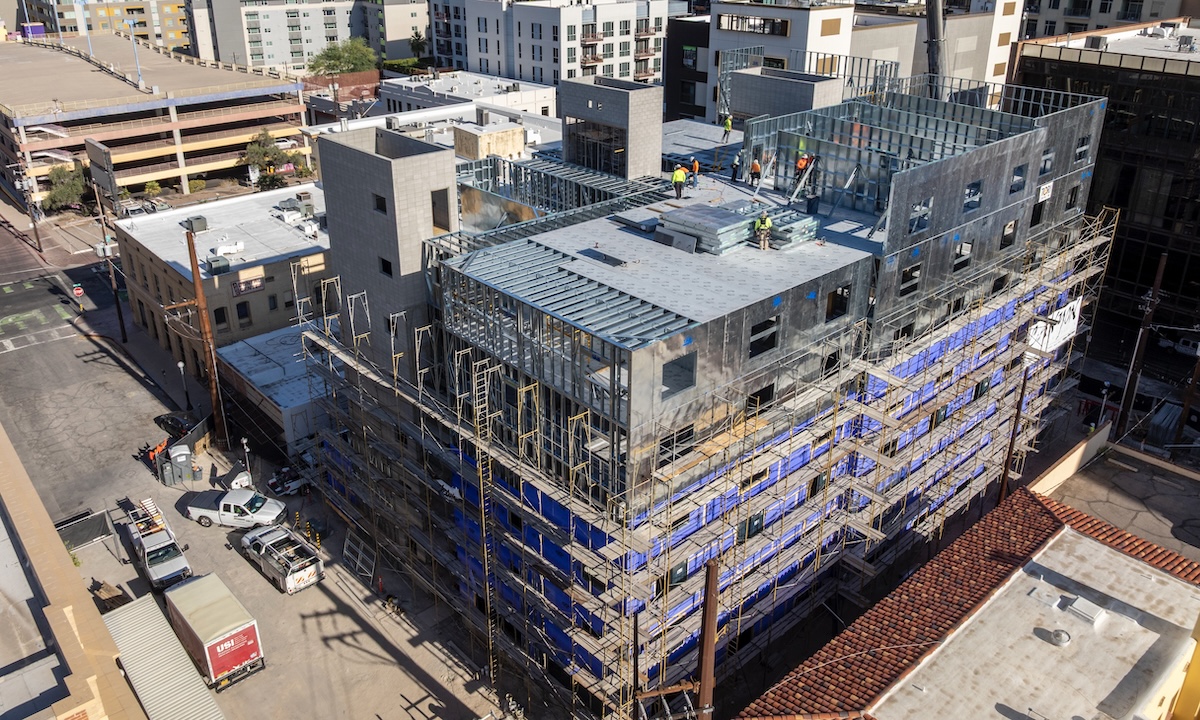
SFIA member Industrialized Construction Solutions used prefabricated cold-formed steel (CFS) framing to shorten exposure and lower the contractor’s liability insurance for the West Point Apartments II in Tucson, Arizona.
Data Drives Future Resilient Construction
Industry leaders increasingly rely on data to improve building performance and guide future design decisions.
Don Allen, executive director of the Steel Framing Industry Association (SFIA), emphasizes the importance of measurable performance.
“Strength and safety aren’t abstract ideas,” says Allen. “They have real-world consequences for people who lose everything.”
SFIA recently launched a new Data Task Group to improve industry insight. The initiative expands data collection beyond simple production volumes.
The group now tracks load-bearing framing applications, modular construction systems and emerging code requirements.
These insights help engineers, manufacturers and builders better understand how steel framing performs across different project types.
Allen also envisions forecasting tools similar to the American Institute of Architects’ Architecture Billings Index. Tracking shop drawings could help the industry forecast demand and identify emerging construction trends.
“In today’s construction environment, data is essential for understanding both building performance and market dynamics,” says Allen.
“Better data means better decisions — about materials, timelines and resilience,” says Allen.
The Steel Framing Industry Association (SFIA) data strategy drives steel framing demand by helping the industry forecast trends and improve efficiency in data center construction.

Insurance Economics Favor Noncombustible Buildings
Insurance markets are shaping building decisions in wildfire-prone regions. Builder’s risk policy premiums increasingly reflect the financial impact of wildfire damage.
Underwriters incorporate combustion risk into their pricing models. Combustible structural systems typically produce higher premiums.
Steel framing construction reduces insurance costs. Developers recognize the financial advantages of noncombustible framing systems.
One six-story hotel project illustrates the difference. A steel framing design carried a builder’s risk premium of about $92,000. A comparable wood-framed design carried a premium near $450,000. Developers reviewed the pricing and selected steel framing to reduce project costs.
Insurance Costs Favor Steel-Framed Construction
Insurance brokers report similar trends across the construction industry. Wood-framed projects often cost between $0.30 and $0.40 per $100 of project value to insure. Comparable steel-framed projects frequently cost between $0.15 and $0.20.
Prefabricated steel systems also reduce exposure during construction. Faster assembly shortens project timelines and limits vulnerability during the build phase.
Steel Framing Industry Association (SFIA) member Industrialized Construction Solutions used prefabricated CFS framing for the West Point Apartments II project in Tucson, Arizona. The approach shortened construction timelines and reduced contractor liability insurance exposure.
As wildfire risks continue to grow, insurers increasingly favor noncombustible construction systems.
Surge in Fires: The Case for Steel Framing
Download this free article brief exploring the rise of fires in mid-rise wood construction across the U.S., highlighting incidents in California and Texas. The report outlines the key advantages of steel framing as a noncombustible alternative to significantly reduce fire hazards.

Modular Steel Homes Improve Affordability
Communities rebuilding after wildfires often face severe housing shortages. Builders must deliver durable homes quickly without dramatically increasing costs.
Modular construction systems help meet this challenge. Prefabricated steel framing allows builders to produce housing efficiently while maintaining structural performance.
Hapi Homes provides a clear example of this approach. The company manufactures modular housing systems built around light-gauge steel framing. Demand for wildfire-resistant homes has surged in recent years.
“We’ve seen a 300% to 400% increase in inquiries after the Los Angeles fires,” says Mary O’Brien, CEO of Hapi Homes.
View this post on Instagram
Each Hapi Homes kit ships in a single 14-foot container. A container carries the structural components for a 1,200-square-foot home. Factory production ensures precise fabrication and consistent quality. Automated equipment cuts and assembles steel components to exact specifications.
Steel framing reduces structural build time by 40% and labor costs by 20%.
Because the homes incorporate wildfire-resistant features, homeowners may qualify for insurance discounts approaching 20%.
“Resiliency starts with the light-gauge steel,” says O’Brien. “It forms the core frame, manufactured to spec using automated factory tools.”
Research Confirms Steel Fire Performance
Engineering research continues to strengthen understanding of steel framing performance during wildfire exposure.
Queensland University of Technology recently published research examining cold-formed steel exterior wall systems exposed to bushfire flame zone conditions.
The researchers used numerical modeling to evaluate heat transfer inside wall assemblies. The study also examined how different cladding materials influenced system performance.
The results confirmed the importance of steel framing within wildfire-resistant building systems.
The researchers concluded that CFS framed exterior walls serve as key components of the building envelope.
The study also determined that these systems play a critical role in resisting bushfire attacks.
The modeling demonstrated that CFS framed walls maintain load-bearing performance under severe fire conditions. This research offers engineers validated tools for designing wildfire-resistant wall assemblies.
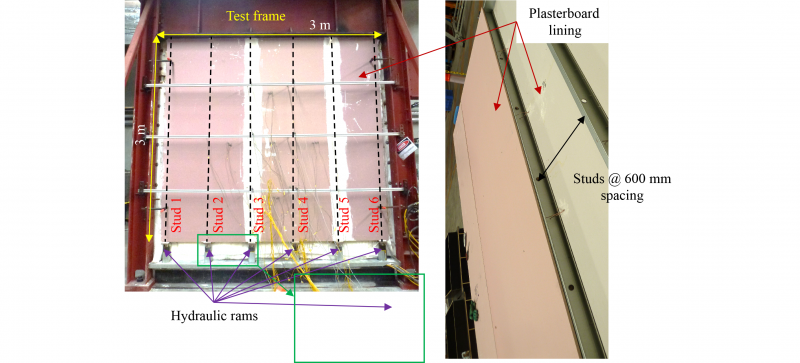
Test set-up and wall test frame showing the team’s 0.6 m × 0.2 m scaled model, designed to reduce computation time while accurately replicating full-scale behavior.
Building Resilient Communities With Steel
Wildfires continue to reshape residential construction across the nation. Communities rebuilding after catastrophic fires must prioritize safety, durability and long-term resilience.
CFS framing helps meet these demands. The noncombustible structural system reduces ignition risk while maintaining structural performance during fire exposure.
Faster construction, stronger insurance outcomes and durable building performance further strengthen steel’s value. As fire risk grows, builders increasingly rely on steel framing to deliver safer homes and more resilient communities in wildfire-prone regions.
Additional Resources
- Fire Changes Everything: Why Cold-Formed Steel Is Reshaping Housing Construction
- Update: Insurance Costs Are Re-Shaping Construction Choices — And the Data Speaks for Itself
- Data and Noncombustible Materials Hold the Key to Safer Construction, Says SFIA’s Don Allen