
Image: South Valley Prefab’s exterior finish panels cut installation labor by 90 percent in the construction of Denver’s new RiNo District hotel.
The ongoing pandemic, widespread labor shortages, supply chain disruptions and extreme weather have created an unprecedented number of disruptions for the construction industry.
Despite these difficult developments, the resourceful construction industry has found ways to implement creative solutions to address these challenges. One trending solution is the use of cold-formed steel (CFS) framing for prefabricated construction.
Prefabrication Reduces Installation Time by 80%
Changes that developed as a result of the pandemic and recent building challenges indicate that off-site construction has reached mainstream status for the construction of non-residential and multi-family housing.
“In the wake of COVID-19, many construction professionals experienced the value proposition of working in a safe, controlled environment removing the uncertainties of working in the field,” says Tim Salerno, director at StoPanel, in The Construction Specifier article, “Trial to trend: The growth of prefabricated exterior walls.”
Salerno adds: “Add in a post-pandemic labor shortage, and prefabrication becomes an even more popular solution, because it requires a smaller crew to complete a job.”
According to Dodge Data & Analytics, 25% of contractors are now invested in prefabricated projects. This is expected to increase to 33% by 2024.
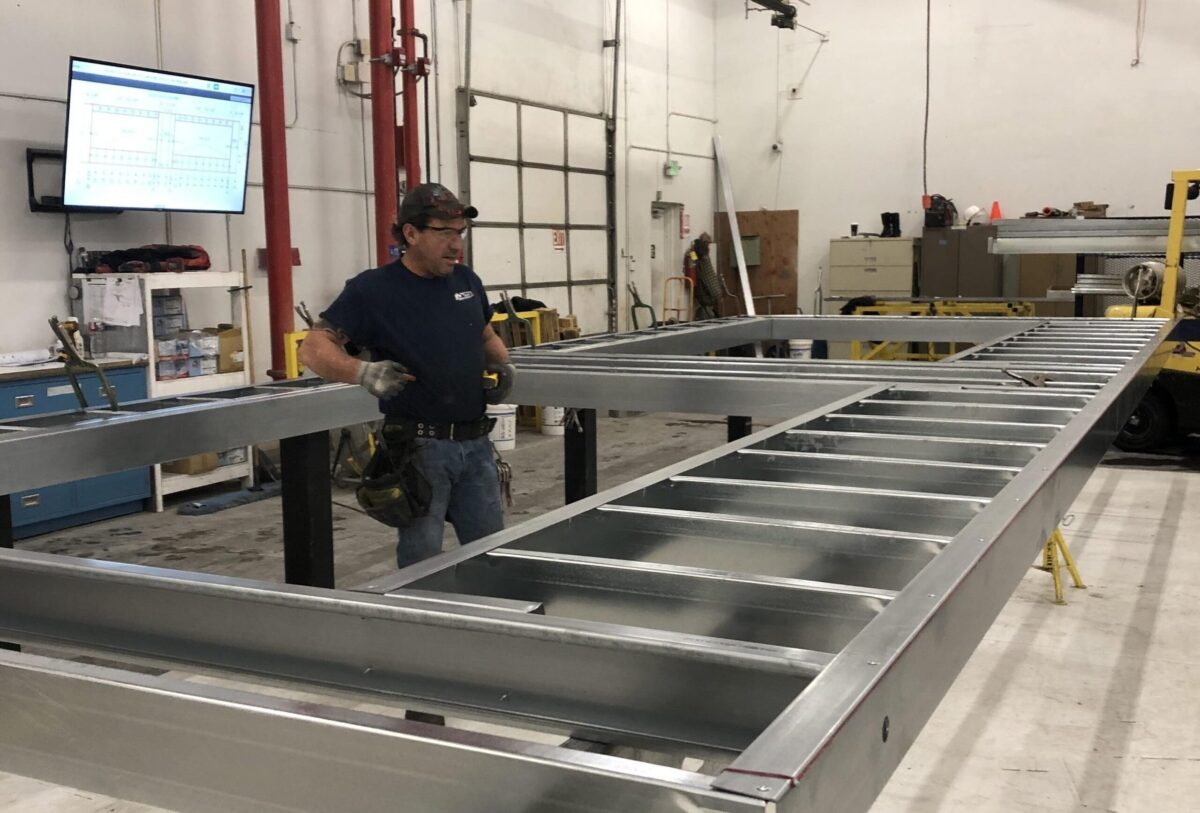
A South Valley Prefab craftsman inspects the quality of a prefabricated exterior wall panel.
“When prefabrication enters the construction equation, the variables change dramatically,” says Salerno. “In fact, prefabrication can provide up to 80% reduction in building envelope installation time with a substantial reduction in on-site installation team size and minimize the impact of weather.”
Growth of Prefabricated Exterior Walls
According to Salerno, the construction industry has been primed for growth in the use of prefabricated exterior walls. As the technology continues to evolve, its benefits become more apparent. In The Construction Specifier article, Salerno explains why growth is anticipated in the use of prefabricated exterior walls:
Prefabrication Delivers Greater Certainty
- Improved scheduling
- Increased safety for work crews
- Cost savings and faster turnaround times
- More predictable completion timeline
Prefabrication Provides Design freedom
- Architectural freedom to support a wide array of color, texture, and cladding material options
- Lightweight designs that reduce structural and foundational requirements
- Energy efficiency
Salerno cautions that design teams must consider prefabrication early in project design since options can be realized without a need for redesign.
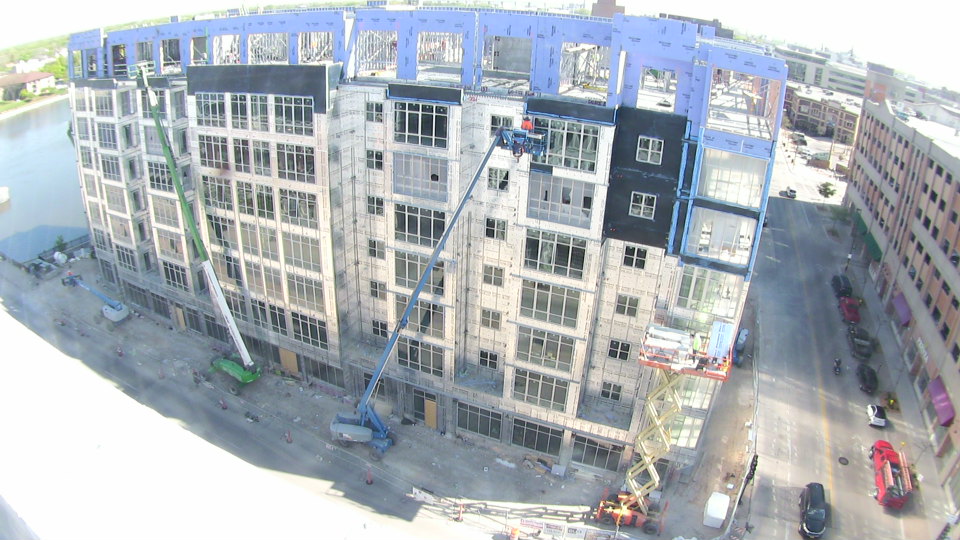
The Metreau Apartments in Green Bay, Wisconsin featured 11,508 lineal feet of prefabricated cold-formed steel (CFS) wall panels from Wall-tech.
The Steel Framing Advantage
Cold-formed steel (CFS) leads the way as the preferred framing material for prefabricated structures for multiple reasons.
CFS is:
- A pre-engineered material that can be cut to exact lengths
- Dimensionally stable and does not expand or contract with changes in moisture content
- Lightweight compared to wood and concrete
- Resilient and will not warp, split, crack or creep when exposed to the elements
- Sustainable and 100% recyclable
- Durable and has a high tensile strength
- Non-combustible and is a safeguard against fire accidents
Obstacles to Prefabricated Construction
According to Ken Smerz, CEO of ZELUS, a main barrier to the spread of prefabrication construction is the slow adoption of Building Information Modeling.
“Though BIM adoption has increased significantly –– and saw record adoption in 2020 –– it’s still rarely used through the entire prefabrication process,” says Smerz. “Typically, general contractors are using BIM to get an accurate visual understanding of the project, but that’s where it tends to end.”
To realize the true benefits of prefabrication, Smerz says BIM has to unite project planning, design and construction processes.
eBook: Is BIM Worth the Investment?
Building Information Modeling can help foster communication and improve job site organization. The BuildSteel eBook, “BIM for Cold-Formed Steel Framed Projects: Benefits, Drawbacks, and How to Succeed,” explores how to determine if BIM is right for your next project and how to use the process successfully.
In this eBook, you’ll learn:
- Five steps to help your firm become competent in BIM
- How BIM can streamline your project by reducing requests for information and conflicts with other trades
- How, and which, cold-formed steel (CFS) framing projects can benefit from BIM
Download
The Next Frontier in Prefabrication
The lack of standardization has limited the adoption of panelization. However, this is now changing.
“Certain manufacturers have stepped up to address this challenge,” says Salerno. “They have developed processes that can be replicated nationwide [with] fully engineered, code-compliant systems [that] deliver a consistent, high-performance wall assembly.”
Economies of scale will improve the competitive position of prefabrication, he says.
“A paradigm shift is underway in the construction industry,” Salerno says. “Fast, on-schedule construction of high-quality buildings is an emerging expectation and prefabrication will help deliver.”
Additional Resources
Prefabrication with Steel Framing: Centuries in the Making
3 Pandemic Construction Challenges Solved With Steel Framing
4 Reasons Prefabrication is Here to Stay