
Glass defines modern architecture. Daylight, transparency and expansive views drive today’s design language. Yet glass performance depends on the strength and stability of its framing.
In the Glass Magazine article, “The Role of Steel in Modern Architectural Fenestration,” Rachel Vitello, associate editor and content manager, the National Glass Association, examines how steel supports both design flexibility and structural integrity.
“In modern architectural fenestration, steel can offer both structural integrity and design flexibility,” Vitello says. “It allows for slender framing profiles that maximize daylight and views without compromising durability.”
Featured image (above): Excel Engineering designed special cold-formed steel (CFS) framed sloping sills and special wing walls for Flexjet’s global headquarters building, which has an unusual geometric design.
Strength Enables Larger Spans and Slim Profiles
Steel delivers exceptional strength relative to its size. That strength allows manufacturers to produce slimmer profiles while supporting larger panes of glass, the article says.
“Steel is a very strong material, and as a strong material, you can really go with large dimensions and spans,” says Robert Miller, CEO of Jansen, a Swiss producer of architectural steel profile systems for doors, windows and facades.

Header Image: T.J. McCartney installed 133 tons of cold-formed steel (CFS) framing at Allston Labworks in Boston, supporting complex curtainwall conditions, multi-story fly-by assemblies and curved geometries.
With greater spanning capability, architects can maximize daylight and exterior views. Steel also responds slowly to thermal expansion and contraction. When combined with high performance glass and thermal breaks, steel systems support energy efficient windows and doors.
Manufacturers use steel in both non rated and fire rated curtain wall systems. Steel also supports heavy glazing units without requiring supplemental structural support. This capability proves especially valuable in fire-rated applications and large commercial projects.
“We prioritized the use of steel in our fenestration and curtain wall systems,” says Chuck Knickerbocker, curtain wall manager for Technical Glass Products, a supplier of fire-rated glass and framing systems, and cited in the article. “Steel allows TGP to readily meet fire and life safety standards.”
Steel framing also supports oversized and custom shaped openings. Designers often specify steel for high end residential, retail and hospitality projects where aesthetics and performance must align.
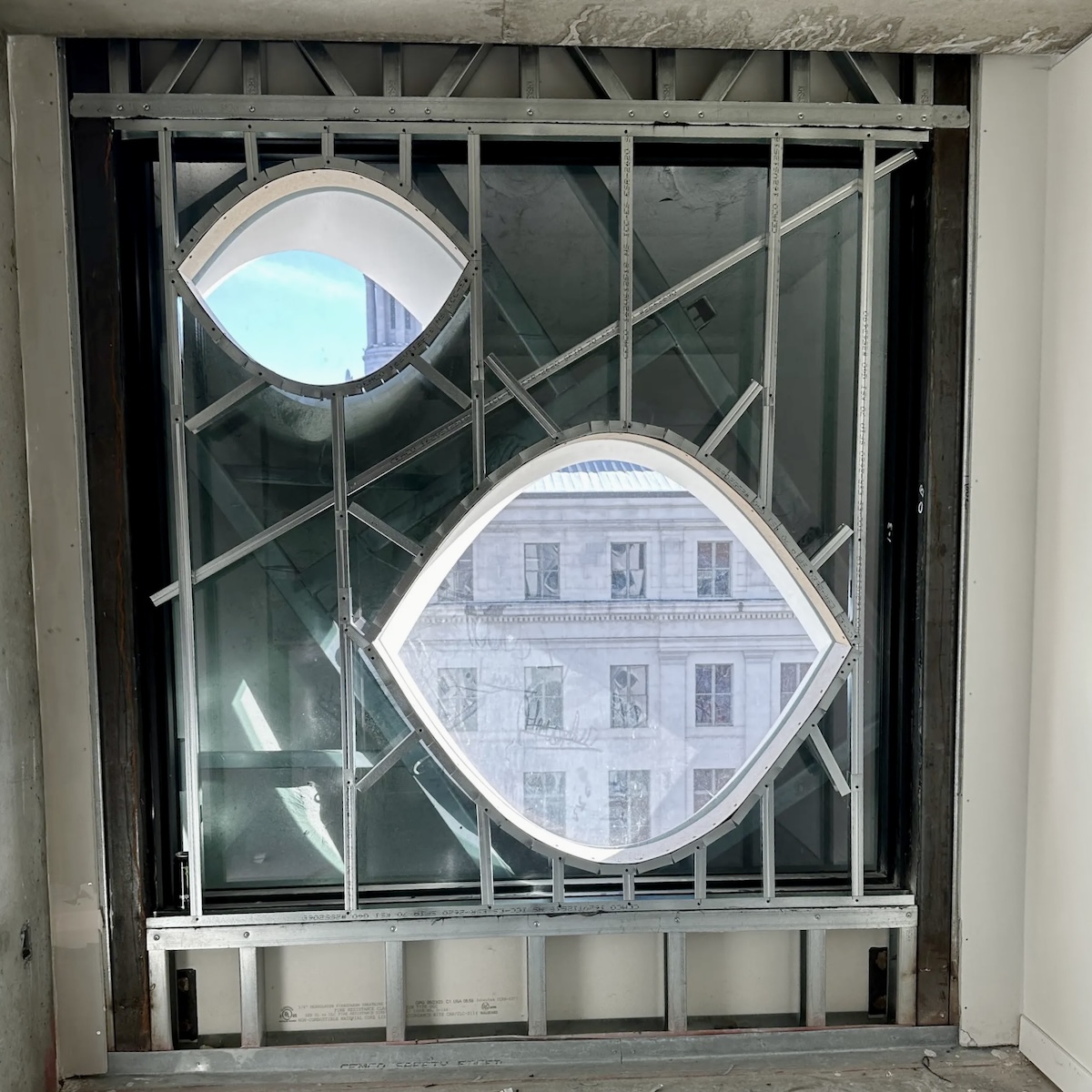
Cold-formed steel framing shapes the Populus Hotel’s sculpted window and signature “eyelid” detail.
Steel Framing Shapes Populus Hotel’s Sculpted Windows
Cold-formed steel (CFS) framing shapes the Populus Hotel’s distinctive sculpted windows in downtown Denver. Inspired by Colorado’s aspen groves, each opening features a subtle architectural “eyelid” that shades interiors and improves energy performance.
SFIA member CEMCO supplied 150 tons of precision-engineered CFS framing components to create these curved forms. The strength and versatility of CFS allow designers to achieve complex window geometries while maintaining structural integrity and dimensional accuracy.
The precisely framed openings reinforce the building’s biophilic design and recognizable architectural identity. This innovative use of CFS earned CEMCO the 2025 SFIA Industry Project and Product Award in the Architectural Design Detail category.
Manufacturing Advances Expand Design Possibilities
Steel has served as a structural material for more than a century. However, recent manufacturing advances have expanded its role in glazing systems.
Cold roll forming and laser welding now allow manufacturers to create narrower steel profiles without sacrificing strength. These technologies preserve inherent material performance while enhancing aesthetics.
“Steel-forming technologies also allow greater shape flexibility than what was previously possible for a more expansive aesthetic range,” says Knickerbocker.
Modern steel systems now accommodate various cover cap materials, including aluminum and real wood veneers. Powder coating and corrosion protection technologies extend steel’s use across diverse environments. Continuous gasketing systems prevent water intrusion and protect insulated glass units.
These innovations allow steel curtain walls and window systems to meet modern performance expectations while maintaining slender sightlines.

SFIA member ClarkDietrich Engineering designed the picture frame feature on the north elevation of the IQHQ Research and Development District – Block 2A in San Diego, California, using cold-formed steel (CFS) framing. The project won a 2024 CFSEI Design Excellence award.
From Industrial Roots to Modern Performance
Steel first appeared in windows and doors during the 19th century. Builders used it in industrial and commercial structures as steel construction methods evolved. The material’s inherent strength allowed buildings to rise taller and reduce masonry mass.
Historic renovations now highlight steel’s design continuity and performance upgrades. Modern steel windows replicate the original aesthetic while incorporating thermal breaks and energy improvements.
“You’re able to get that original look and feel but with modern innovation and modern performance,” says Miller in Glass Magazine.
Today, European markets specify steel fenestration more frequently due to energy standards and aesthetic preferences for slim profiles. However, demand continues to grow globally as architects prioritize durability, fire performance and structural efficiency.
Steel combines strength, longevity and design flexibility in one system. As modern architecture pushes for transparency and performance, steel framing continues to define the future of architectural fenestration.
Additional Resources
- eBook: How Cold-Formed Steel Framing Solves Design Challenges for Architects
- T.J. McCartney Wins SFIA’s High Rise Category Award for Allston Labworks in Boston
- ClarkDietrich Engineering Design Wins 2024 CFSEI Award for the IQHQ Research and Development District – Block 2A