
Cold-formed steel (CFS) framing improves job site safety across every phase of construction. From preconstruction planning to final installation, teams use CFS to reduce labor exposure, improve material handling and create more controlled building conditions.
These safety benefits take on added importance as construction professionals observe Construction Safety Week from May 4–8, 2026. Founded in 2014 by members of the Construction Industry Safety Initiative and the Incident and Injury Free Executive Forum, the event promotes industry-wide education and awareness around job site safety.
Featured image: Cold-formed steel’s (CFS) noncombustible nature improves job site safety, while lowering insurance premiums. Photo courtesy of Scottsdale Construction Systems.
Construction Safety Week
Organizers of Construction Safety Week, May 4-8, 2026, have made a number of Safety Week tools and resources available, including safety tips, toolbox talks and best practices to support company events and communication.

10 Ways CFS Improves Safety
1. Safer Job Sites Start Offsite
Off-site construction with lightweight, versatile cold-formed steel (CFS) panels transforms the building industry by streamlining schedules, reducing labor demands and optimizing structural design. Crews assemble panels and components in factories with stable conditions and repeatable processes. This approach reduces exposure to weather, congestion and unpredictable job site hazards. As a result, contractors create safer and more controlled job sites.
2. Faster Installation with Fewer Workers
CFS systems install quickly due to precision manufacturing and prefabrication. Crews complete framing faster with fewer workers and less specialized labor. This efficiency reduces total labor hours on site and lowers overall exposure to risk. Fewer workers improve spacing and trade coordination, boosting job site safety.
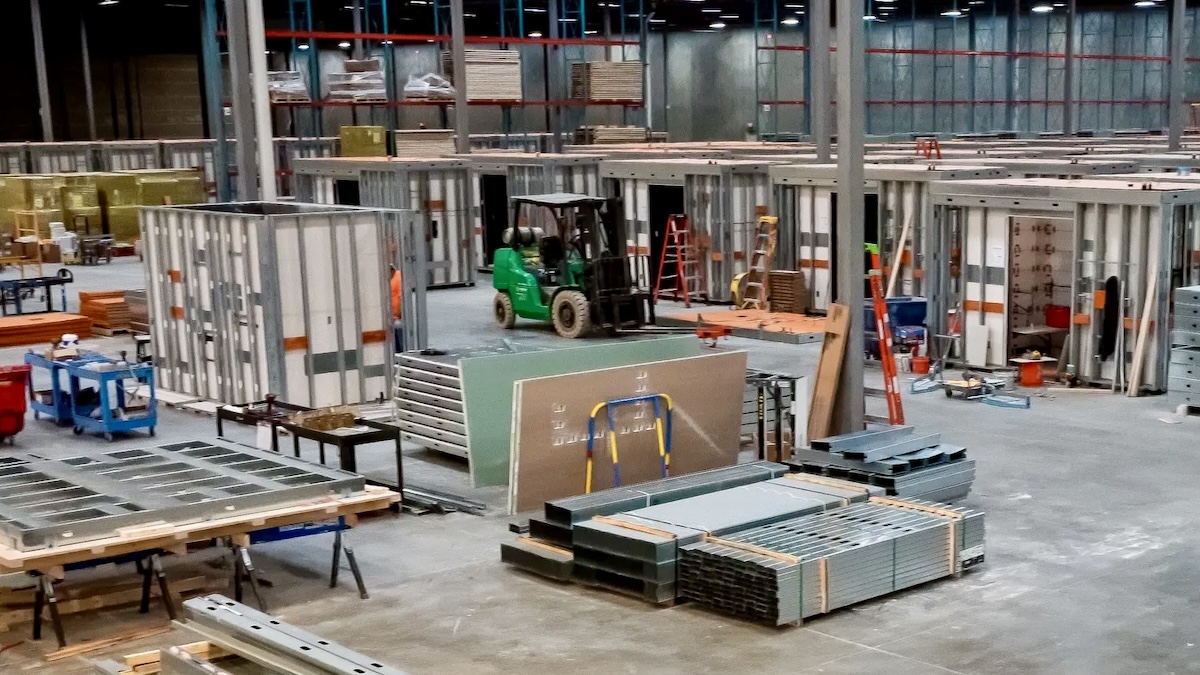
T.J. Wies Contracting prefabricated 277 bathroom pods and 224 headwalls for a healthcare project in St. Louis. Image courtesy of T.J. Wies
3. Noncombustible Material Reduces Fire Risk
Steel does not burn, reducing fire risk during construction. Crews avoid delays, shutdowns and safety incidents tied to combustible materials. This keeps workflows consistent and limits exposure to unplanned hazards. Fewer disruptions also reduce high-risk situations for workers and responders. CFS helps maintain steady, safer job site operations.
Surge in Fires: The Case for Steel Framing
Download this free article brief exploring the rise of fires in mid-rise wood construction across the U.S., highlighting incidents in California and Texas.
The report outlines the key advantages of steel framing as a noncombustible alternative to significantly reduce fire hazards.

4. Lighter Materials Reduce Lifting Risk
CFS offers a high strength-to-weight ratio, making materials easier to lift and position. Crews can handle many components without heavy equipment. This reduces strain and lowers the risk of lifting injuries. Lighter materials also improve maneuverability in tight or elevated areas. Workers maintain better control during installation, improving job site safety.

Cold-formed steel (CFS) framing offers a strength-to-weight ratio that surpasses wood and concrete. Image provided by FRAMECAD.
5. Fewer Adjustments, Safer Installs
Manufacturers produce CFS to strict tolerances, delivering straight and uniform members. Crews install components with minimal field adjustments. This reduces cutting, rework and the need for on-site modifications. Predictable materials improve planning and sequencing. As a result, teams reduce errors and improve safety.
6. Material Stability Improves Safety
Steel framing resists mold, rot, termites and moisture damage, so it remains stable on the job site. Crews do not need to manage materials that weaken or change condition during storage or installation. This reduces the risk of damaged components or unexpected issues in the field. Fewer damaged materials also mean less rehandling and replacement work. As a result, teams maintain safer and more predictable job site conditions.

R.A. Smith designed modular pods for the research lab at the Cleveland Clinic. Workers at an easy time move pod panels.
7. Cleaner Sites, Safer Crews
Precut studs and precision manufacturing cut down on waste from the start. Crews make fewer cuts in the field, so there is less scrap to manage. A cleaner job site improves visibility and reduces trip hazards. It also makes it easier for crews to move materials and stay organized. Less clutter helps the job run safer and more efficiently.
8. Better Coordination Through Digital Planning
Teams use Building Information Modeling with CFS to plan projects before work begins. By modeling the full structure, crews identify conflicts and resolve issues early. This reduces the need for on-site adjustments and last-minute changes, where risks are higher. Better planning also limits delays and keeps crews working in a steady, controlled sequence. With fewer surprises and clearer direction, teams reduce rework and raise job site safety conditions.

BIM streamlines cold-formed steel (CFS) framing by integrating design, engineering and manufacturing, allowing for automated, accurate 3D modeling.
9. Dimensional Stability Improves Structural Reliability
CFS does not shrink, warp or split like traditional materials. Crews rely on consistent material behavior during installation. This stability reduces unexpected movement and alignment issues. Assemblies remain true to design throughout construction. Reliable performance helps crews work safely and efficiently.
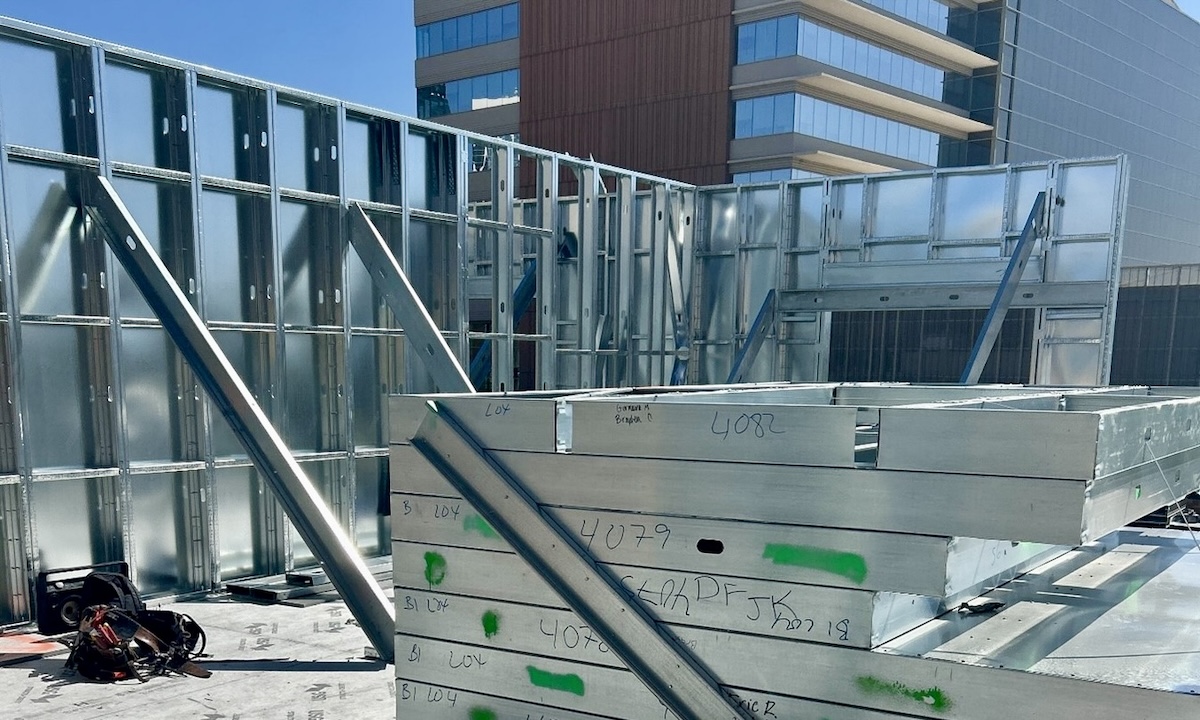
On an award-wining Industrialized Construction Solutions project, workers could move unsheathed, light-weight wall panels by hand.
10. Certification Improves Quality and Reduces Risk
The Steel Framing Industry Association (SFIA) certification programs verify that cold-formed steel products meet building code requirements and perform as intended. Third-party audits and ongoing inspections ensure consistent manufacturing quality and compliance. This reduces the risk of material defects, installation issues and job site failures. Certified products also give contractors and inspectors greater confidence in system performance from design through installation. By improving quality control and preventing issues before they occur, certification supports safer and more reliable job sites.
Building Safer with Steel
Cold-formed steel framing helps contractors raise job site safety by improving control, reducing labor exposure and minimizing common hazards. As the industry prioritizes safety, steel framing remains a practical and proven solution.
The Steel Framing Advantage
Cold-formed steel (CFS) leads the way as the preferred framing material for prefabricated structures for multiple reasons. CFS is:
- A pre-engineered material that can be manufactured to exact lengths
- Dimensionally stable and does not expand or contract with changes in moisture content
- Lightweight compared to wood and concrete
- Resilient and will not warp, split, crack or creep when exposed to the elements
- Sustainable and 100% recyclable
- Durable and has a high tensile strength
- Non-combustible and is a safeguard against fire accidents
Additional Resources
- Cold-Formed Steel (CFS) Framing 101: A Practical Guide for Designers, Builders and Owners
- eBook: Strength in the Face of Disaster: How Cold-Formed Steel Framing Keeps Buildings Safe
- 10 Ways Steel Framing Solves Modern Construction Challenges