
Image provided by FRAMECAD, an SFIA member.
In 2024, the United States endured 27 weather and climate disasters with losses topping $1 billion each. Smaller events added hundreds of billions of dollars in damages. In the face of such volatility, building professionals and homeowners now seek more resilient materials that can withstand hurricanes, wildfires and other natural disasters.
In a recent Apartment Therapy article, “Wood-Framed Homes Are Being Replaced with Something Far More Practical (And Sustainable!),” content strategist and journalist Amanda Hoyer raised a critical question: why are most homes still built with wood framing when more durable and sustainable alternatives, such as cold-formed steel (CFS) framing, are readily available?
Hoyer’s reporting offers a valuable lens to examine not only the shortcomings of wood framing, but also the opportunities that steel provides for building stronger, safer and more sustainable homes as climate risk escalates.

Researchers at UC San Diego tested a 10-story prefabricated cold-formed steel (CFS) structure—the tallest ever on a shake table—to explore new height limits for CFS buildings in seismic zones.
Limits of Wood
For decades, wood has been the default framing material for American homes.
“93% of new homes are still built with traditional stick frames, and they’ve been a hallmark of U.S. construction since after World War II,” says Hoyer.
Since the 1940s, the climate, economy and demands on housing have changed dramatically. Stronger wildfires, hurricanes and tornadoes now drive up insurance premiums. Despite their history, wood-framed homes no longer match today’s environment.
“Traditional wood-framed homes can only withstand winds up to 135 mph, which is no match for a Category 4 hurricane, with winds over 130 mph, or an F2 tornado, with winds up to 157 mph,” says Hoyer. “That’s not to mention fast-spreading wildfires that ignite homes from radiant heat alone.”
Recent events prove the risks are real.
“Since 2019, the United States has experienced 115 separate billion-dollar weather and climate disasters, adding up to $746.7 billion in damage,” says Hoyer.
This means millions of homes remain at constant risk. Wood no longer meets today’s durability demands.
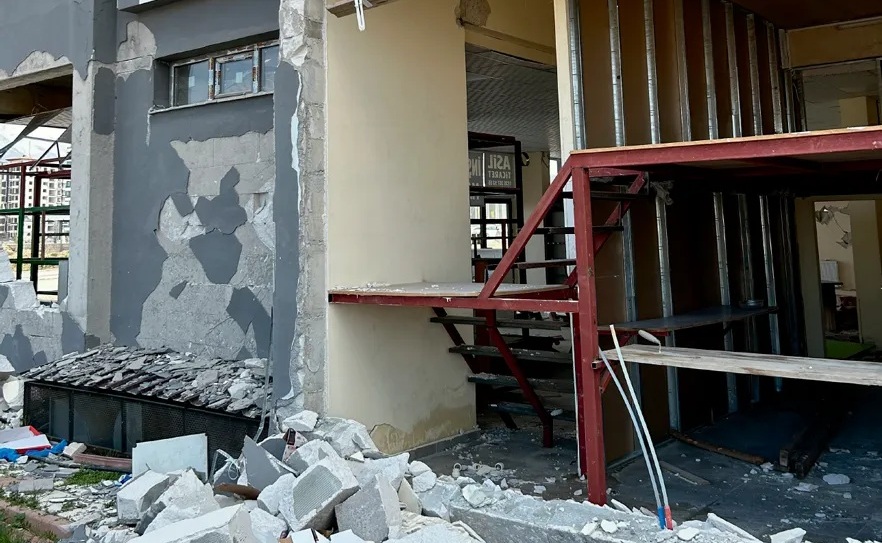
In many areas of the recent Turkey earthquake, cold-formed steel (CFS) framed walls of gypsum and steel survived with very little damage.
Fire Safety: 5 Reasons to Use Steel
1. Steel is Noncombustible
Steel can’t burn, because it contains no elements that can serve as fuel.
2. Steel Maintains its Noncombustibility
Steel remains noncombustible throughout the entire lifecycle of a building — during construction, occupation and renovation and repair.
3. Steel Framing Reduces Fire Risk to Workers and Occupants
Fire-rated walls and floors help contain flames and preserve the integrity of a structure.
4. Steel-Framed Buildings Reduce the Impact on Municipal Fire Services
Fires have strained local fire departments, prompting many municipalities to adopt site-safety regulations for combustible buildings.
5. Steel-Framed Buildings Tend to Cost Less to Insure
CFS framing saved $1.32 million in builders risk insurance premiums over the 24-month construction of a four-story, 400-unit hotel — plus $66,000 annually in property insurance premiums compared to wood framing.
Steel Framing, Future-Proof Option
Although primarily used in commercial construction, CFS (also called light-gauge steel) debuted in residential projects at the 1933 Chicago World’s Fair.
Here, the “home of the future” exhibit featured three homes that made extensive use of steel framing. These included the General Houses home, the Armco-Ferro House and the Stran-Steel House sponsored by Good Housekeeping.
Although it has taken some time, professional builders are rediscovering steel for a variety of reasons. Unlike wood, steel does not rot, warp, attract pests and is noncombustible. It delivers the strength needed to face today’s climate reality.
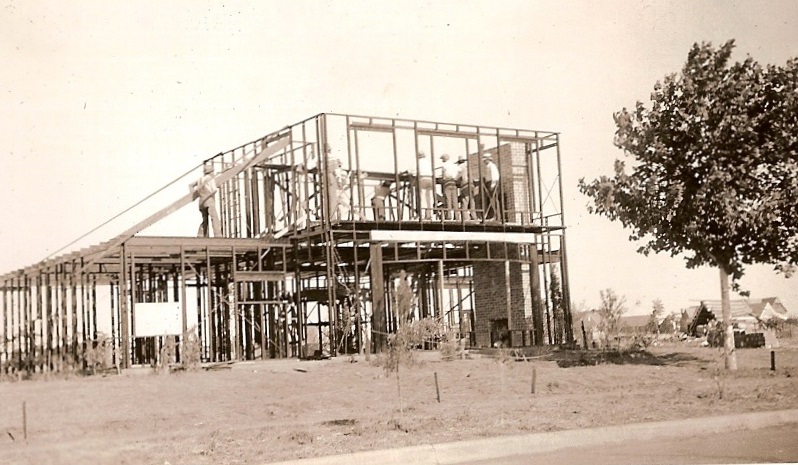
Cold-formed steel (CFS) framing made its grand debut in 1933 at the Chicago World’s Fair. The Good Housekeeping/Stran-Steel House “Home of the Future” was completely framed with steel.
“Steel is a powerful alternative to wood framing; it’s strong and fire-resistant and can withstand winds up to 150 mph,” says Hoyer.
FEMA backs this up, reporting that steel- and concrete-framed homes can withstand wind speeds 60–80 mph greater than wood. Beyond resilience, steel offers environmental benefits.
Framing a single wood home requires 40 to 60 mature trees, while the same home can be built with recycled steel, often sourced from end-of-life cars.
Builders can turn waste into new housing stock by using cold-formed steel (CFS), reducing deforestation while recycling existing resources.
Health, Safety, and Long-Term Value
CFS delivers more than just disaster resilience. Its unique properties help homeowners achieve healthier indoor environments and long-term cost savings.
“Steel frames are also termite-proof, mold-resistant, and more fire-safe than wood-framed homes and more resistant to extreme weather,” says Hoyer. “They also can have lower maintenance costs and insurance premiums — which, over time, leads to cost savings.”
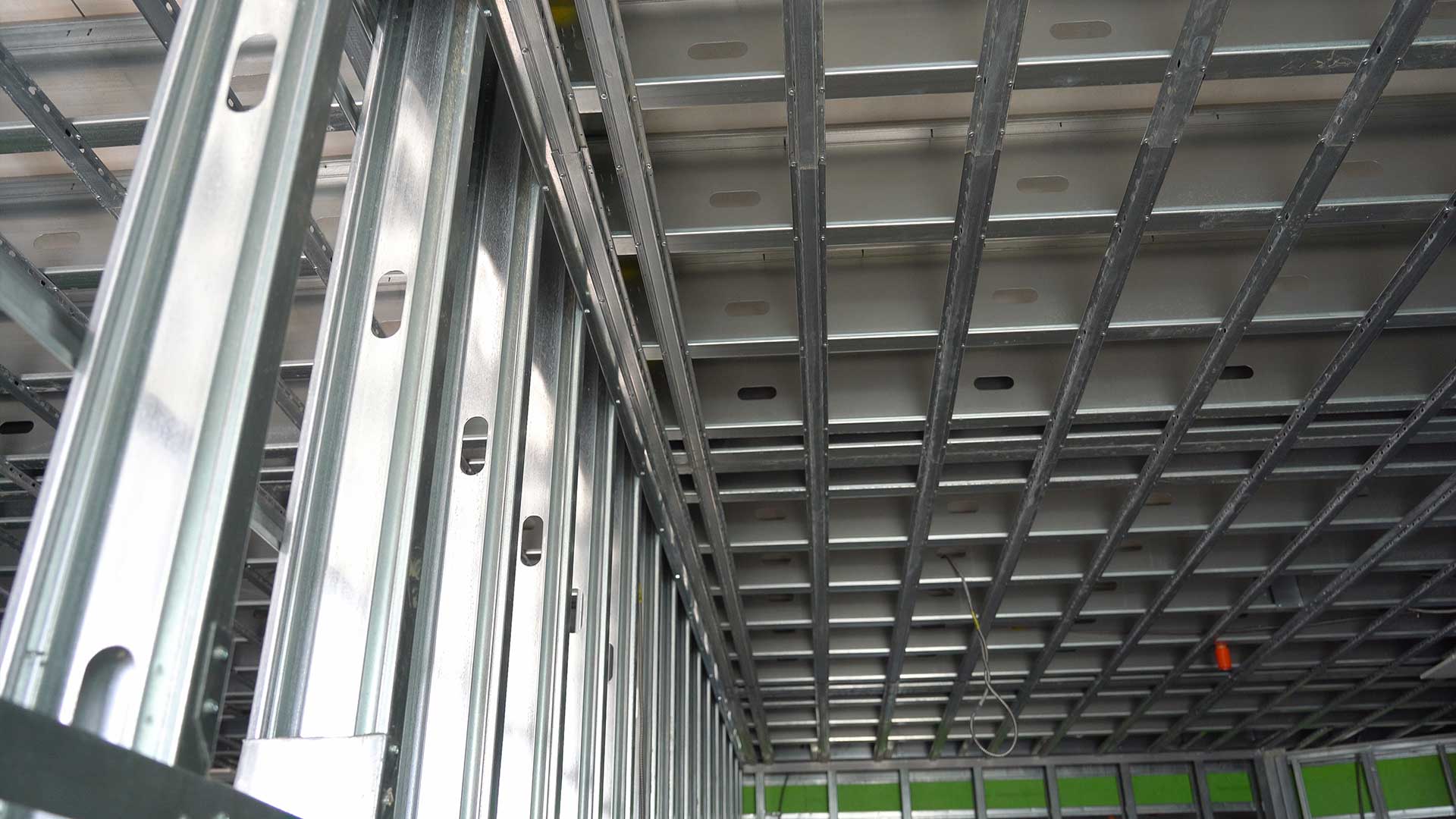
While wood provides organic material for mold to grow, steel framing prevents it and produces healthier structures.
Steel framing also supports better indoor air quality, creating healthier living environments for homeowners.
Homeowners increasingly prioritize wellness, making better air quality especially important in their housing choices. Add in steel’s resistance to pests, mold and fire, and the result is a safer home with fewer repair costs over time.
“Unfortunately, while these framing materials are much more durable than wood, they cost much more,” says Hoyer. “One report estimates a steel-framed home costs about 14.2% more than an identical wood-framed home — and for good reason, given how sturdy they are.”
Those costs are offset by reduced repairs and insurance savings. Longer building lifespans add even more value. Choosing a steel home means investing in stability.
Addressing the Challenges
Critics often point to cost as a major barrier to steel adoption. But this is a snapshot in time. As more builders adopt CFS, costs will fall. Scaling up manufacturing will accelerate that trend. Prefabrication and modular methods already reduce waste and accelerate timelines.
“These aren’t deal-breakers per se, but they definitely require up-front planning,” says Hoyer, referring to thermal bridging — steel’s tendency to conduct heat.
With modern insulation techniques and continuous insulation systems, builders can mitigate this challenge and deliver high-performance, energy-efficient homes.
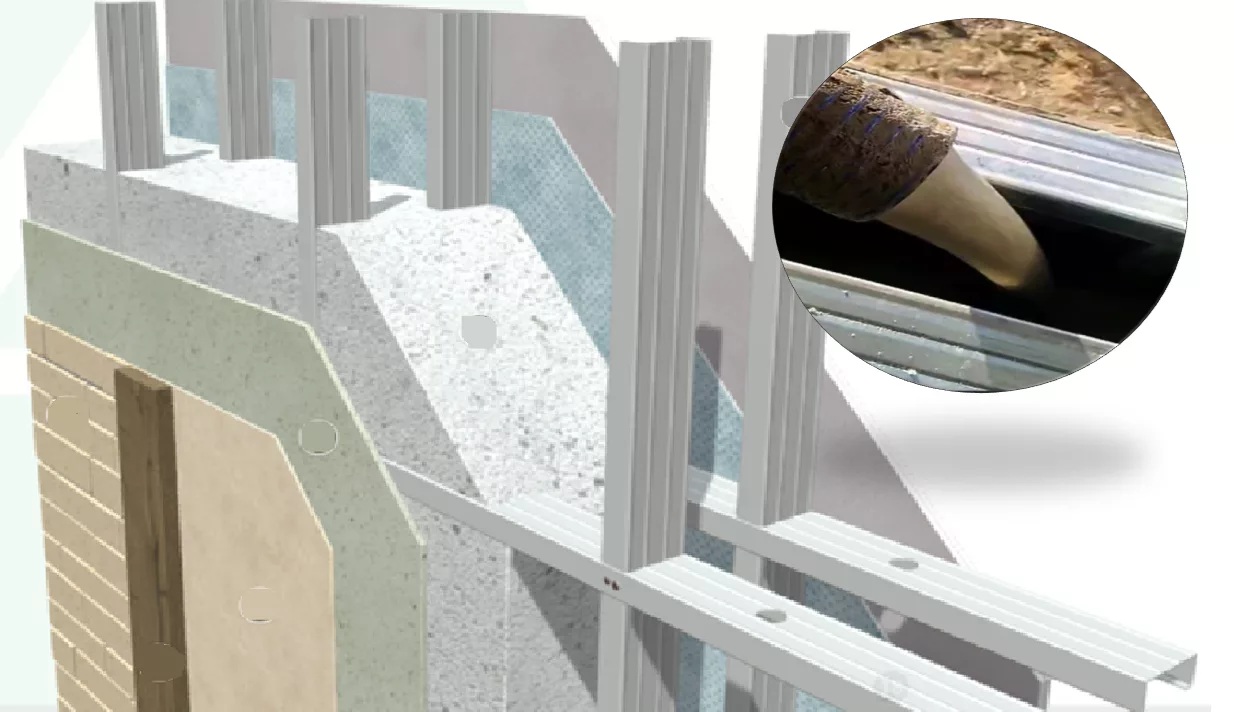
SFIA member Scottsdale Construction Systems cold-formed steel (CFS) technology delivers innovative thermal solutions for use in cold climates.
The Steel Framing Advantage
Cold-formed steel (CFS) leads the way as the preferred framing material for prefabricated structures for multiple reasons. CFS is:
- A pre-engineered material that can be cut to exact lengths
- Dimensionally stable and does not expand or contract with changes in moisture content
- Lightweight compared to wood and concrete
- Resilient and will not warp, split, crack or creep when exposed to the elements
- Sustainable and 100% recyclable
- Durable and has a high tensile strength
- Non-combustible and is a safeguard against fire accidents
Lessons From Abroad
In much of the world, steel is not the alternative, it’s the standard.
“Countries like Japan, Germany and the Netherlands have long favored steel and concrete for their seismic resilience and overall durability,” says Hoyer.
Even within the United States, Hawaii leads the way, with 72% of homes built using steel framing. In regions where hurricanes, earthquakes and termites pose constant threats, steel has proven itself as the material of choice.
Looking abroad, it’s clear that the U.S. reliance on wood is not the only path. Many countries have already turned to steel and are benefiting from its strength, resilience and long-term durability.
Sustainability and the Bigger Picture
In the era of climate accountability, sustainability matters as much as strength. Steel is one of the most recycled materials in the world and can be reused without losing its strength.
“Some experts say that steel in particular is far more recyclable than wood, making it a more sustainable material over the lifetime of use,” says Hoyer.
The case for CFS also aligns with broader goals of reducing embodied carbon in construction. Each steel-framed home means a stronger building and less reliance on deforestation-driven wood supply chains.
SFIA’s new industry-average EPD provides independently verified environmental impact data for cold-formed steel framing products.
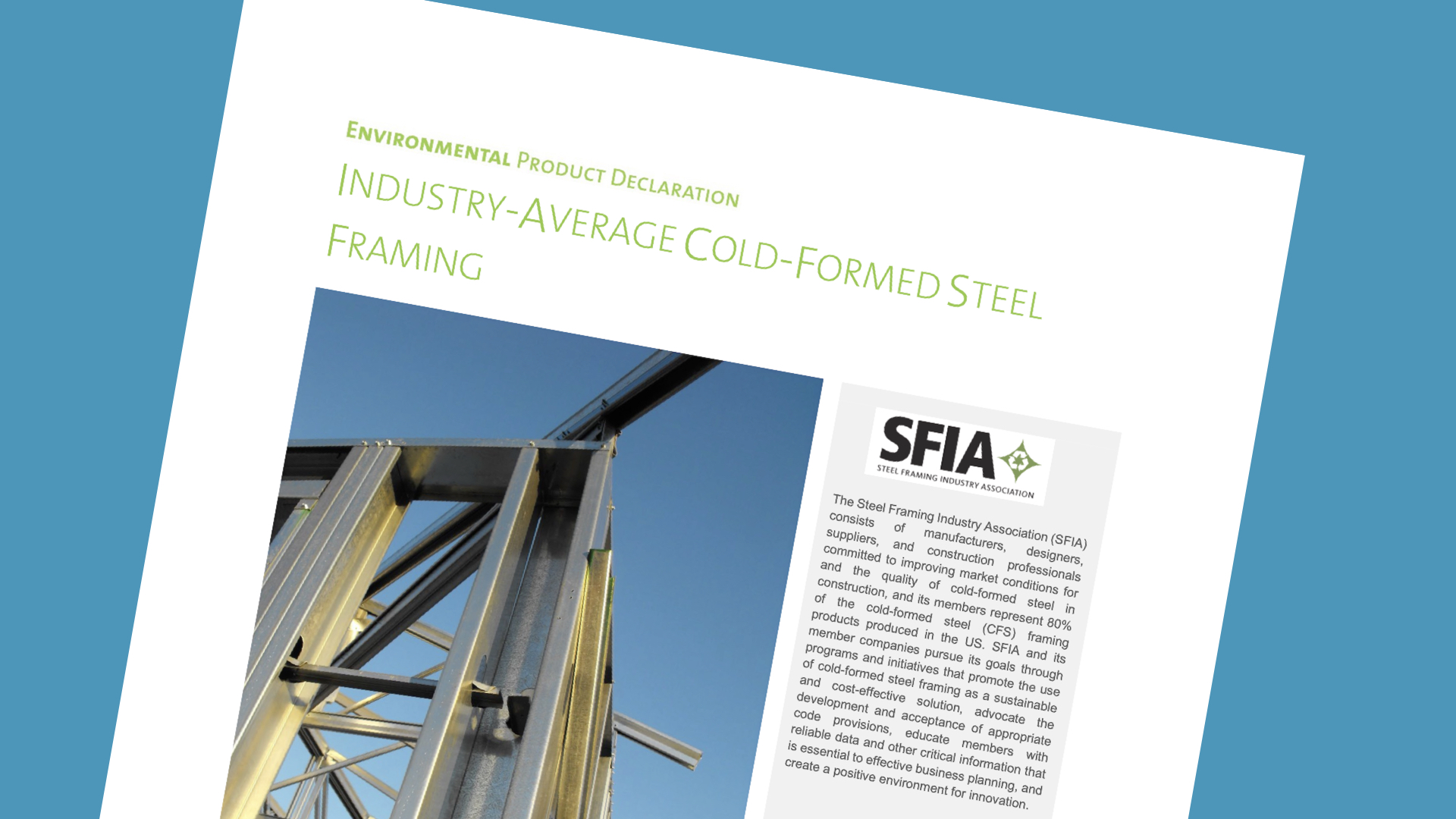
SFIA EPD
The Steel Framing Industry Association (SFIA) Environmental Product Declaration for Cold-Formed Steel Framing (EPD) is a must-have tool for contractors, building owners, architects and others who strive to deliver advanced building designs that meet the latest LEED™ and other sustainable rating systems, programs and standards.
The SFIA EPD for CFS Framing can be seamlessly integrated into project specifications as an option with company-specific EPDs. SFIA offers a Specifications Review Service for steel framing, which is a completely free checkup.
Breaking Free from Wood’s Inertia
The evidence is overwhelming, steel framing outperforms wood in durability, sustainability and long-term value. Yet as Hoyer asks, why are most homes still built with wood? The answer lies in inertia, codes and cost structures — not in material performance.
“As energy costs rise and climate risks mount, buyers are asking better questions — and builders are responding,” says Hoyer. “Designing for disaster also doesn’t have to mean sacrificing style. Durable materials open the door to architectural flexibility, smart systems and longer-lasting homes.”

John Farrow, Farrow Development, is rebuilding parts of Santa Rosa, California, after wildfires destroyed thousands of homes, with cold-formed steel (CFS) framing solutions.
The Future of Housing Demands Steel
The storms are getting worse. The risks are rising. And yet, 93% of U.S. homes are still framed in wood. As Hoyer’s reporting in Apartment Therapy makes clear, the old way is failing in today’s climate reality. CFS framing offers a way forward, one that saves lives, protects investments and ensures homes are built for the world we live in now, not the one we left behind.
The question is no longer whether we can afford steel-framed homes. It’s whether we can afford to keep building with wood.
Additional Resources
- Homebuilders Embrace Steel as an Alternative to Wood Framing
- Why Are We Still Building Homes Like It’s 1832?
- 5 Ways Steel Framing Optimizes the Construction Supply Chain