
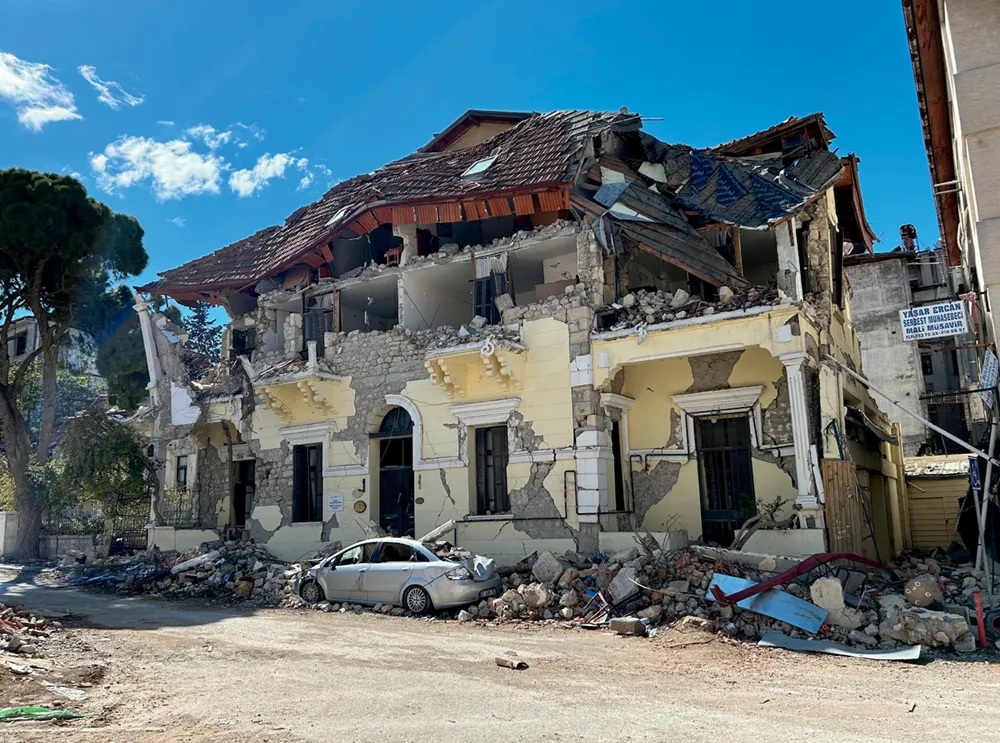
Image: In many areas of the Turkey earthquake, cold-formed steel (CFS) framed walls of gypsum and steel survived with very little damage, while nonstructural masonry walls collapsed, leading to costly damage and death.
Resilience in construction refers to a building’s ability to remain robust, resourceful and capable of recovering quickly from disruptive events. It encompasses safety, security, durability, energy conservation, and environmental friendliness, and it can also be applied to specific materials such as cold-formed steel (CFS) framing.
In an article from Construction Dimensions, “Resilience: How Strong Should It Be?,” Don Allen, SFIA executive director, highlights how stricter codes, a focus on functional recovery and upgrades to existing structures can significantly reduce reconstruction costs and strengthen community resilience – with CFS leading the way as a solution that outperforms heavier systems during natural disasters.
The intent of building codes is and always has been life safety. But more building owners and local jurisdictions are considering stricter codes as one way to make recovery after disasters faster and less costly.
Evolving Purpose of Building Codes
Building codes have traditionally focused on life safety by ensuring structures are safer and less likely to cause illness or injury. However, codes are now being used to extend beyond life safety, addressing financial implications of natural and man-made disasters.
Governments and code development bodies are increasingly embedding cost-reduction and resilience provisions into codes.
“But, there has been some push back since more stringent codes come with a higher price to builders, developers and building owners,” says Allen.
An event like the recent Turkey earthquakes highlight how inadequate codes, or lack of enforcement, lead to higher death tolls and greater rebuilding expenses. These earthquakes claimed over 50,000 lives and destroyed or damaged more than 4 million buildings.
After surveying the damage, it was concluded that if more structures had been built to code and fewer builders had been allowed to purchase code amnesty, there would have been significantly fewer casualties and a faster, less expensive recovery.
Virtual Symposium: Business Case For Resilience (March 24)
On March 24, from 11:00am-12.30pm ET, ARISE-US and ASTM International, will be hosting a virtual symposium entitled “The Business Case for Resilience – A Call to Action”.
This 90-minute virtual event will showcase perspectives, tools, and techniques to enable an accurate assessment of needs, as well as cost/benefit analyses, for designing resilience into real assets.

Stricter Codes, Lower Costs
Adopting stricter codes, focusing on functional recovery and upgrading existing buildings can significantly reduce reconstruction costs and strengthen community resilience.
A recent study from the National Institute of Building Sciences showed that on average, adopting and building to the model codes saves $11 in recovery and reconstruction costs for every $1 spent implementing code requirements.
The study further emphasizes that given the escalating frequency of disaster events and the rising cost of recovery nationwide, mitigation measures are essential for protecting property, preserving financial resources, and saving lives.
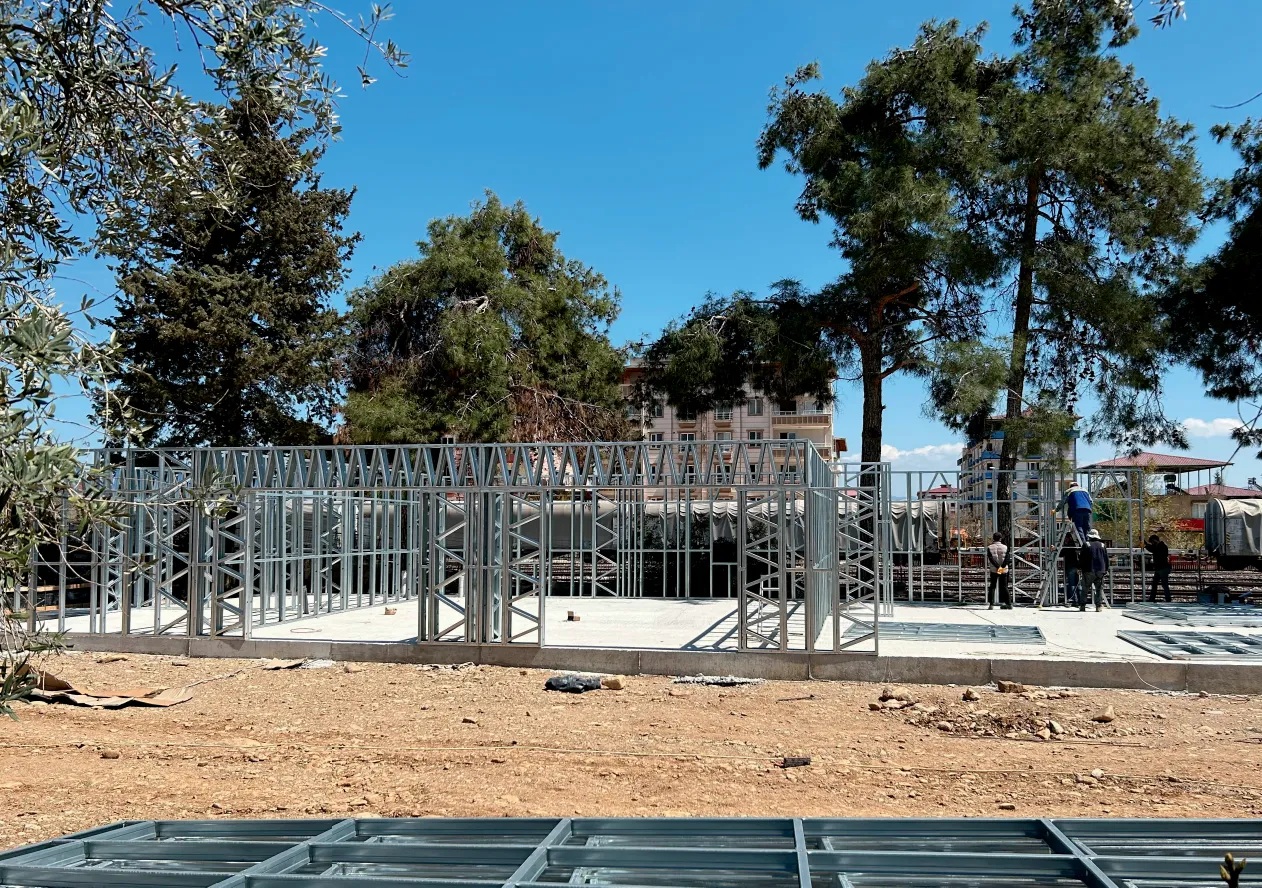
Trends toward off-site construction can help speed the functional recovery of a community since wall and floor panels can be built in areas not compromised by the disaster.
5 Reasons CFS Contributes to Resilience
- It’s highly ductile. CFS can easily bend or stretch without breaking when force is applied. This gives it a higher degree of resistance to lateral loads, uplift and gravity loading, such as those imposed on a structure by seismic or high wind events
- CFS is non-combustible. According to the Steel Framing Industry Association, both load-bearing and non-load-bearing CFS-framed assemblies are fireproof up to four hours when subjected to tests conforming to ASTM E119
- CFS is durable. CFS is corrosion resistant. It does not retain moisture and will not harbor mold growth. CFS uses zinc or similar coatings to boost durability and will last hundreds of years before its corrosion resistance deteriorates
- CFS is impervious to pests. CFS is one of the few building materials completely impervious to termites and other pests in any climate or building type
- CFS is a highly sustainable material. Steel framing contains on average a minimum of 25% recycled content and is 100% recyclable at the end of its life
Steel in Resilient Construction
CFS plays a critical part in enhancing a building’s ability to withstand disasters.
“Wall and ceiling construction with cold-formed steel framing and gypsum assemblies not only is cost-effective but performs better than heavier systems in earthquakes,” says Allen. “Light-frame construction saves weight, allowing additional stories to be added to existing buildings with little or no foundation upgrade.”
CFS assemblies offer durability, helping mitigate damage from storms, earthquakes and floods. Steel framing also speeds the recovery phase. Prefabricated wall and floor panels can be transported in after a disaster, minimizing downtime. Renovating older buildings with steel framing can lower embodied carbon, reduce demolition waste and meet stricter modern codes more easily.
Read the full article from Construction Dimensions.
One-Demand CFS Resilience Webinar
Resilience Amidst Uncertain Times: Preparing The Cold-Formed Steel Industry
In an exclusive on-demand webinar from the Cold-Formed Steel Engineers Institute (CFSEI), Don Allen, SFIA executive director, discusses strategies for strengthening resilience through cold-formed steel (CFS). He examines how the supply of framing materials has been affected and suggests ways that designers and builders can better prepare for the next “unprecedented” event.
This presentation includes historical context, design methodologies and reflections on the responsibilities of industry professionals. Allen also highlights relevant literature and resources, offering practical activities to support preparedness planning.
1.5 continuing education credits are available for completion of this course.

Additional Resources
- eBook: Strength in the Face of Disaster: How Cold-Formed Steel Framing Keeps Buildings Safe
- Top 5 Reasons Steel Framing Can Keep a Building Safe During an Earthquake
- Wildfire Resilience with Cold-Formed Steel: Insights from NASH’s Ken Watson