
BuildSteel™ is tracking the sustainability initiatives of Steel Framing Industry Association (SFIA) members and their partners. Here is some recent sustainability news related to the cold-formed steel (CFS) framing industry.
Steel Framing Shapes Net-Zero Home Project
Prefab home manufacturer Dvele, a customer of SFIA member Scottsdale Construction Systems, has built the VISION House Transcend in Colorado’s San Juan Mountains — a high-performance demonstration home. Designed to operate 87% more efficiently than a typical new home, the project showcases net-zero design powered by solar energy. The home uses precision offsite construction to support an airtight envelope and enhance overall performance and resilience.
Scottsdale’s Scotpanel roll-forming machines fabricated and produced the steel framing for the VISION House Transcend. The equipment delivered accurate, repeatable manufacturing of cold-formed steel (CFS) components engineered for project-specific design demands. The team integrated design data directly into roll forming production. This approach produced steel framing to exact project requirements. It supported efficient assembly and long-term structural performance.
The project team selected recycled CFS framing to increase durability and reduce embodied carbon throughout the structure. They also chose a carbon-negative magnesium oxide foundation. The foundation absorbs carbon dioxide during curing. Together, these systems create a home that withstands wildfires, high winds and seismic events.
“Transcend is a model for how the building industry can address climate, affordability and health challenges,” says Kurt Goodjohn, CEO of Dvele.
The home now serves as a living laboratory. It generates data on energy use and grid interaction. The project demonstrates how prefabricated steel framing supports climate-ready housing.
Advanced Roll-Forming Technology
Advanced roll-forming technology manufactures prefabricated steel framing for high-performance residential construction. Project teams gain advantages when they design and fabricate steel framing specifically for each project. This approach outperforms purchasing standard members and modifying them in the field. Project-specific roll forming produces each stud, track and structural component to precise dimensions. This process reduces material waste and eliminates time-consuming site modifications. It improves build accuracy and supports faster assembly. CFS framing delivers predictable performance for high-performance homes like the VISION House Transcend. Learn more about Scottsdale’s advanced roll forming machines and technology at scottsdalesteelframes.com.
U.S. Steel to Build DRI Plant in Arkansas
United States Steel Corporation, a leading steel producer and an SFIA member, announced plans to build a direct reduced iron plant on the Big River Steel Works campus in Osceola, Arkansas. The project will advance the company’s strategy for efficient, lower-emission steel production. The facility will support steelmaking operations across the company’s growing Mini Mill segment.
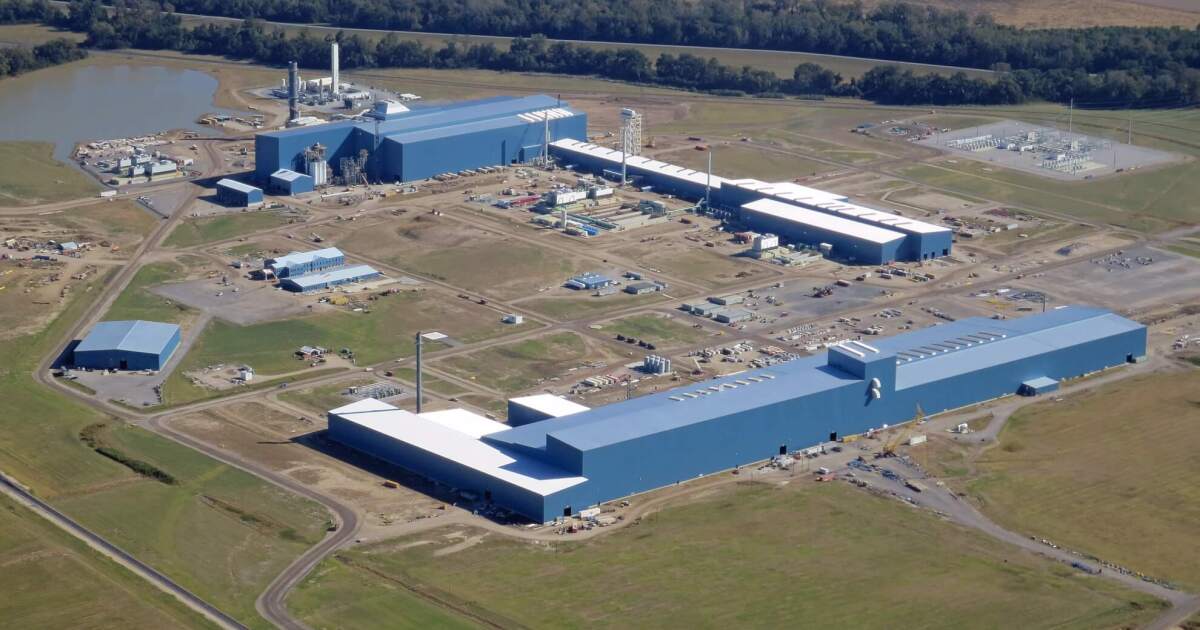
U.S. Steel announced plans to build a direct reduced iron plant on the Big River Steel Works campus in Osceola, Arkansas.
The new plant will rely on DR-grade pellets from U. S. Steel’s Minnesota Ore operations. It will produce high-quality DRI feedstock for electric arc furnace steel mills. The project strengthens domestic raw materials sourcing and reinforces a reliable U.S. supply chain.
“Our new direct reduced iron plant will propel our Mini Mill segment toward industry leadership in advanced, sustainable steel production,” said Amanda Malkowski, U. S. Steel spokeswoman.
Steel and Nippon Steel will collaborate on the project as part of their broader strategic partnership. The company has not released a construction timetable for the new facility.
Green Steel Could Help Australia Build Cleaner, Faster
Australia faces twin pressures from its housing shortage and the rising climate impacts of new construction. The country must grow its housing supply. Yet, doing so through traditional construction methods produces considerable emissions. Green steel offers a path to build faster while lowering the carbon footprint of new housing, according to The Conversation, an independent news organization.
“There’s a win-win here,” The Conversation article says. “Australia is well placed to make green steel from its abundant iron ore supplies. This makes it possible to cut emissions while scaling up building efforts using faster prefab and modular factory techniques making use of steel’s strength and exact dimensions.”
In other words, green steel paired with modular construction supports faster, cleaner housing growth across Australia.
- Prefabricated cold-formed steel (CFS) helps builders scale projects efficiently
- CFS framing offers strength and precise dimensions that speed installation and reduce waste
Australian regulators are updating guidance to align modular systems with the country’s National Construction Code. Faster build times strengthen housing supply. And green steel advances climate goals, allowing both priorities to progress together.
Demand remains the key challenge. Initially, green steel still costs more because energy and hydrogen prices remain high. Researchers emphasize that green steel will scale only when builders and governments create consistent demand. Policies such as procurement rules, emissions reporting and the Guarantee of Origin scheme support that shift. If Australia aligns green steel with modular construction, the nation can speed housing delivery and reduce emissions.
Additional Resources
- Update #26 | Sustainability News from Rwanda, Steel Dynamics and Atlas General Construction
- Update #25 | Sustainability News from the University of Waikato, Southeast Asia and Steel Dynamics
- Update #24 | Sustainability News from CFS Home Builders, ArcelorMittal Dofasco and Steel Dynamics
- Update #23 | Sustainability News from U.S. Steel, Steel Dynamics and ClarkDietrich
- Update #22 | Sustainability News from Cleveland-Cliffs, U.S. Steel and the Upcoming Green Steel Summit
- Update #21 | Sustainability News from the EPA, ResponsibleSteel and U.S. Steel
- Update #20 | Sustainability News from ClarkDietrich, ArcelorMittal and U.S. Steel
- Update #19 | Sustainability News from ArcelorMittal, Cleveland-Cliffs and Nucor4
- Update #18 | Sustainability News from U.S. Steel, Nucor and Cleveland-Cliffs
- Update #17 | Sustainability News from ClarkDietrich, Cleveland-Cliffs and U.S. Steel
- Update #16 | Sustainability News from Nucor, Cleveland-Cliffs and the U.S. General Services Administration
- Update #15 | Sustainability News from MRI Steel Framing, U.S. Steel and the U.S. Senate
- Update #14 | Sustainability News from Cleveland-Cliffs, U.S. Steel, and Nucor
- Update #13 | Sustainability News from ArcelorMittal Dofasco, U.S. Steel and Nucor
- Update #12 | Sustainability News from Nucor, U.S. Steel, and Steel Dynamics
- Update #11 | Sustainability News from Steel Dynamics, Cleveland-Cliffs and Carnegie Mellon
- Update #10 | Sustainability News from ArcelorMittal, U.S. Steel and Nucor
- Update #9 | Sustainability News from Nucor, Cleveland-Cliffs and U.S. Steel
- Update #8 | Sustainability News from FrameCAD, Cleveland-Cliffs and ArcelorMittal Dofasco
- Update #7 | Sustainability news from ArcelorMittal, SDI and U.S. Steel
- Update #6 | Sustainability news from Cleveland-Cliffs, Worldsteel and U.S. Steel
- Update #5 | News from Nucor, Cleveland-Cliffs and a New Low-Emissions Steel Coalition
- Update #4 | Steel Framing Industry Sustainability Initiatives
- Update #3 | Steel Framing Industry Sustainability Initiatives
- Update #2 | Steel Framing Industry Sustainability Initiatives
- Update #1 | Steel Framing Industry Sustainability Initiatives