
Remodeling failures rarely start where owners can see them. In kitchens and bathrooms, performance problems often originate behind finished walls — with the wrong choice of framing material.
That’s the message presented in the article, “Avoid These Common Bathroom and Kitchen Renovation Mistakes — How Steel Framing Can Help.” “Common Bathroom and Kitchen Renovation Mistakes” from Australian Steel Framing says that poor planning and poor material choices can lead to walls that move, exposure to moisture and other inconsistencies that compromise finishes and trigger costly callbacks.
In contrast to wood, cold-formed steel (CFS) framing delivers dimensional stability, does not absorb moisture and provides structural reliability that protects high-value kitchen and bath finishes.
Precision Protects Premium Finishes
Kitchens and bathrooms rely on tight tolerances. For example, large-format tile requires flat wall planes. Frameless glass showers demand consistent alignment. Custom cabinetry depends on straight, rigid backing.
“A steel frame provides millimetre-perfect precision, ensuring cabinetry, tiles and walls all align seamlessly,” says Gavin Sharp, director of Australian Steel Framing. “It gives designers the accuracy they need to create clean lines and practical layouts in both bathrooms and kitchens.”
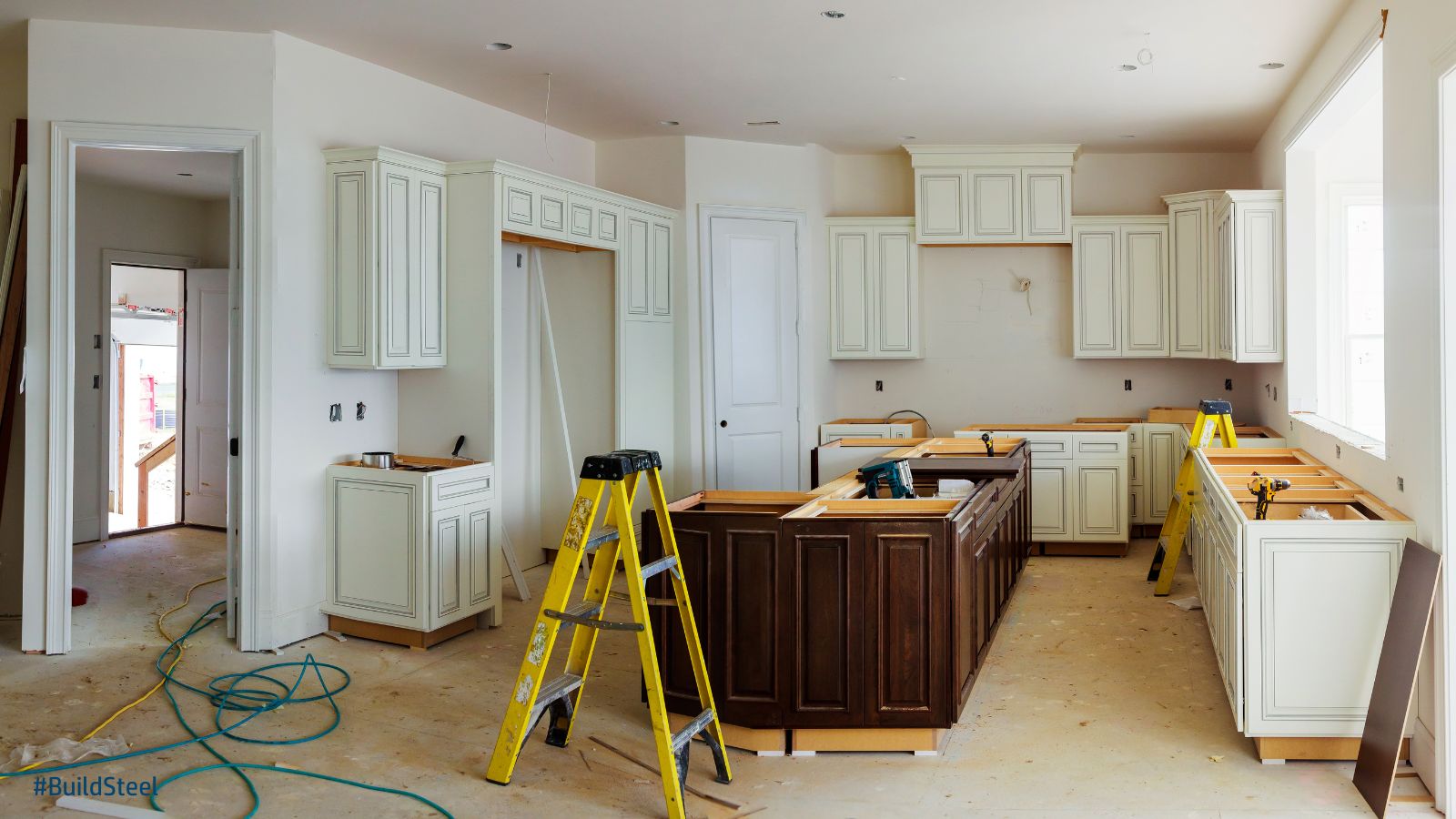
Kitchens demand tight tolerances, with custom cabinetry depending on straight, rigid framing for precise alignment.
Cold-formed steel framing delivers that precision.
- Manufacturers produce CFS members to strict tolerances, reducing field variability
- Contractors spend less time correcting bowed walls and twisted studs
- Tile installers work from flat, stable substrates
- Cabinet installers anchor into consistent structural backing
When finishes cost thousands of dollars per room, framing accuracy protects that investment.
Function Begins Behind the Walls
Kitchen remodeling projects emphasize layout and flow. For example, designers focus on the homeowner’s work zones, which affects the placement of appliances and storage. Therefore, the framing of the kitchen walls needs to structural support these choices. This is where CFS framing serves well. Ultimately, it reinforces the needs of the homeowner.
Also, engineers design steel-framed walls to accommodate wall-hung cabinets, floating shelving and heavy stone countertops. Here again, steel resists splitting under concentrated fastener loads and maintains dimensional stability over time. Thus, cabinets stay aligned. Shelving remains secure. And, the kitchen or bath remodel performs as intended — and for a long time.
The Steel Framing Advantage
Cold-formed steel (CFS) leads the way as the preferred framing material for prefabricated structures for multiple reasons. CFS is:
- A pre-engineered material that can be cut to exact lengths
- Dimensionally stable and does not expand or contract with changes in moisture content
- Lightweight compared to wood and concrete
- Resilient and will not warp, split, crack or creep when exposed to the elements
- Sustainable and 100% recyclable
- Durable and has a high tensile strength
- Non-combustible and is a safeguard against fire accidents
Moisture Resistance Reduces Remodeling Risk
Bathrooms and kitchens expose framing to sustained humidity, condensation cycles and occasional plumbing leaks. Over time, organic framing materials such as wood absorb moisture, expand, contract and gradually deteriorate. The dimensional changes in wood studs and joists creates stress behind finished surfaces, leading to cracked grout lines, shifting cabinetry and compromised waterproofing systems.
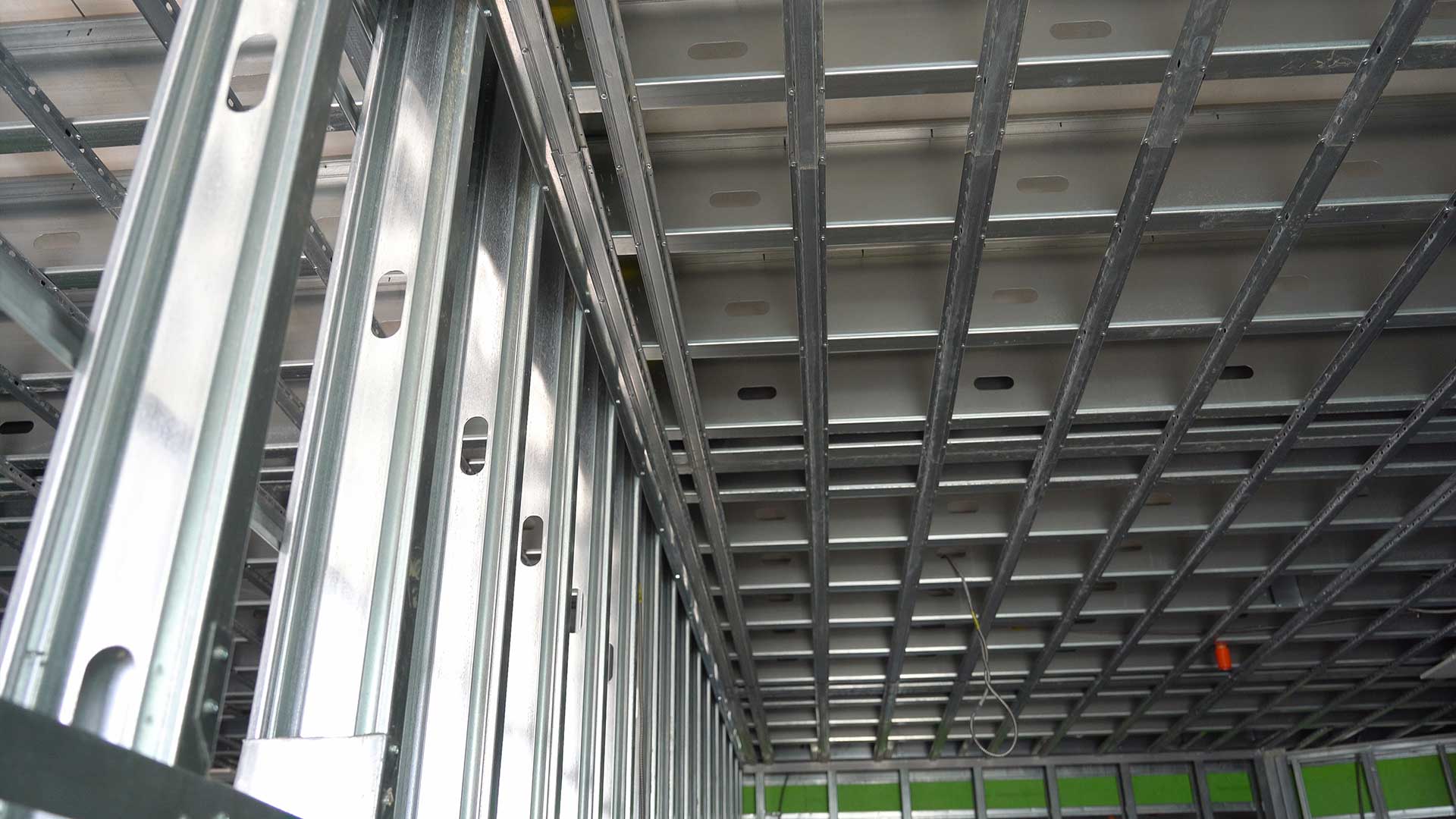
Steel framing does not rot, warp or attract termites, so even if moisture breaches waterproofing, the structure remains stable and will not deteriorate.
“Steel framing does not rot, warp or attract termites,” says Sharp. “So, even if moisture breaches your waterproofing, the structure will not deteriorate.”
Of course, CFS framing does not absorb moisture. It does not experience the expansion and shrinkage cycles associated with organic materials. Its dimensional stability remains consistent across humidity fluctuations, preserving substrate integrity and finish alignment.
Many contractor callbacks trace back to moisture-related movement, including:
- Cracked tile and grout
- Misaligned cabinetry
- Substrate instability
- Hidden moisture damage
Specifically, steel framing eliminates moisture-driven expansion and contraction of the framing system. It improves performance from the inside out, protecting kitchen and bathrooms over time.
Noncombustible Performance Adds Resilience
Kitchens introduce heat, electrical systems and cooking appliances, which have implications on the choice of framing materials used on a project. Multifamily renovations must also consider fire-resistance strategies and code compliance.
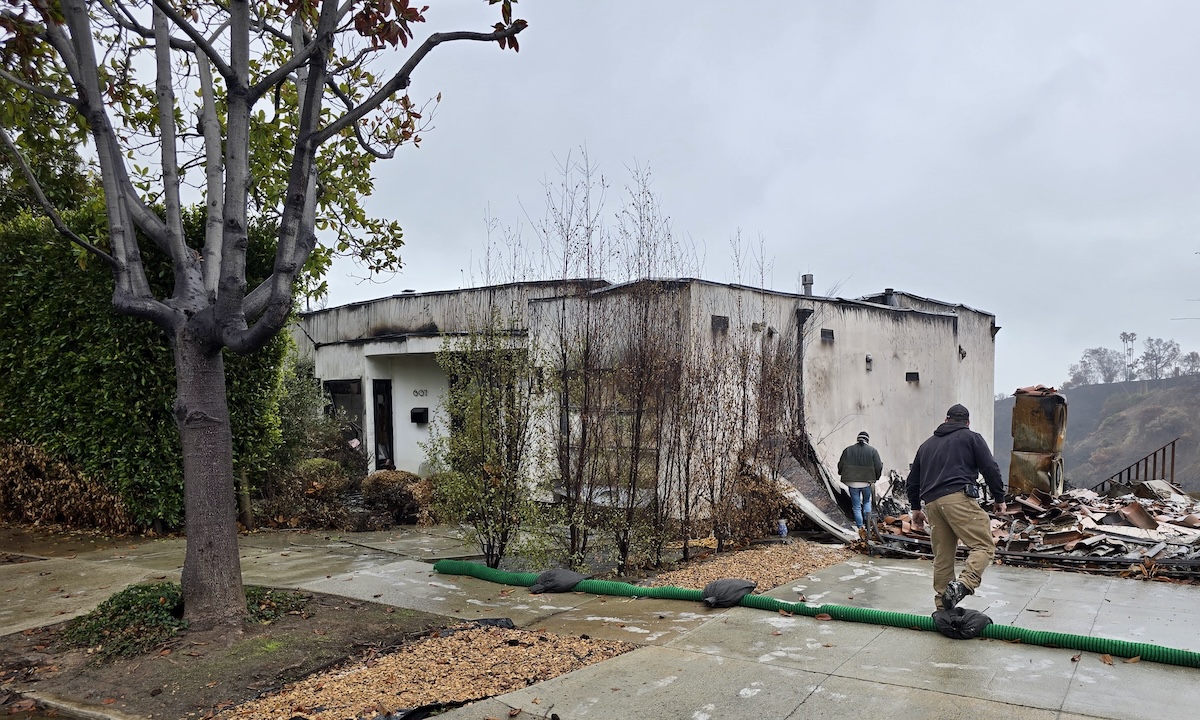
The cold-formed steel (CFS) floor framing, roof framing and wall framing of this home survived the Palisades Fire of January 2025.
CFS framing is noncombustible. It does not contribute fuel to a fire event. For these reasons, use of steel framing in multifamily and mixed-use building remodels support the ability to meet much broader resilience goals.
Clearly, the material choice behind the walls influences risk profiles and the long-term durability of a kitchen or bathroom renovation project. Steel reduces risk profiles without limiting design flexibility, the Australian Steel Framing article says.
Stability Drives Long-Term Value
What about renovations of aging structures? Here, hidden deterioration from pest exposure, moisture intrusion and framing movement may already exist.
In older structures especially, CFS framing can add strength and resilience going forward. Steel does not support mold growth. Steel studs and joists maintain their shape across seasonal temperature and humidity cycles.
For owners and developers, that durability translates into:
- Fewer repair cycles
- Lower maintenance risk
- Greater lifecycle reliability
- Improved renovation return on investment
Performance Begins Behind the Finish
When making material choices for a new kitchen or bathroom, homeowners tend to focus on the choices in tile, stone and fixtures. Designers emphasize the aesthetics. And contractors have too manage the installation.
Structural stability, however, determines whether the visible elements of a new kitchen and bath will endure.
Cold-formed steel framing:
- Delivers precision for high-end finishes
- Supports heavy fixtures and modern layouts
- Resists moisture and movement
- Provides noncombustible performance
- Reduces long-term maintenance risk
For designers and contractors who prioritize strong walls, steel framing is not an afterthought. Steel is the material that protects kitchen and bathroom remodels for the long-term.
“Cold-formed steel (CFS) framing provides the straightest, most stable foundation possible,” says Sharp.
Additional Resources
- Cold Formed Steel Framing Expands Possibilities for Backyard Multilevel Deck
- 12 Tips to Frame Basement Walls with Metal Studs
- Steel Studs Make Bob Vila’s ‘Best Tips’ List