
Housing shortages rarely begin with fire safety in mind. Yet material selection determines how a structure performs when disaster strikes.
In the article, “Enhanced fire protection for buildings and occupants part one: Cold formed steel,” published in the Journal of Commerce, writer John Bleasby examines current housing trends. He explains that North America’s push to accelerate housing production continues to favor traditional stick construction. However, wood burns easily, he says, and it increases the risk of catastrophic loss in fire-prone regions.
“Fortunately, mitigating the potential catastrophic loss of lives and property from fire is possible with materials other than wood,” Bleasby says.
Then, he introduces cold-formed steel (CFS).
CFS framing delivers noncombustible structural performance. Bleasby says CFS improves fire resistance, lowers insurance costs and advances through innovation.
Header image provided by CEMCO, an SFIA member.
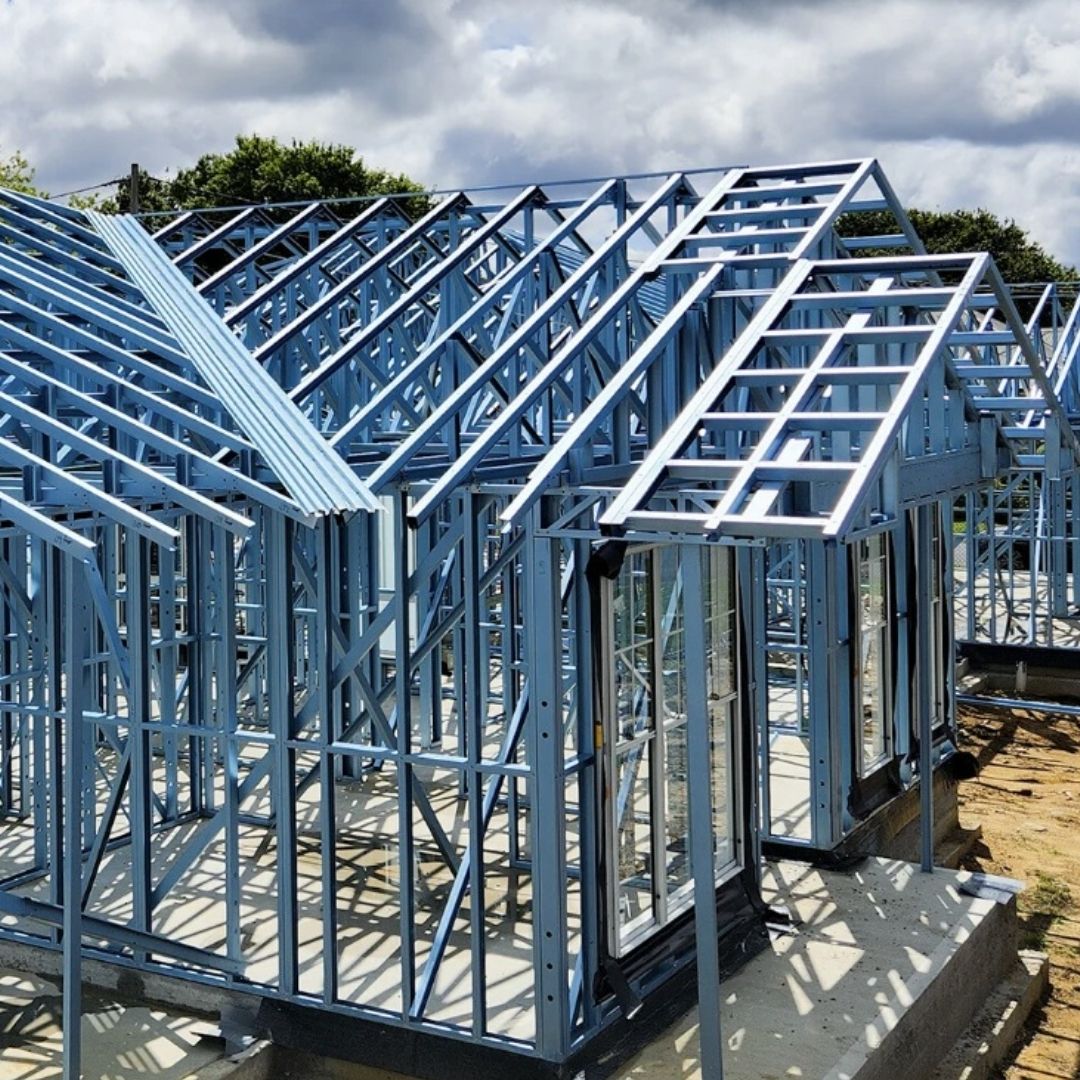
Cold formed steel (CFS) framing delivers noncombustible strength and dependable fire performance for homes built to last. Image provided by FRAMECAD, an SFIA member.
Noncombustible Framing
Manufacturers produce cold-formed steel by shaping thin-gauge sheets at room temperature through precision roll forming. The cold-forming process increases yield strength and maintains tight tolerances. Builders gain a lightweight material with a high strength-to-weight ratio.
- Fabricators deliver prefabricated CFS components ready for installation
- Builders complete framing faster and reduce waste generated during construction
Unlike wood, CFS does not warp, attract pests or require drying after moisture exposure. Producers manufacture CFS from steel that can be recycled again and again without loss of strength.
“However, the fire resistance of CFS is what really pays back both owners and builders,” says Bleasby.
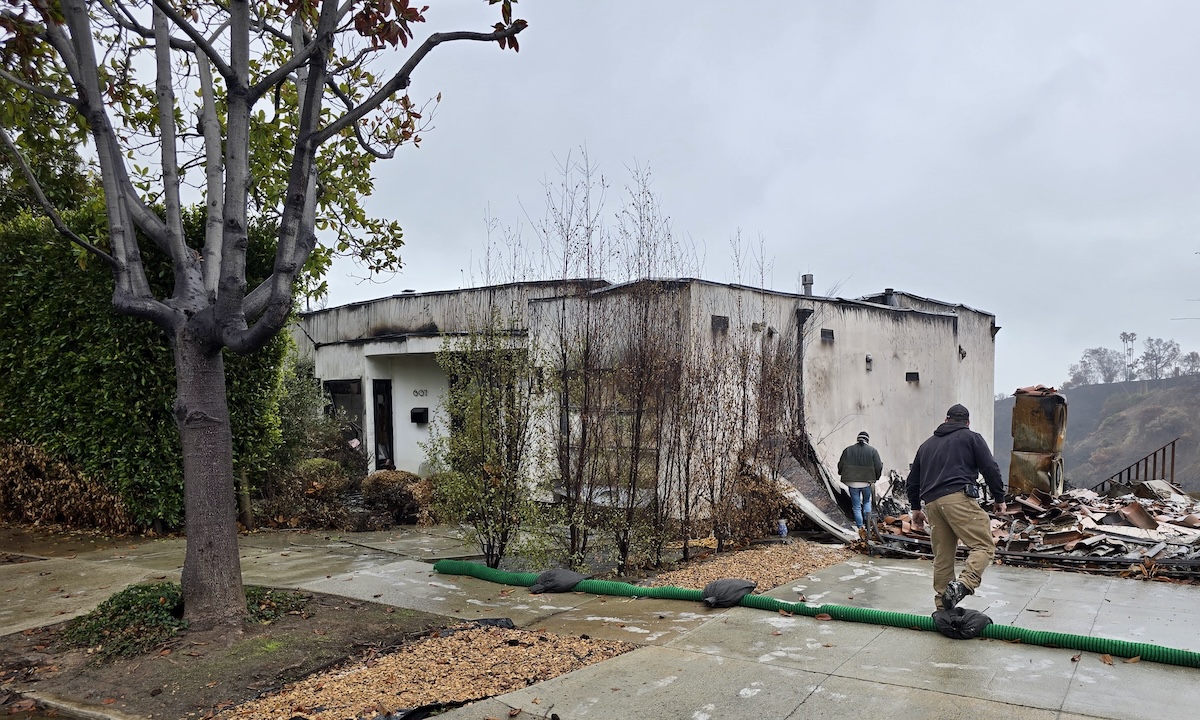
The cold-formed steel (CFS) floor framing, roof framing and wall framing of this home survived the Palisades Fire of January 2025.
Because CFS remains noncombustible, it does not fuel a fire. It maintains structural integrity longer under high temperatures.
“Since time is of the essence during a fire, occupants have an increased opportunity to evacuate, reducing fatalities,” says Bleasby. “Firefighters also have more time to control the fire in order to minimize damage.”
Surge in Fires: The Case for Steel Framing
Download this free article brief exploring the rise of fires in mid-rise wood construction across the U.S., highlighting incidents in California and Texas. The report outlines the key advantages of steel framing as a noncombustible alternative to significantly reduce fire hazards.

Builder’s Risk Premiums Shift Toward Steel
Insurance markets increasingly shape construction decisions. In one six story hotel project, a CFS design carried a builder’s risk premium of about $92,000. A similar wood framed project carried a premium near $450,000. Developers reviewed the pricing and selected steel to capture significant savings.
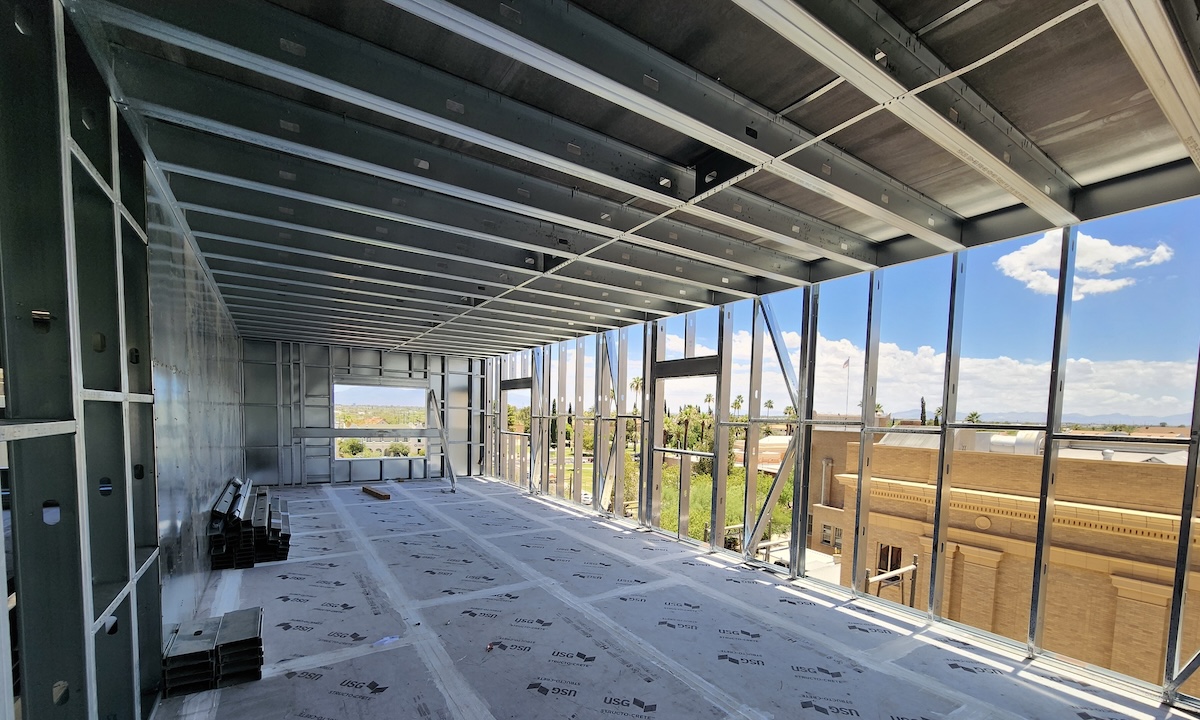
SFIA member Industrialized Construction Solutions used prefabricated cold-formed steel (CFS) framing to shorten exposure and lower the contractor’s liability insurance for the West Point Apartments II in Tucson, Arizona.
Brokers report that insurers consistently reward noncombustible structural systems with lower rates. Underwriters actively price combustion risk into their models. When developers move from wood framing to steel, they often secure meaningful rate reductions during construction. Those savings improve overall project economics.
This trend extends beyond a single development. In non catastrophe areas, insurers typically charge $0.30 to $0.40 per $100 of value for wood framed projects. They often charge $0.15 to $0.20 per $100 of value for comparable steel framed buildings. While location and exposure still influence pricing, noncombustible design continues to deliver measurable insurance advantages.
The Steel Framing Advantage
Cold-formed steel (CFS) leads the way as the preferred framing material for prefabricated structures for multiple reasons. CFS is:
- A pre-engineered material that can be cut to exact lengths
- Dimensionally stable and does not expand or contract with changes in moisture content
- Lightweight compared to wood and concrete
- Resilient and will not warp, split, crack or creep when exposed to the elements
- Sustainable and 100% recyclable
- Durable and has a high tensile strength
- Non-combustible and is a safeguard against fire accidents
Steel Innovation Strengthens Fire Performance
Recent roll forming advances produce larger and thicker steel studs and joists. These members add mass, which slows heat buildup during a fire. Because steel does not burn, increased thickness delays strength loss at elevated temperatures. That added time helps framing maintain load bearing capacity and supports life safety.
Heavier sections also improve stability under heat stress. They reduce the likelihood of premature deformation during fire exposure. Together, these enhancements strengthen fire performance and overall building resilience.
Manufacturers apply fire resistant coatings directly to CFS components. These coatings create protective barriers that limit direct heat transfer. Intumescent coatings expand when exposed to heat and form an insulating layer. Ablative coatings gradually erode and dissipate heat away from the steel.
“The resultant delay of the temperature rise of the steel helps to maintain its structural integrity longer,” says Bleasby. “The coatings also prevent premature warping, twisting or buckling of CFS components during a fire.”
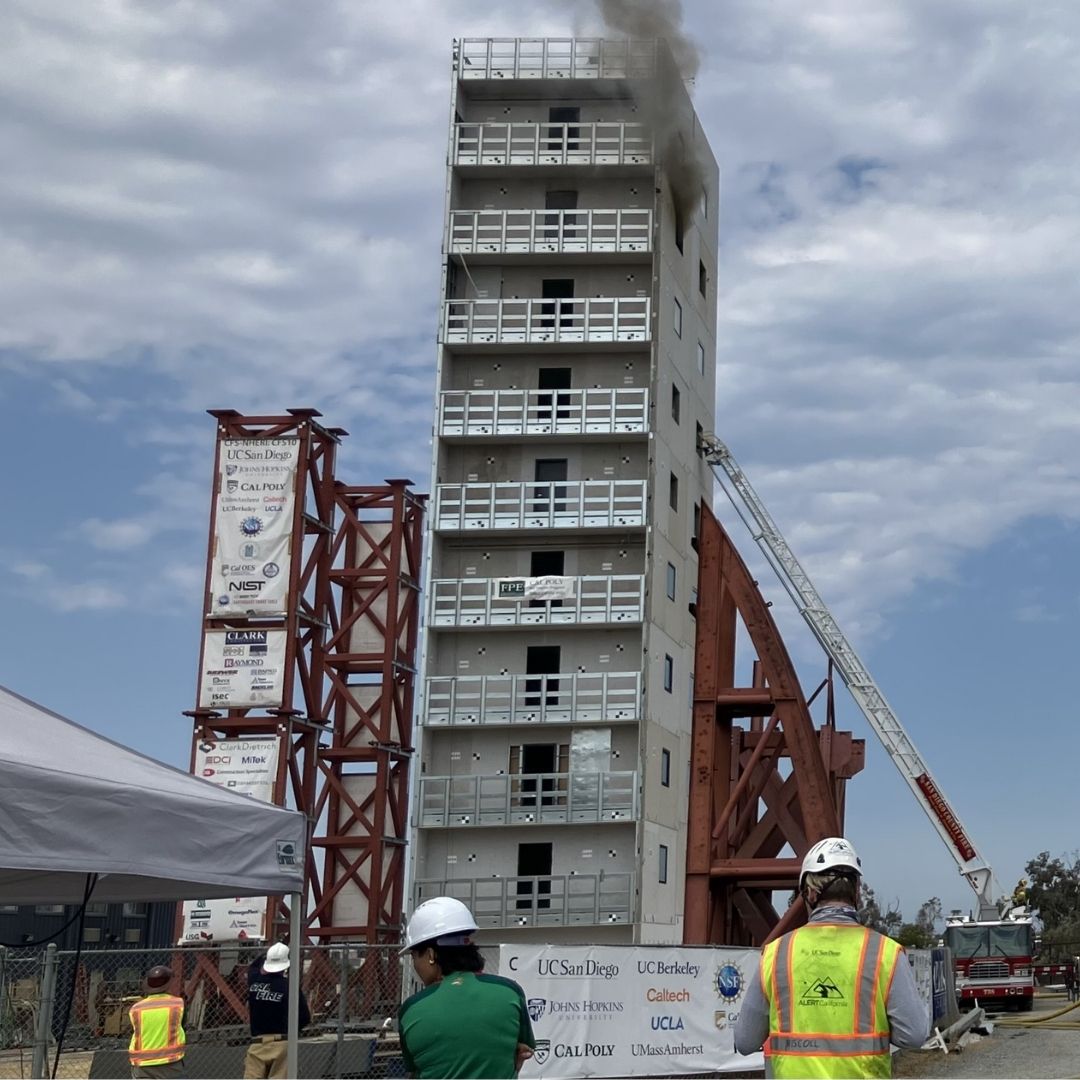
Backed by Steel Framing Industry Association (SFIA), UC San Diego researchers tested a 10-story cold-formed steel (CFS) structure with 18 simulated earthquakes and a controlled burn. The building stood strong — a breakthrough for building taller and safer with steel framing.
Safer Outcomes Start with Steel
No framing material withstands extreme heat without impact. However, material choice directly influences building performance during a fire.
“While CFS offers significant fire resistance benefits over traditional wood construction, it is not totally immune to fire damage when exposed to extremely high temperatures,” says Bleasby. “However, the material offers superior durability, enhanced security and safety from fires versus traditional lumber.”
Additional Resources
- Update: Insurance Costs Are Re-Shaping Construction Choices — And the Data Speaks for Itself
- New Bushfire Research Confirms Cold-Formed Steel Retains Load-Bearing Strength in Fire
- Data and Noncombustible Materials Hold the Key to Safer Construction, Says SFIA’s Don Allen