
The National Institute of Building Sciences (NIBS) has developed an implementation and launch plan for the United States Building Information Management (BIM) Program. The aim: To achieve a new level of industrial efficiency through digitalization.
BIM is an acronym for Building Information Modeling or Building Information Management. BIM is a highly collaborative process that allows architects, engineers, real estate developers, contractors, manufacturers and other construction professionals to plan, design and construct a structure or building within one 3D model.
BIM is an important tool used on many cold-formed steel (CFS) framing projects since BIM can help foster communication and improve job site organization by uniting project planning, design and construction processes
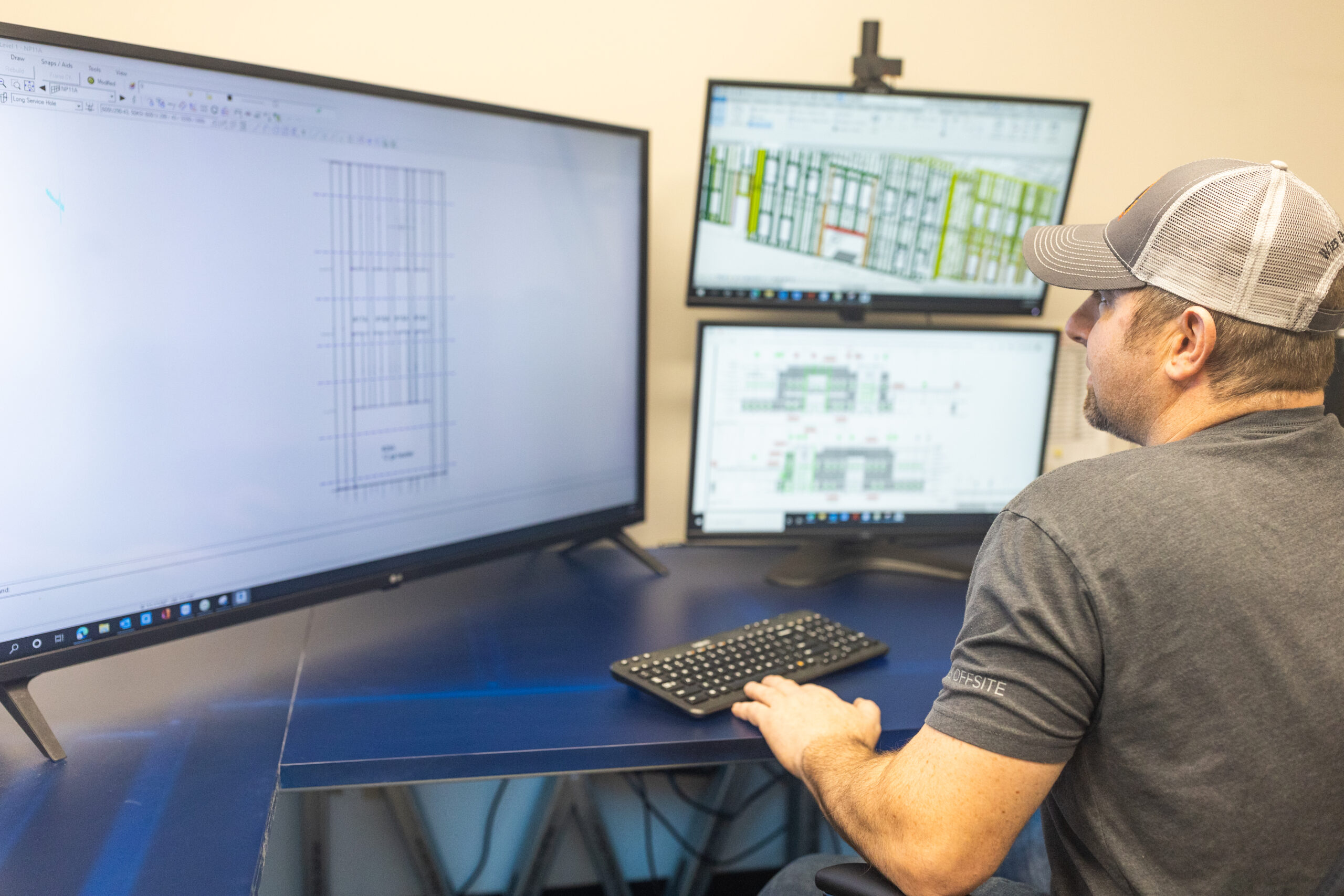
A fabricator at Wies Offsite prepares a production run. Photo courtesy Wies Offsite
Reports indicate that BIM adoption has increased significantly in recent years, but also that it is still rarely used in construction prefabrication processes. While general contractors may use BIM to get a visual understanding of their projects, sources say they miss out on opportunities that come from closer project collaboration.
BuildSteel.org is taking the lead in BIM adoption for the steel framing industry by compiling articles from BIM experts, helping the industry to get started with BIM and by making available the eBook: BIM for Cold-Formed Steel Framed Projects: Benefits, Drawbacks, and How to Succeed.
National BIM Program: Building Lifecycle Focused
An overview of the launch plan for the U.S. National BIM Program was presented to industry leaders recently at an executive roundtable to accelerate ongoing efforts from innovative and forward-thinking organizations.
A critical issue in the U.S. construction industry is its low level of digitalization, which prevents it from transforming lifecycle work processes to be more efficient, less expensive, more resilient, and safer to build and maintain. The U.S. National BIM Program expands upon existing and ongoing work of the NIBS BIM Council as well as various other initiatives in the industry. Read the summary of the National BIM Program.
“Many national and international initiatives focus on BIM standardization to support digital transformation throughout the entire lifecycle of designing, constructing, and operating the built environment,” says Stephen T. Ayers, FAIA, interim chief executive officer of NIBS. “The U.S. National BIM Program will be successful through collaboration between the public and private sectors and across the diversity of project stakeholders, namely owners, designers, constructors, suppliers, vendors, and other involved parties.”
To aid in the implementation and launch of the U.S. National BIM Program, AEC subject matter expert Johnny Fortune joined NIBS in June. Fortune serves as Director of the National BIM Program. Fortune said next steps include securing resources and establishing workgroups to operationalize different aspects of the plan.

Johnny Fortune, director of the U.S. National BIM Program
U.S. National BIM Program Background
NIBS began the planning process for the U.S. National BIM Program last year, meeting and working with industry leaders. Since then, many volunteers and NIBS staff members have worked to develop the implementation plan, which includes key activities and an estimated budget for the first five years.
The construction industry employs more than seven million people to create or renovate nearly $1.4 trillion in buildings, infrastructure, and other built assets each year.
But the industry has yet to enjoy the productivity improvements of the digital age, averaging only 1% productivity growth in the past 20 years.
About the NIBS BIM Council
The BIM Council has focused on capturing the requirements of U.S. building owners to document best practices and provide guidance on the adoption of digital technology to increase productivity and performance. Examples include the United States National CAD Standard (NCS), National BIM Standard-United States (NBIMS-US), National BIM Guide for Owners (now a Draft Standard with ASHRAE), and Construction to Operations Building information exchange (COBie) Specification. For more information, visit the Building Information Management Council.

About NIBS
National Institute of Building Sciences brings together labor and consumer interests, government representatives, regulatory agencies, and members of the building industry to identify and resolve problems and potential issues around the built environment. NIBS is a non-profit, non-governmental organization. For more information, visit nibs.org or follow @bldgsciences on Twitter, Facebook, and LinkedIn.
eBook: BIM for Cold-Formed Steel Framed Projects
Building Information Modeling can help foster communication and improve job site organization. The BuildSteel eBook, “BIM for Cold-Formed Steel Framed Projects: Benefits, Drawbacks, and How to Succeed,” explores how to determine if BIM is right for your next project and how to use the process successfully. In this eBook, you’ll learn:
- Five steps to become competent in BIM
- How BIM can reduce RFIs and conflicts with other trades
- Which CFS framing projects can benefit from BIM
Download

Additional Resources
- How to BIM: Creating Your Team
- What to Expect on Your First Cold-Formed Steel BIM Project
- Cold-Formed Steel Framing Delivers Fast, Adaptable, Cost-Effective Buildings