
In construction, achieving optimal acoustical performance and fire resistance in buildings is critical. One of the solutions to this challenge is the use of resilient channels.
Resilient channels — featured regularly in cold-formed steel (CFS)-framed construction — have become a vital component for enhancing the soundproofing and fire resistance of walls and ceilings.
For complete information, download “Four Frequently Asked Questions about Cold-Formed Steel (CFS) Resilient Channels” (RC101-24), from the Steel Framing Industry Association (SFIA).*
This article delves into the specifics of where resilient channels are installed and the methodology behind their installation.
Resilient Channels: Installation Locations
Resilient channels are designed for installation over open framing in both wood and steel structures, serving to significantly improve acoustical performance. They are ideally installed at right angles to the framing members, with the gypsum board installed directly to the flange.
This setup is crucial for the channels to function as intended, providing a decoupling effect that reduces sound transmission through the wall or ceiling assembly. Whether in structural or non-structural applications, resilient channels offset the rigidity of steel framing, thereby enhancing sound insulation.
- Note: Resilient channels are not intended for retrofitting purposes to improve the acoustical properties of an existing wall. Rather, they’re intended for new construction or renovations where the framing is exposed.
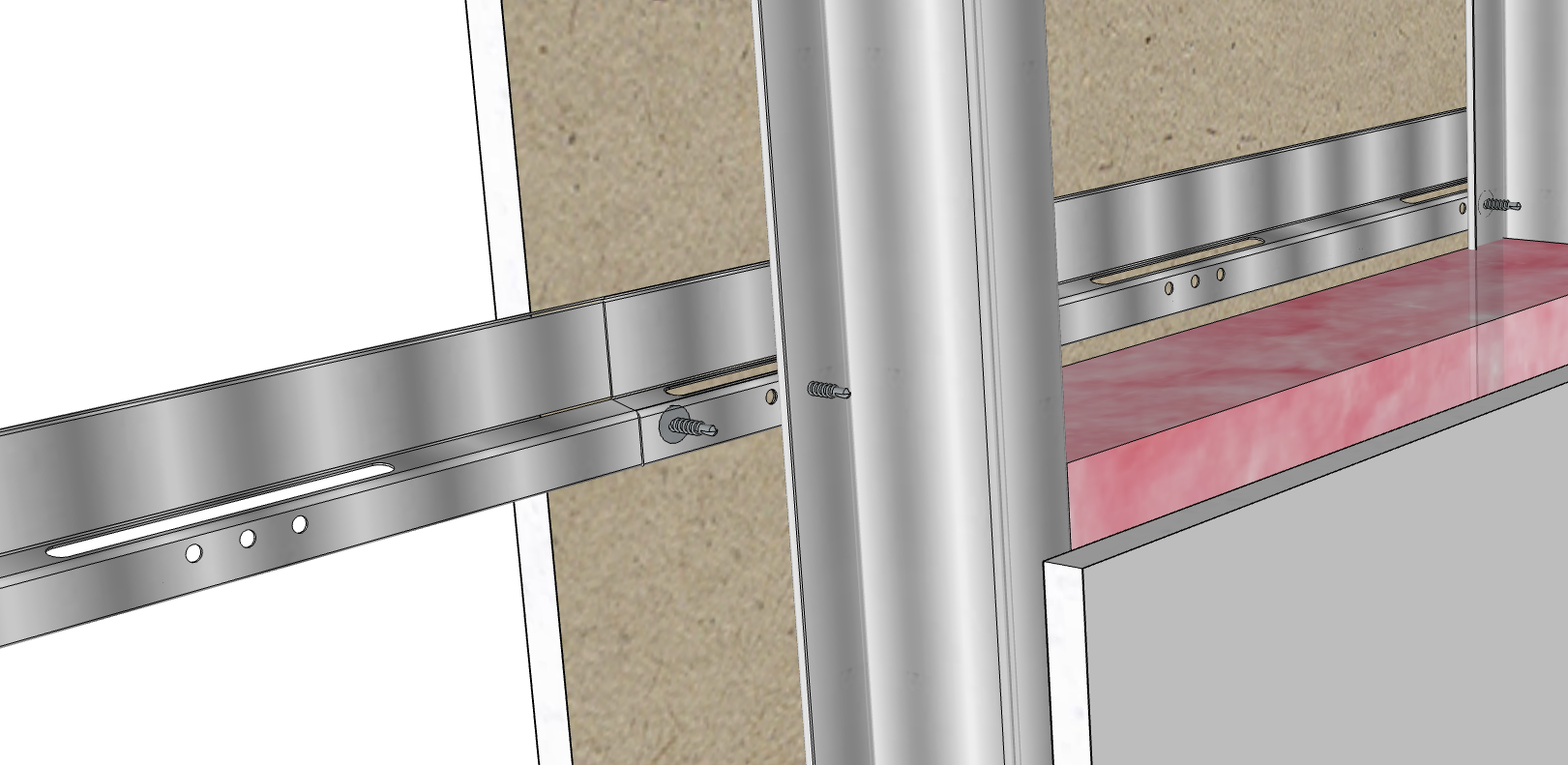
Gypsum board attachment to channel. Source: SFIA
In ceiling applications, while the channels can be used between layers of gypsum board primarily for fire resistance, they follow a similar installation principle. They are mounted perpendicular to the floor joists or ceiling framing, emphasizing their versatility across different types of construction.
See SFIA RC101-24 for more details.
Resilient Channels: The Installation Process
The installation of resilient channels is governed by specific standards to ensure their effectiveness. According to ASTM C754-20, the proper installation technique involves attaching the single-leg resilient furring channel to CFS framing members with specific attention to the orientation of the mounting flange. This technique ensures that the weight of the attached gypsum board helps to maintain the intended acoustic decoupling.
- Wall applications: The resilient channels should be positioned with precise spacing from the floor and ceiling to maintain uniformity and effectiveness across the entire wall
- Ceiling installations: similar principles apply, with the channels spaced appropriately from adjacent walls to ensure a consistent application
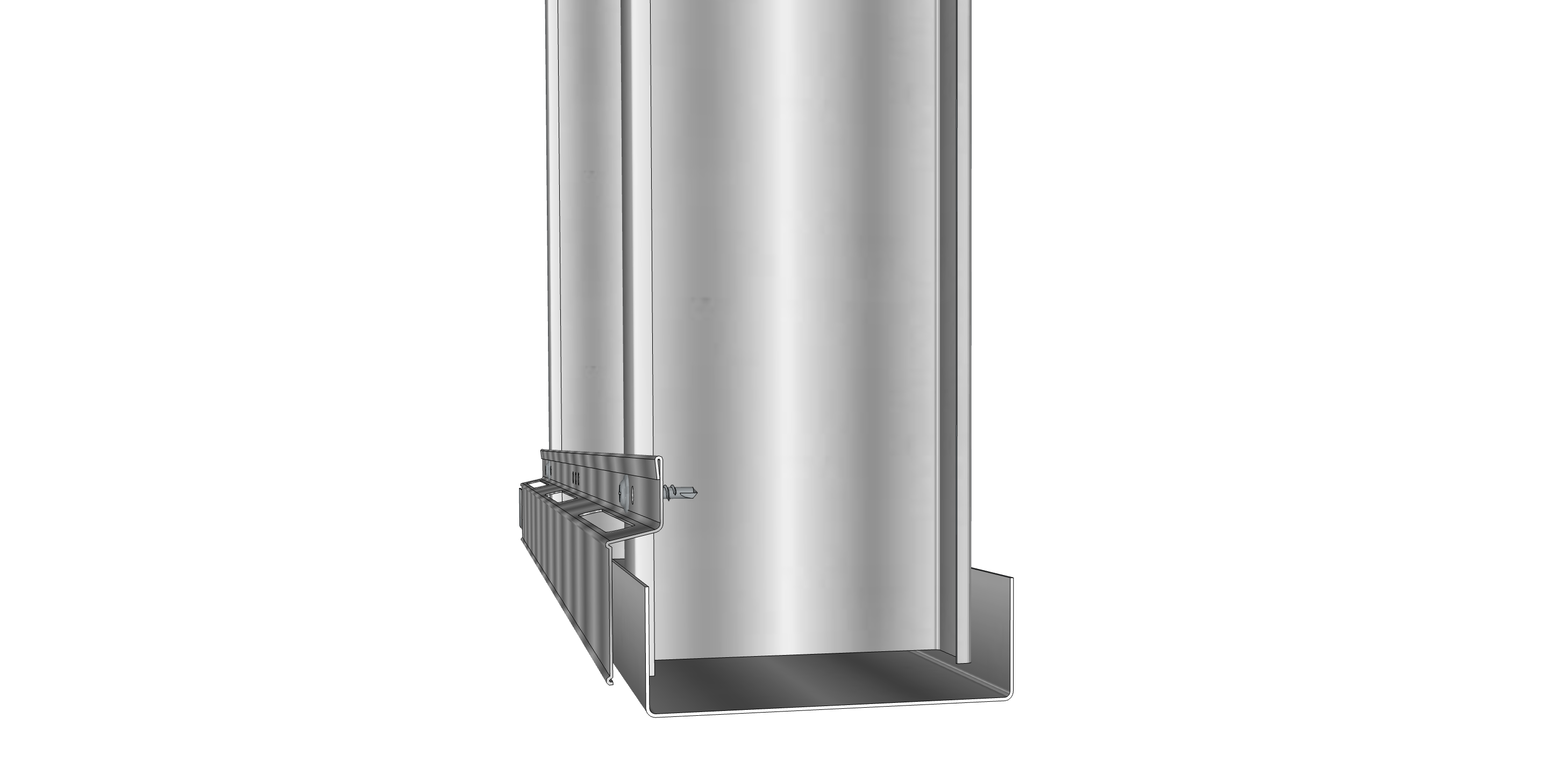
Resilient channel at base. Source: SFIA
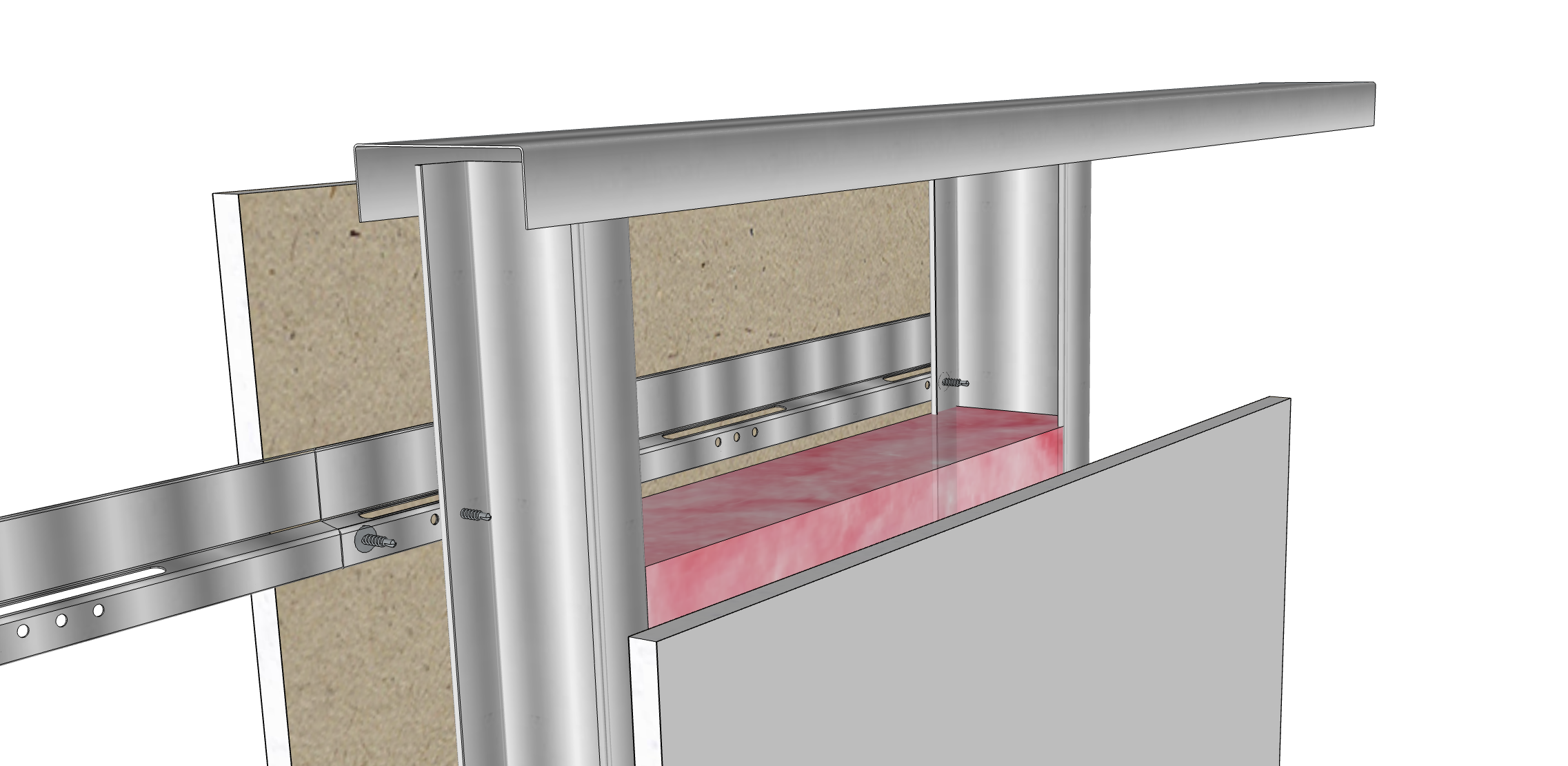
Resilient channel at head. Source: SFIA
The effectiveness of resilient channels is also dependent on the correct positioning of the slots in the web element of the channel, as well as the use of appropriate fasteners based on the thickness of the steel in the studs. Special considerations are also made for splicing resilient channels. The methods outlined by ASTM C754 ensure continuity and structural integrity.
See SFIA RC101-24 for more details.
Resilient Channels: General Installation Notes
Resilient channels must be installed perpendicular to the framing members, and the gypsum board should be mounted with its long dimension perpendicular to the channels.
- Spacing: The spacing of the channels varies depending on the application, with specific spacing recommended for walls and ceilings based on the spacing of the framing members.
- Cantilever Limits: It is crucial to consider the cantilever limits of the channels, the type and length of screws for attaching the gypsum board and the extension of channels into corners. To achieve the desired acoustical performance, channels must be installed over open framing and sealed appropriately at perimeters and penetrations.
- Corners and Control Joints: For applications requiring fire resistance or acoustical sealing at corners and control joints, additional detailing is necessary. This includes running channels through stud cavities and backing control joints with sound insulation.
See SFIA RC101-24 for more installation notes.
Pivotal Role in Modern Construction
Resilient channels play a pivotal role in modern construction by enhancing the acoustical performance and fire resistance of walls and ceilings. Their effective installation requires adherence to specific guidelines and standards, ensuring that these channels deliver the intended benefits.
Whether in new construction or renovations, understanding the where and how of installing resilient channels is essential for architects, builders, and contractors aiming to achieve the best possible outcomes in their projects.
Robert Grupe, SFIA General Manager, Architectural Services
Robert Grupe
SFIA General Manager, Architectural ServiceRobert Grupe is general manager, architectural services at the Steel Framing Industry Association (SFIA), managing the SFIA’s Architectural Services Team nationwide. Grupe is a 40-year-plus industry veteran and popular seminar and webinar presenter. He spent over 38 years with United States Gypsum Company in various technical and management positions, including product and system design and technical consultation to the AEC community.

Steel Framing Industry Association
The Steel Framing Industry Association (SFIA) provides its members with exclusive access to technical cold-formed steel (CFS) framing services, including the SFIA Steel Framing Learning Portal. SFIA member services include access to market data, market analysis, technical design guides, architectural services, environmental product declarations, CFS certification , free specification review services and more.

Additional Resources
- FAQ: What Are Resilient Channels, and What Is Their Purpose?
- SFIA Releases Guide to the Performance-Based Nonstructural Partition Selection of Metal Framing
- Sorting Apples from Oranges — Comparing Evaluation Services with Third-Party Certification
- SFIA Releases Updated Technical Guide with the Most Up-to-Date CFS Load and Span Tables in the Industry
- 5 Need-to-Knows about Building Codes and Cold-Formed Steel
* SFIA RC101-24 is intended as a general guide. The Steel Framing Industry Association has tried to ensure the accuracy of the information and makes no representation, warranty or guarantee, and expressly disclaims any liability or responsibility for failure resulting from use of this information. SFIA Certified products should only be used with an independent evaluation by a qualified engineer or architect to verify suitability.