
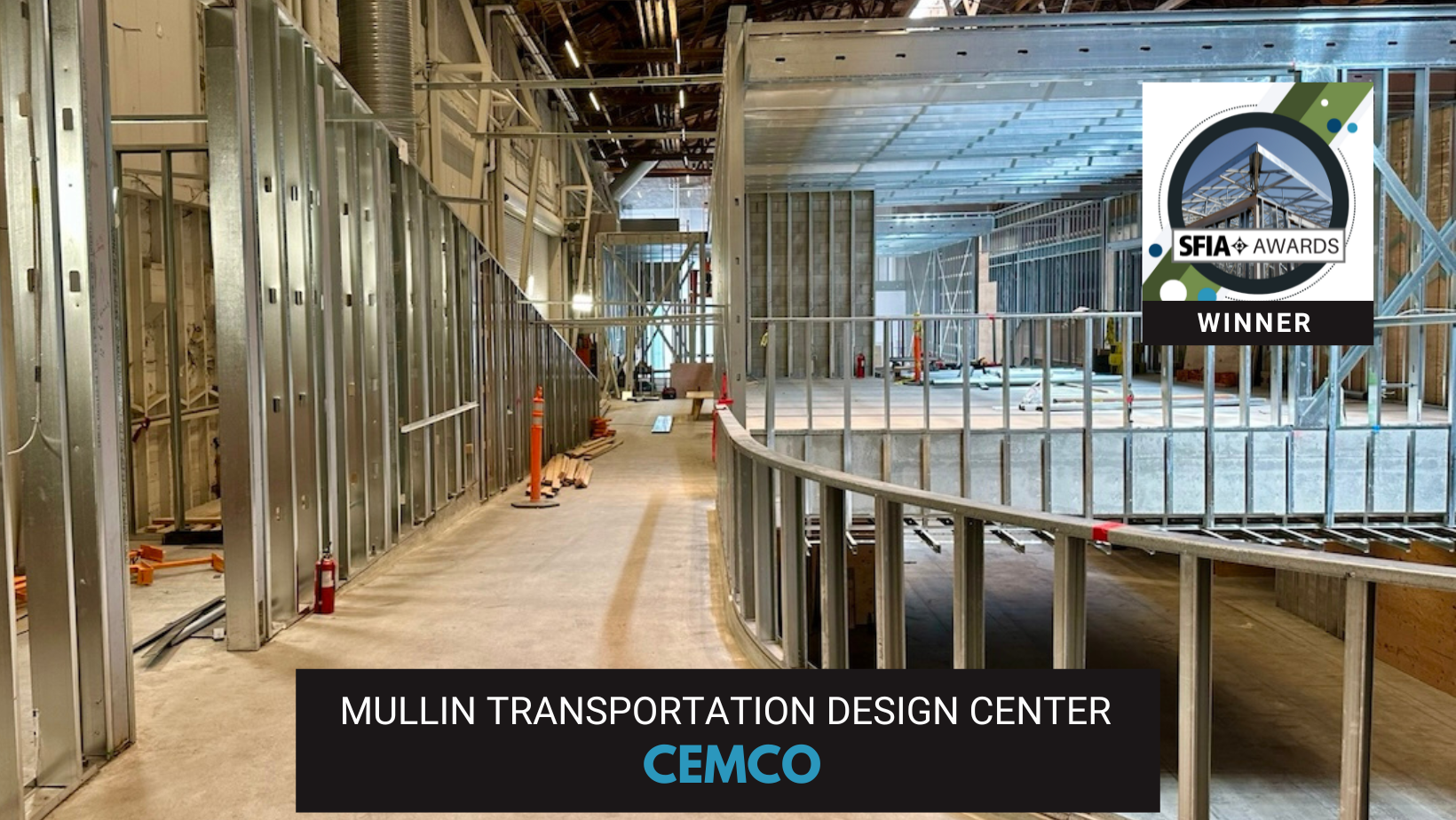
Mullin Transportation Design Center, a former supersonic wind tunnel, features CEMCO cold-formed steel (CFS) products.
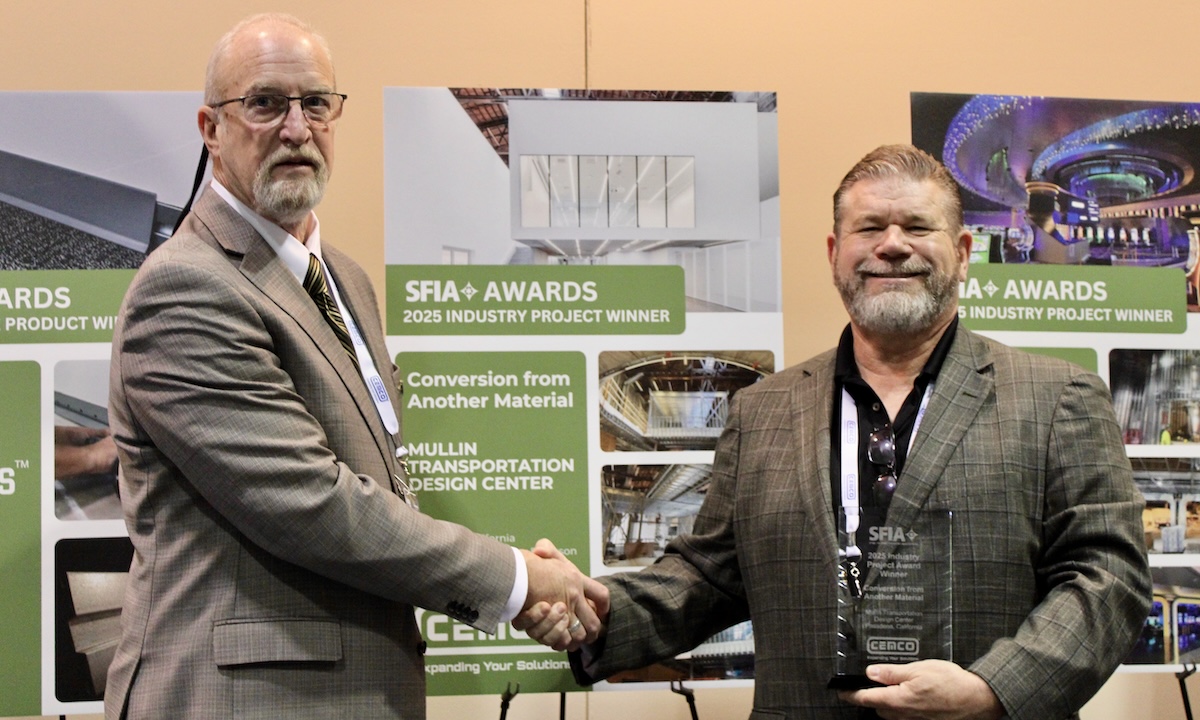
At right, Steve Farkus of CEMCO accepts one of three SFIA awards the firm received during the 2026 SFIA General Session in New Orleans.
CEMCO’s win was announced during the 2025 SFIA Awards live ceremony and posted online. The SFIA 2025 Industry Project and Product Awards, an annual steel framing industry awards competition, focuses on cold-formed steel manufacturing and construction. Designers, manufacturers, distributors and contractors entered a variety of projects in the latest competition.
Conversion to Steel
How was conversion to metal framing achieved?
The Mullin Transportation Design Center project team built the new floating structure on 63 piles and grade beams. Cast-in-place concrete upper decks support the metal framing above.
The design team specified steel for the primary structure and used CFS to replace wood and structural steel in interior assemblies. This change reduced weight and enabled floating architectural features without added supports. CFS also helped meet LEED® certification goals by cutting waste, speeding installation and improving MEP coordination. The approach shortened the schedule and reduced construction risk.
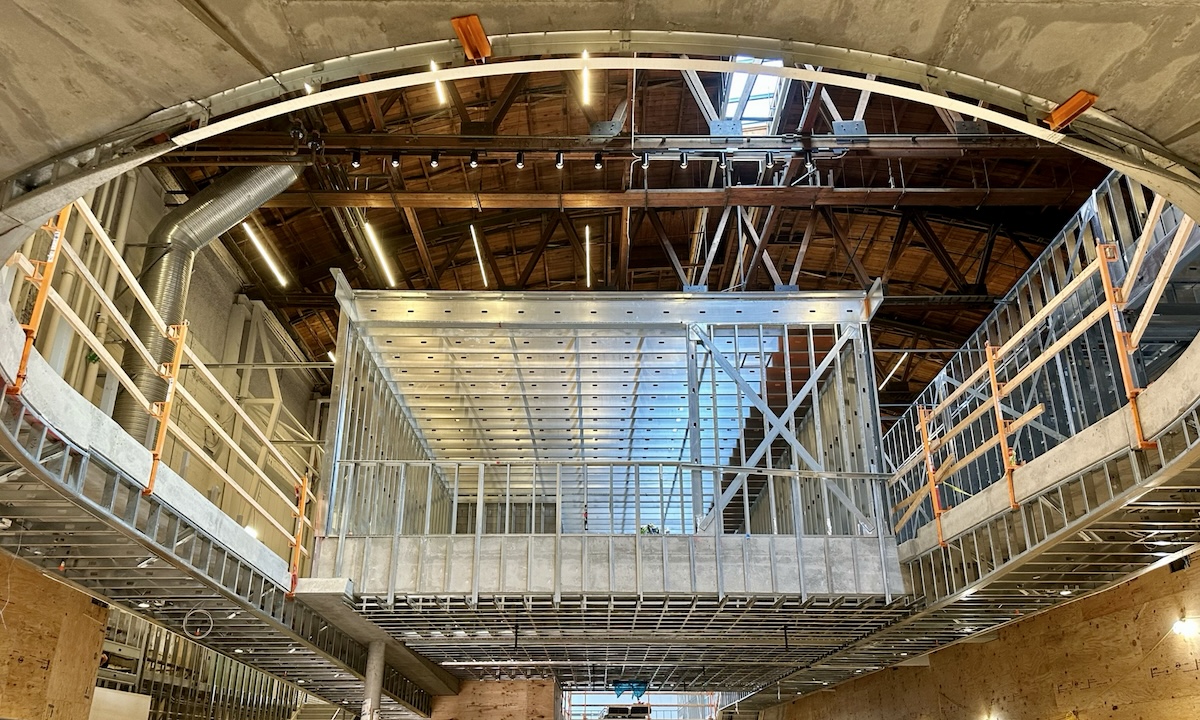
CEMCO’s cold-formed steel (CFS) framing products helped transform a historic Caltech wind tunnel into a unique education center.
The project made efficient use of lightweight, high strength CEMCO cold-formed steel (CFS) products to create the building-within-a-building concept.
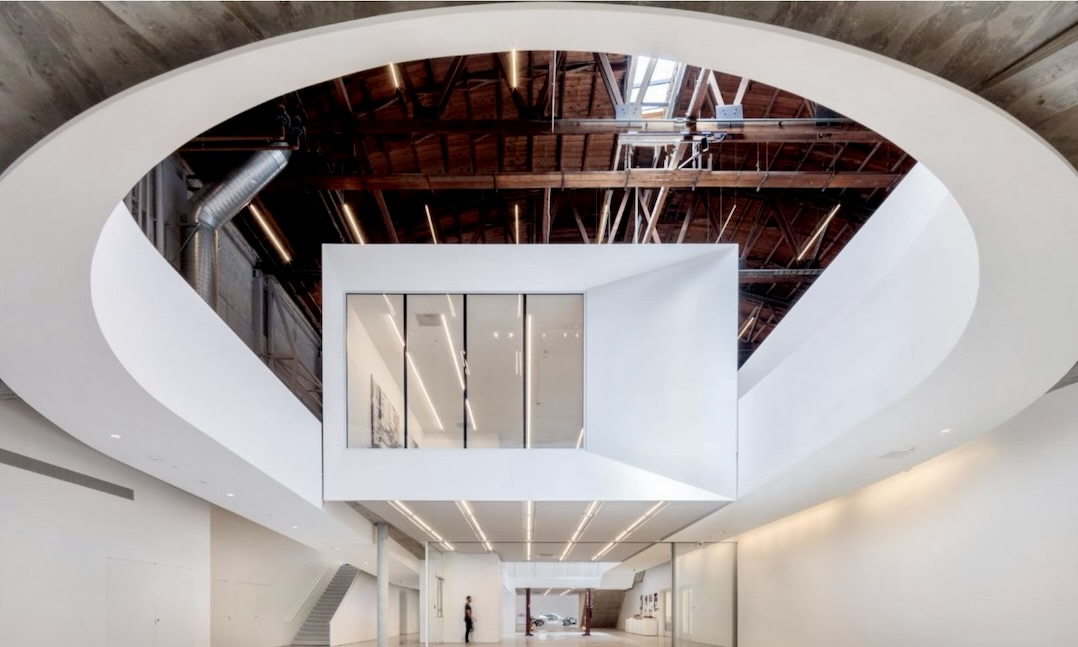
The cold-formed steel (CFS) provided by SFIA member CEMCO, products supported the project’s LEED® certification goals.
Design Quality
Did this project make efficient use of metal framing products?
The design of the Mullin Transportation Design Center called for multiple levels. The upper-level decks feature cast-in-place concrete, which supports light metal wall framing. The teams chose structural cold-formed steel framing, a material that is adaptable and has excellent load-bearing capability.
The project made efficient use of CFS products, which are both lightweight and high strength. The CFS framing supported the building-within-a-building concept. The project team viewed CFS as instrumental. The CFS members provide maximum strength-to-weight ratio, reducing the structural load on the original slab while allowing for architectural flexibility.
The team replaced heavier structural framing with CFS assemblies for non-load-bearing partitions, soffits and ceilings. This shift reduced material costs and simplified installation without sacrificing durability or performance. The approach also maintained seismic separation between the new structure and the historic shell. The use of CFS was a major value engineering success.
Installation Complexity
What difficulties existed on the project?
Originally home to a California Institute of Technology supersonic wind tunnel, the Mullin Transportation Design Center draws on its aeronautical legacy. The team designed a building within a building, supported by 63 piles, grade beams and columns. This system creates seismic separation from the historic shell and delivers the visual effect of light, hovering forms.
Crews worked inside the existing barrel-vaulted wind tunnel, navigating complex geometry and tight access. They coordinated all framing around the seismic separation system and aligned it precisely with new structural steel.
Architectural goals and structural demands often intersected at curved walls, floating floors and integrated lighting. The team resolved these conditions through field coordination and prefabricated custom CFS components. Limited staging space, overhead constraints and an aggressive schedule required off-hours work and disciplined material handling.
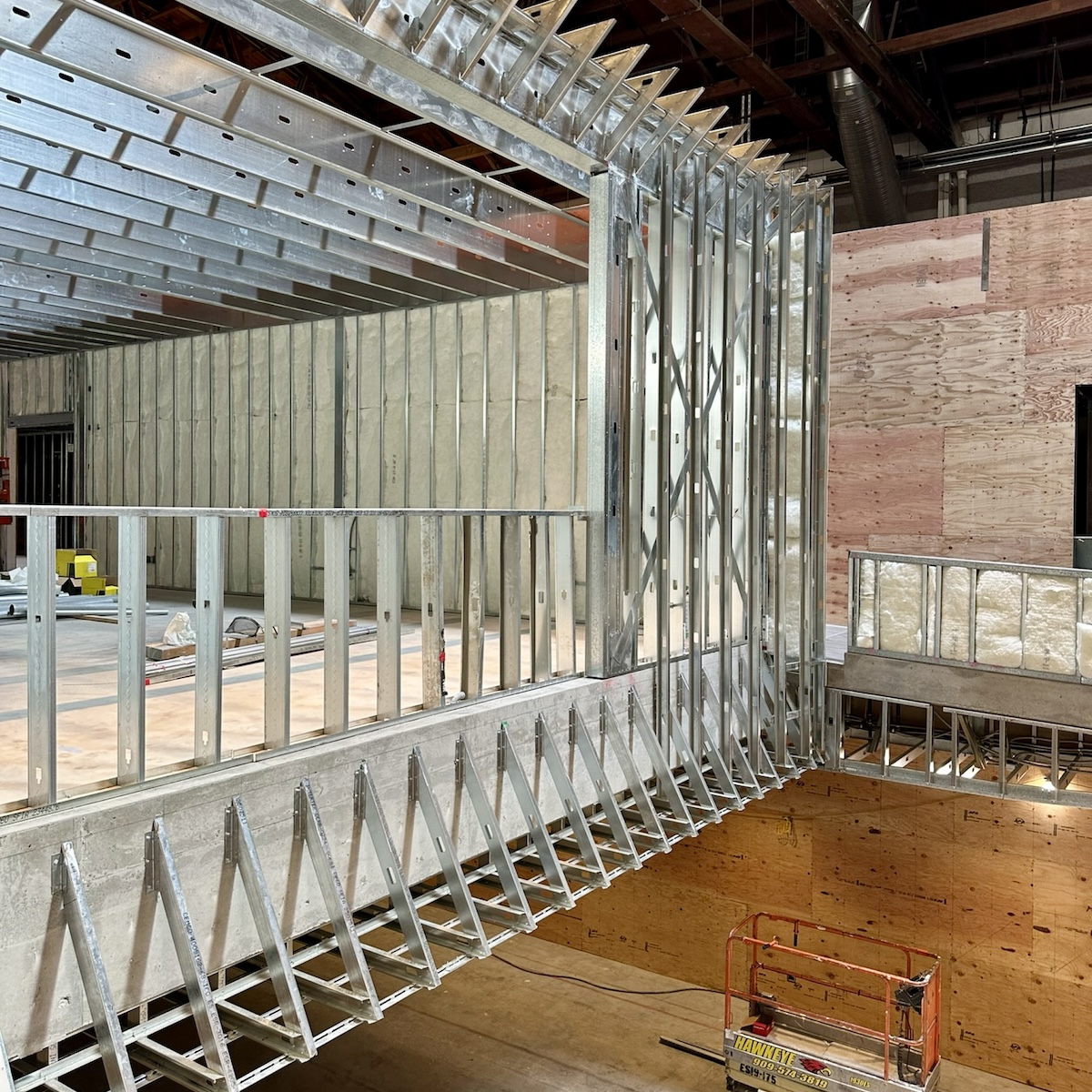
The Mullin Transportation Design Center project combined standard CEMCO cold-formed steel (CFS) members with modified profiles and preassembled components to meet tight tolerances and provide fast installation.
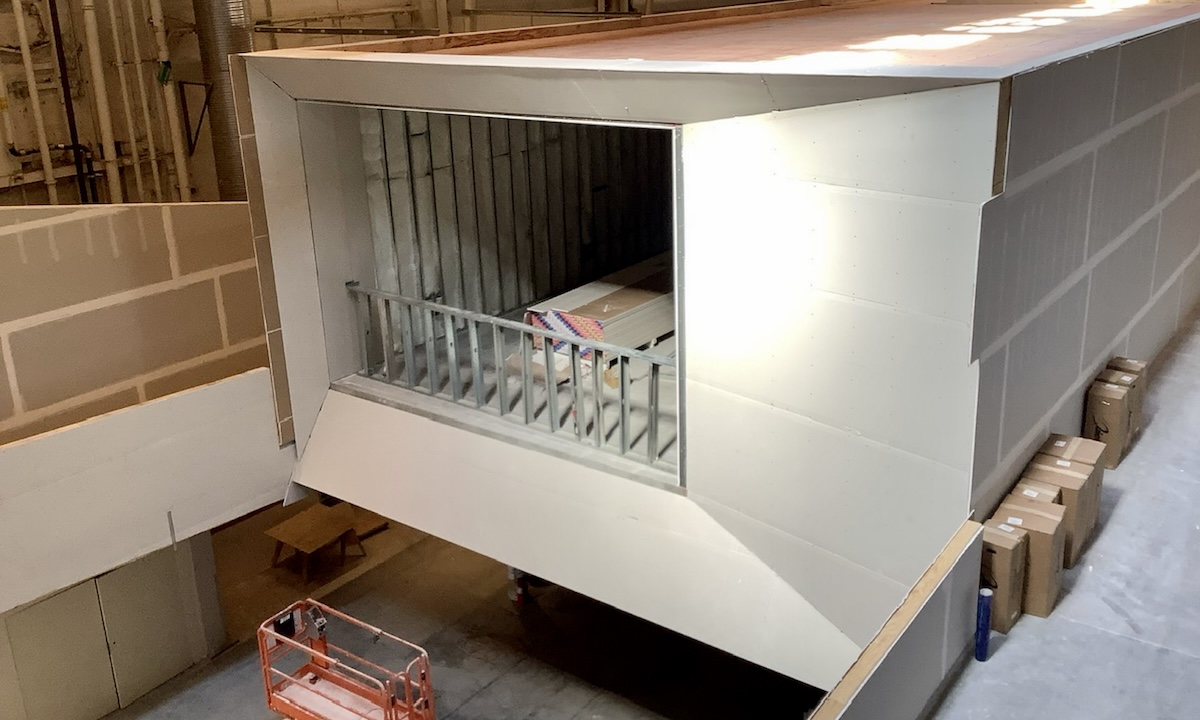
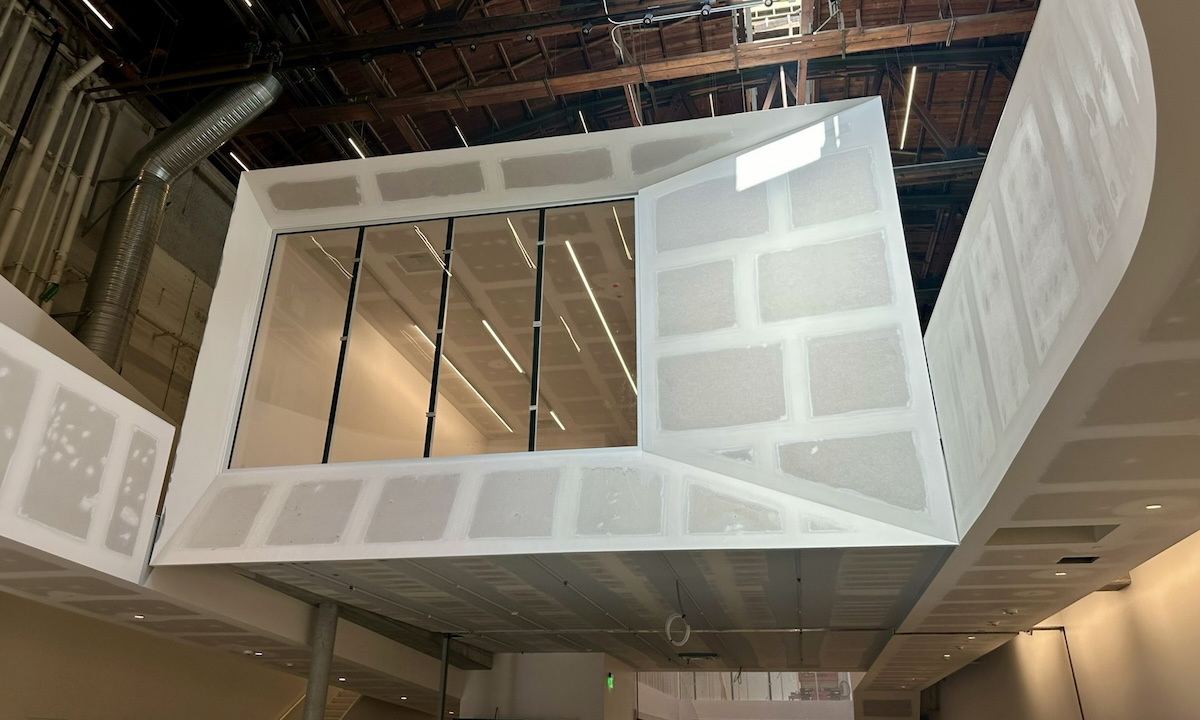
The Mullin Transportation Design Center project team used cold-formed steel (CFS) framing to achieve floating forms.
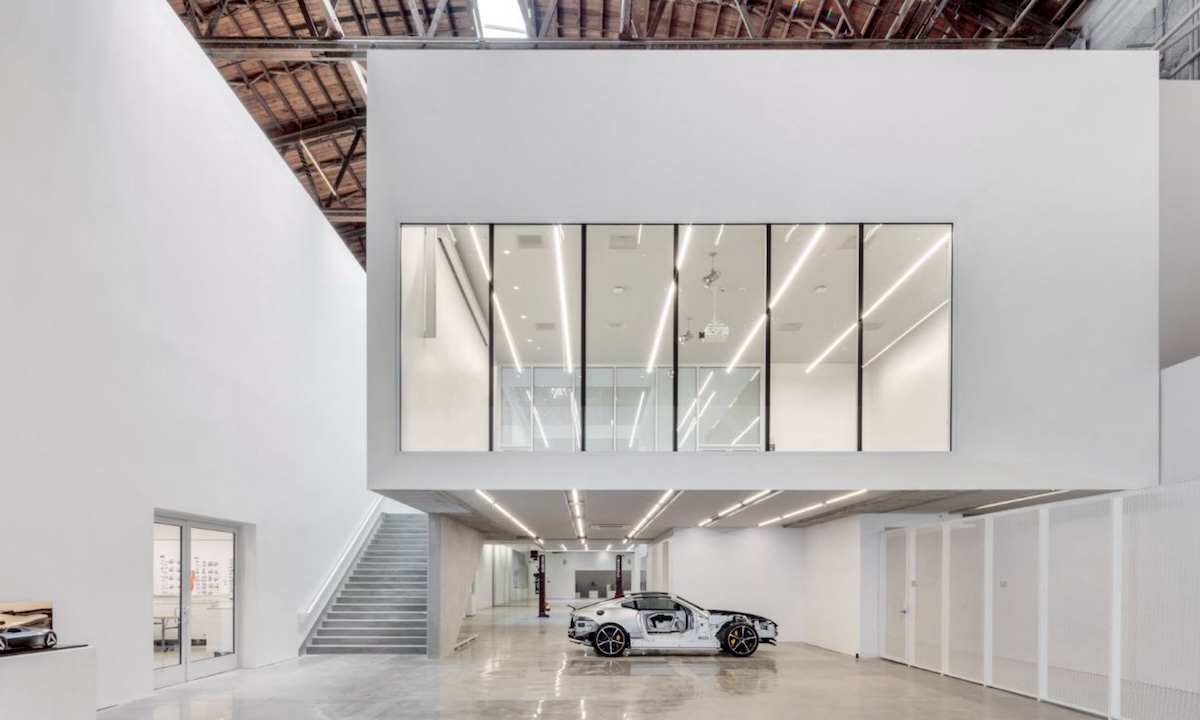
“By blending history with contemporary design,” says Zachary Peterson of CEMCO, “this facility not only enhances the educational landscape but also serves as a focal point for innovation and collaboration.”
Manufacturing Complexity
Were special materials involved?
The Mullin Transportation Design Center “prioritized in‑place, conventional construction techniques, including cast-in-place concrete decks,” Peterson writes in his SFIA Awards submission.
The team custom fabricated many components to achieve floating forms and curved walls. Crews used CFS to frame radii and intersections that traditional framing could not handle.
The project combined standard CEMCO CFS members with modified profiles and preassembled components to meet tight tolerances and speed installation. The team used panelization where space permitted and carefully managed sourcing to secure specialty shapes.
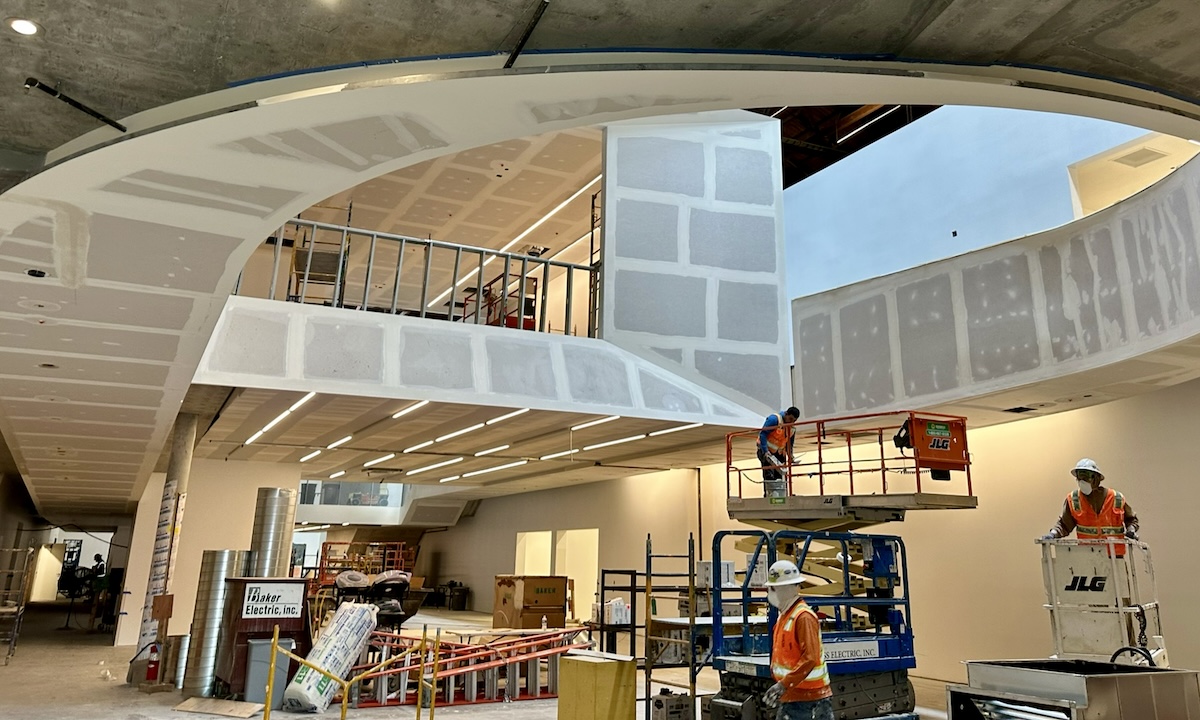
Crews navigated complex geometry and tight access at the Mullin Transportation Design Center project.
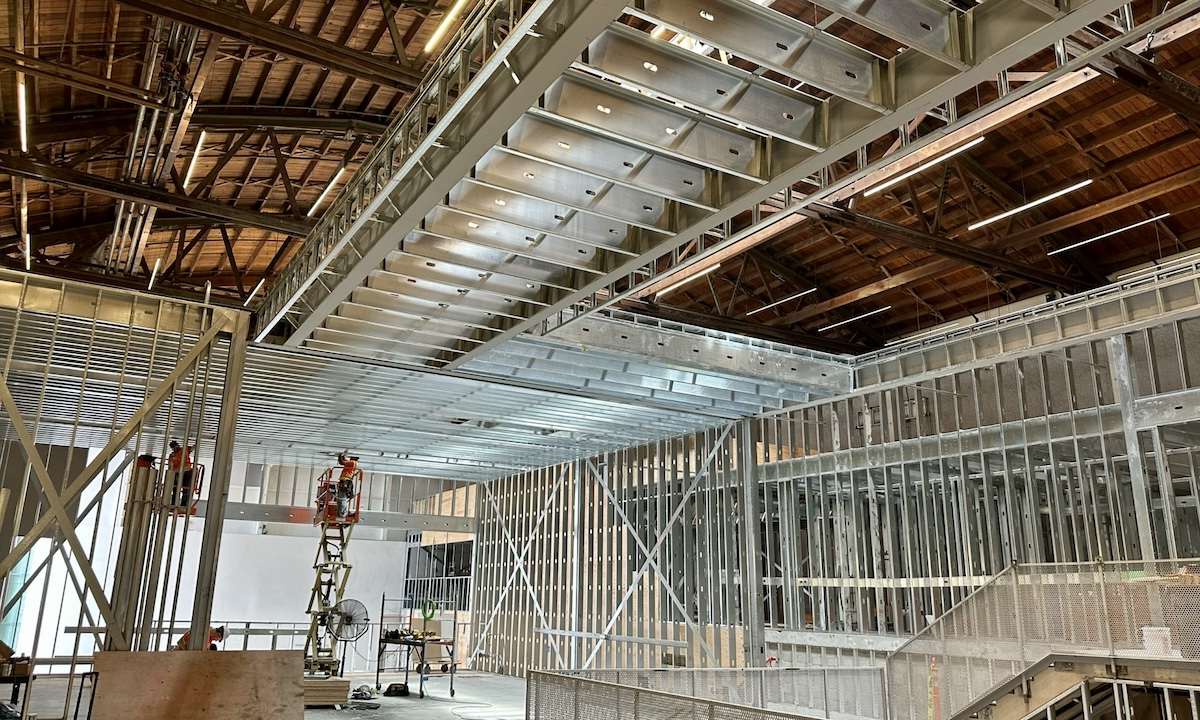
The Mullin Transportation Design Center projects features 100 tons of CEMCO cold-formed steel (CFS) framing products.
Overall Job Quality
How did the completed system turn out?
The Mullin Transportation Design Center “stands as a testament to the evolution of design processes related to transportation and modern aviation,” Peterson says.
“By blending history with contemporary design,” he adds, “this facility not only enhances the educational landscape but also serves as a focal point for innovation and collaboration.”
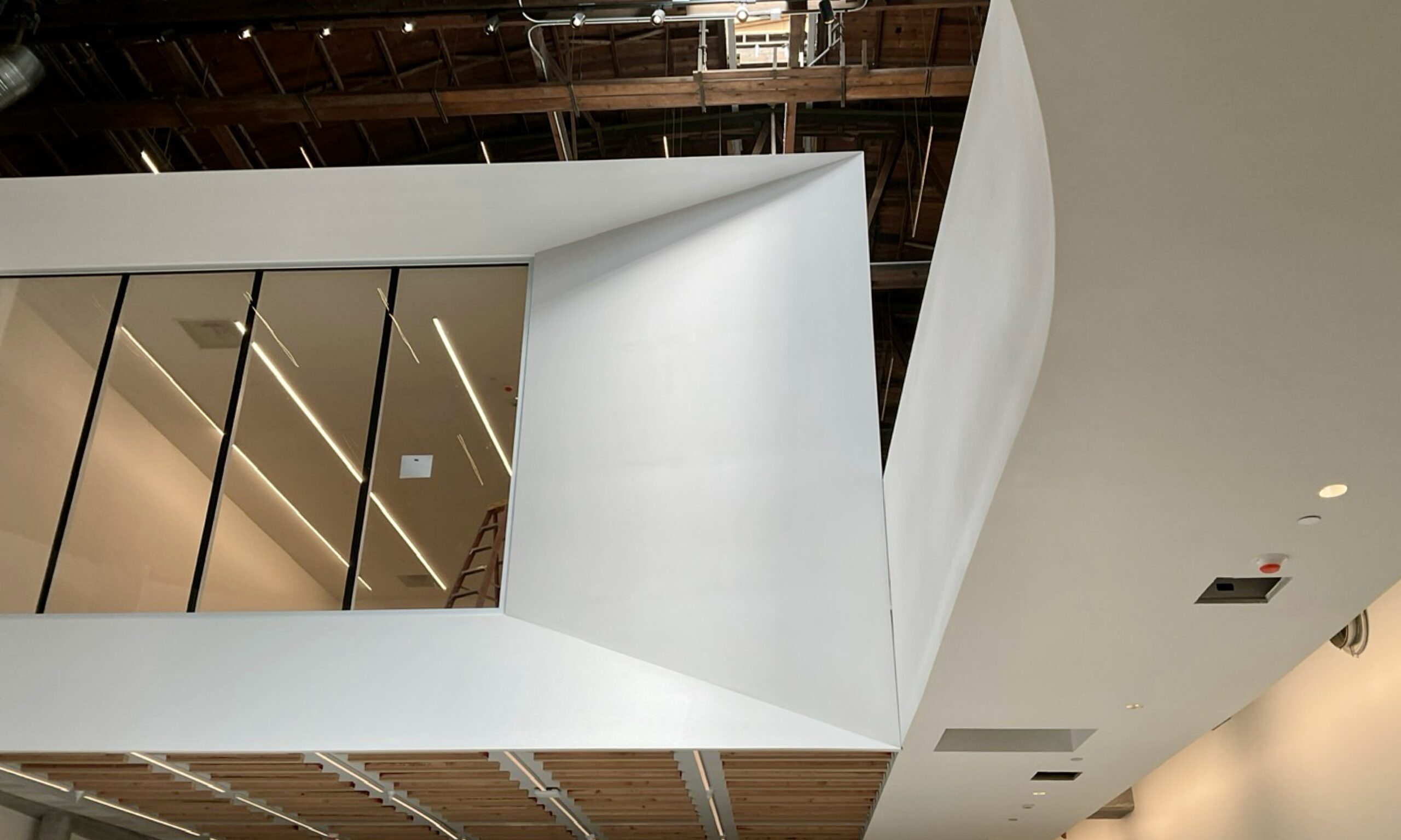
The final product achieved precise alignment and clean finishes — essential in a facility built for display and design instruction. CFS framing created smooth transitions between wall and ceiling planes.
The framing also reinforced the design goal of light, hovering forms, especially in visible, open areas. The team maintained strict quality control throughout construction. Final walk-throughs identified few punch list items, underscoring the crew’s precision and discipline.
CEMCO is the 2025 SFIA Industry Project and Product Awards winner in the Conversion from Another Material category.
Mullin Transportation Design Center, Pasadena, California
Mullin Transportation Design Center
Pasadena, California
Details: 31,000 square feet; 100 tons of cold-formed steel (CFS) framing products
PEOPLE
Owner
ArtCenter College of DesignArchitect
Darin Johnstone ArchitectsGeneral Contractor
Del Amo ConstructionCFS Framing Contractor
Quality Production Services, Inc.CFS Framing Supplier
ABC Supply Interiors (formerly L&W Supply)CFS Products Manufacturer
CEMCO
SFIA Industry Project and Product Awards
The 2025 SFIA Industry Project and Product Awards focus on cold-formed steel (CFS) manufacturing and construction. A panel of industry representatives judged all 2025 SFIA Awards entries based on the following criteria:
- Design Quality, such as the efficient and sustainable use of CFS products
- Installation Complexity, focusing on conflict resolution, timeframe challenges, etc.
- Manufacturing Complexity, including custom orders, panelization, special material sourcing and more
- Overall Job Quality, including the quality of alignments, finishes and other attention to detail
- Conversion from Alternative Framing Material, reflecting how steel framing lowered a structure’s weight, or added stories, or helped lower the project’s builders’ risk insurance, etc.


About SFIA
The Steel Framing Industry Association (SFIA), a unique organization representing steel mills, coil coaters, stud and connector manufacturers, component fabricators, Cold-Formed Steel Engineers Institute (CFSEI) members, suppliers/distributors, contractors and others, provides members with exclusive access to technical cold-formed steel (CFS) framing services, including CFS certification, environmental product declarations, market data and analysis, technical design guides, specification review services, architectural services, the Steel Framing Learning Portal, the SFIA Awards and more. SFIA is an accredited ANSI Standards Development Organization. Follow SFIA on LinkedIn, Facebook, Instagram and X.

Additional Resources
- The Steel Framing Industry Association (SFIA) Names 13 Recipients of the 2025 Industry Awards
- SFIA Unveils 9 Winners of the 2024 Industry Project Awards
- SFIA Reveals 7 Winners of the 2023 Industry Project Awards in Online Ceremony