
Across the United States, steel manufacturers, suppliers, distributors and contractors manage rising costs while deciding how much can realistically be passed on to customers. Don Allen, executive director of the Steel Framing Industry Association (SFIA), regularly speaks with members and other industry professionals to track market conditions and understand the impact on projects.
One cold-formed steel (CFS) distributor and consultant Allen spoke with recently said that a manufacturer had just increased its steel stud prices. When asked if the price hike might lead to some project cancellations, the distributor said he didn’t think so.
“His clients, he explained, could absorb the higher costs, with steel framing representing only a small fraction of total project expenses,” writes Allen in “The Steel Deal,” a bylined article for Walls & Ceilings.
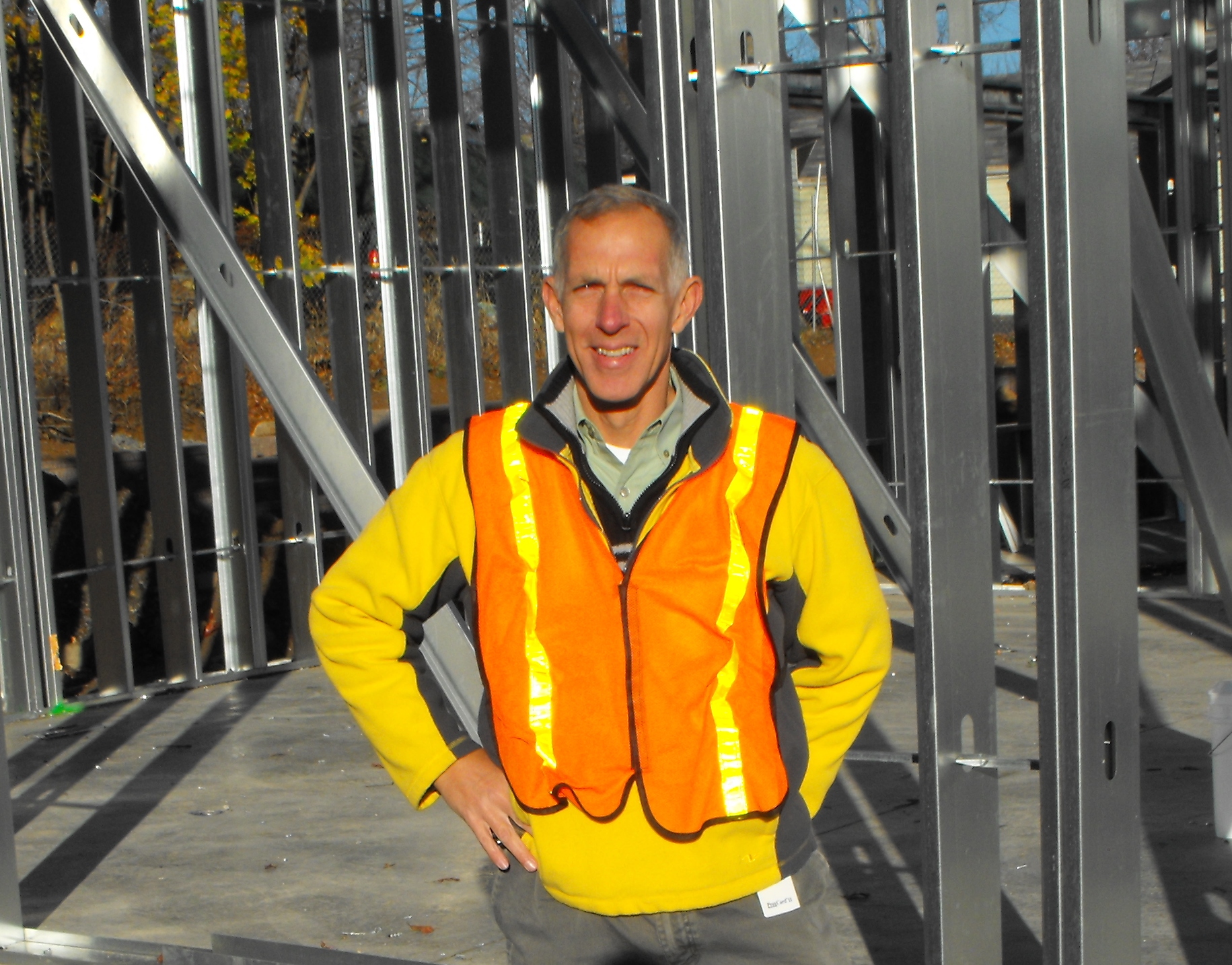
Don Allen is the executive director of the Steel Framing Industry Association (SFIA).
Steady Demand in a Challenging Climate
Allen notes that the building industry’s resilience is mixed—some large projects, like data centers, are moving forward with increased prices creating few disruptions. But smaller developments, such as multi-family housing, hotels and dormitories, “delays and cancelations are becoming more common,” Allen writes.
At the same time, tariff debates have also influenced outlooks. Innovation in the cold-formed steel framing industry increasingly is seen as important to maintaining competitiveness.
Despite these challenges, the steel framing industry overall is holding up well, Allen says, though projections for the remainder of the year suggest volumes will be flat.
“Flat volumes may not be ideal, but given the price pressures, they still represent resilience,” says Allen.
Policy Shifts Shape the Steel Market
“The key question is whether demand will be strong enough to support modest growth at elevated price levels,” says Allen. “Persistent high interest rates, ongoing conflicts in the Middle East and uncertainty around tariffs have made some owners hesitant to green-light new projects.”
Allen notes that he recently attended the American Iron and Steel Institute’s annual meeting in Washington, D.C. There, steel producers expressed optimism over President Trump’s announced tariff increases on imported steel and aluminum—from 25% to 50%. While most attendees welcomed the move, some expressed concerns about the unpredictability of future policy shifts.
“Looking ahead, I expect markets to gradually adjust to these new conditions, with builder confidence returning, provided global conflicts don’t escalate to the point of affecting the U.S. economy,” says Allen.

Backed by Steel Framing Industry Alliance (SFIA), UC San Diego researchers tested a 10-story cold-formed steel (CFS) structure with 18 simulated earthquakes and fire. The building stood strong — a breakthrough for building taller and safer with steel framing.
Research Drives Steel Framing Forward
Amid uncertainty, research and innovation continue to strengthen confidence in the future of steel framing, also known as light-gauge steel framing.
With support from SFIA and industry partners, researchers at the University of California San Diego and other academic institutions recently tested a 10-story, all-steel structure with simulated earthquakes and controlled burns. After 18 intense earthquake simulations, the tallest CFS building ever siesmically tested stood strong, signaling a breakthrough for building taller with steel framing. The fire testing of the structure looks promising as well.
“Research continues thanks to strong industry backing,” Allen says. “This work supports code changes enabling taller steel structures and expanded use of noncombustible construction in high-risk areas.”
Prefabrication and modular construction methods also strengthen steel’s competitive edge, specifically as the construction industry struggles with labor shortages.
“Developers are increasingly recognizing the advantages of offsite construction, meticulous planning and the reduced waste and efficiencies that come with steel framing,” Allen says.
For example, Industrialized Construction Solutions, Inc. recently completed the steel framing on a seven-story load-bearing CFS apartment project in Tucson. The project had been on hold until owners realized that prefabricated CFS offered a more cost-effective and efficient solution than other materials.
The Steel Framing Industry Association (SFIA) has released a revised Environmental Product Declaration for Cold-Formed Steel (CFS) Framing, a must-have tool for contractors, building owners, architects and others who strive to deliver advanced building designs that meet the latest LEED™ and other sustainable rating systems, programs and standards.
The new SFIA EPD for CFS Framing — SCS-EPD-07103 (version Apr. 11, 2025, valid through May 27, 2026) — can be seamlessly integrated into project specifications as an option with company-specific EPDs. SFIA offers the SFIA Specifications Review Service for steel framing, which is a completely free checkup.
The SFIA Environmental Product Declaration (EPD), version April 11, 2025, is valid through May 27, 2026.

Expanding Steel Capacity, Lowering Carbon
Domestic steel production plays a key role in stabilizing supply and supporting sustainability goals. North America will add five million tons of new steel capacity in the next five years—much of it through new electric arc furnaces. The furnaces will position the steel industry to reduce its carbon footprint while allowing it to meet growing demand.
“More than 70% of domestically produced steel already comes from EAFs,” Allen says, “and that number is set to grow.”
In addition, steel producers will curb volatility and keep the market competitive by leveraging domestic scrap and reducing reliance on imports.
“The broader outlook for steel framing construction remains positive,” says Allen.
Read the full article from Walls & Ceilings.
Additional Resources
- SFIA’s Don Allen Discusses the Future of Cold-Formed Steel Framing Standards Development
- Cold-Formed Steel Framing Passes 10-Story Earthquake Challenge in Landmark Tests
- SFIA’s Don Allen Shares Insights on Technology, Training and Code Advocacy on “If Walls Could Talk”