
Image: Wolf Partners, a vertically integrated real estate development firm, uses steel framing to minimize waste and improve the strength and durability of their buildings.
The built environment accounts for 40% of all carbon emissions (6% from building construction, 27% from building operations, 7% from other construction), making it the largest polluting sector worldwide. To lower the carbon footprint, building owners are exploring improved construction methods to develop more socially responsible structures.
A growing number of building professionals are turning to cold-formed steel (CFS) framing to reduce carbon emissions to construct greener structures. Steel has many inherent qualities that make it a unique sustainable material, according to GB&D magazine.
“Steel and steel products are generally considered to be sustainable by most green construction organizations,” GB&D says. “In fact, steel can even help projects earn LEED credits.”
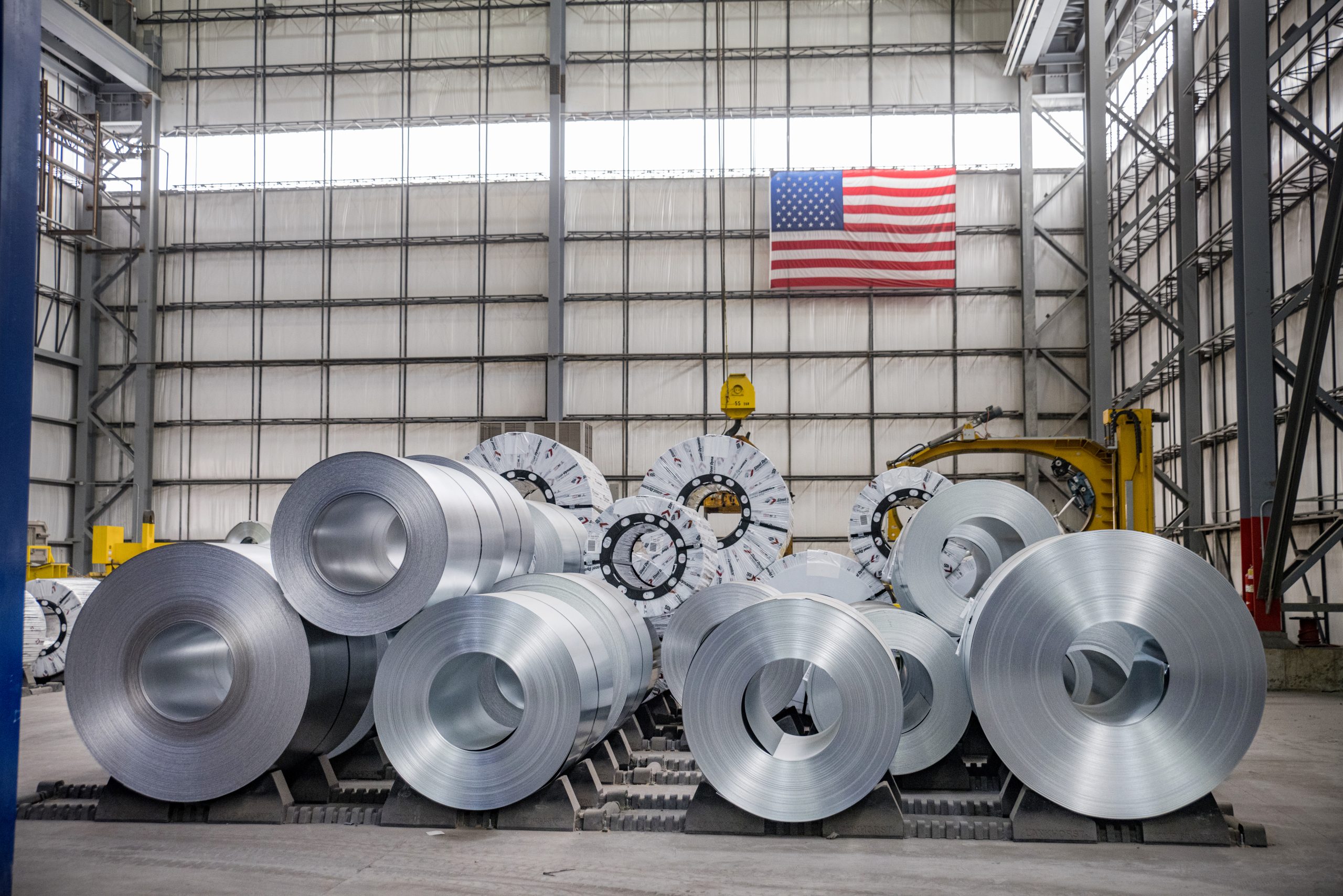
The U.S. has the lowest CO2 emissions per ton of steel produced and the lowest energy intensity.
Steel: One Billion Tons Recycled
The American steel industry is “the cleanest and most energy efficient of the leading steel industries in the world,” according to the American Iron and Steel Institute. This is due to a number of reasons:
- A high percentage of American steel is made from recycling steel scrap
- Most American mills use domestically-sourced iron ore pellets
- Increasingly, American mills are using natural gas in place of coal and coke, which lowers greenhouse gas emissions
Steel is 100% recyclable. It can be recycled into the same material of the same quality again and again. A steel beam can become another steel beam, or a refrigerator, car door or roof panel.
Domestic steel mills recycle their own steel scrap, as well as scrap from downstream product manufacturing processes and end-of-life products, to conserve energy, emissions and natural resources. There are typically 60 to 80 million tons of steel scrap recycled per year into new steel products in North America.
In the past 30 years, more than one billion tons of steel scrap have been recycled into new steel by the North American steel industry. On average, the United States processes enough ferrous scrap daily, by weight, to build 25 Eiffel Towers every day of the year.
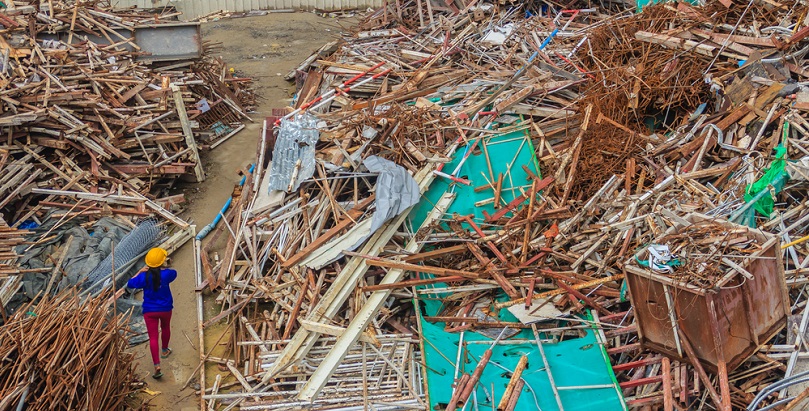
In North America, up to 80 million tons of steel scrap is recycled every year. In fact, more steel is recycled than plastic, copper, paper, aluminum, and glass combined.
Cold-Formed Steel (CFS) Meets All Sustainability Requirements
CFS meets the highest sustainability requirements set in all major green building standards and rating programs, including the Leadership in Energy and Environmental Design from the U.S. Green Building Council, the National Green Building Standard (ICC-700) for residential buildings, ASHRAE Standard 189.1 for commercial construction and the International Green Construction Code (IgCC).
The American Iron and Steel Institute reports:
- Steel framing contains a minimum of 25% recycled steel and is continually and completely remade without any loss of quality
- Most other construction products can only be down-cycled into lower-quality products
- Steel framing minimizes construction site waste
Achieving LEED™ Certification
The environmental benefits of steel framing, particularly high recycling rates, recycled content, and steel’s inert, non‐organic nature, make key contributions to achieving LEED™ certification. Credits in LEED that can be achieved with CFS in many key areas of construction.
Projects can earn LEED points if the steel product manufacturer is able to provide a Health Product Declaration (HPD), Declare Label, Environmental Product Declaration (EPD), Life Cycle Analysis, Cradle-to-Cradle certification or other mechanism demonstrating their commitment to product transparency, GB&D says.
“Some of the companies that make steel products will have gone through the process of getting one or more of those certifications, and that would allow them to potentially qualify for those LEED credits as well,” says Mark Thimons, vice president of sustainability for the American Iron and Steel Institute, as quoted by GB&D.
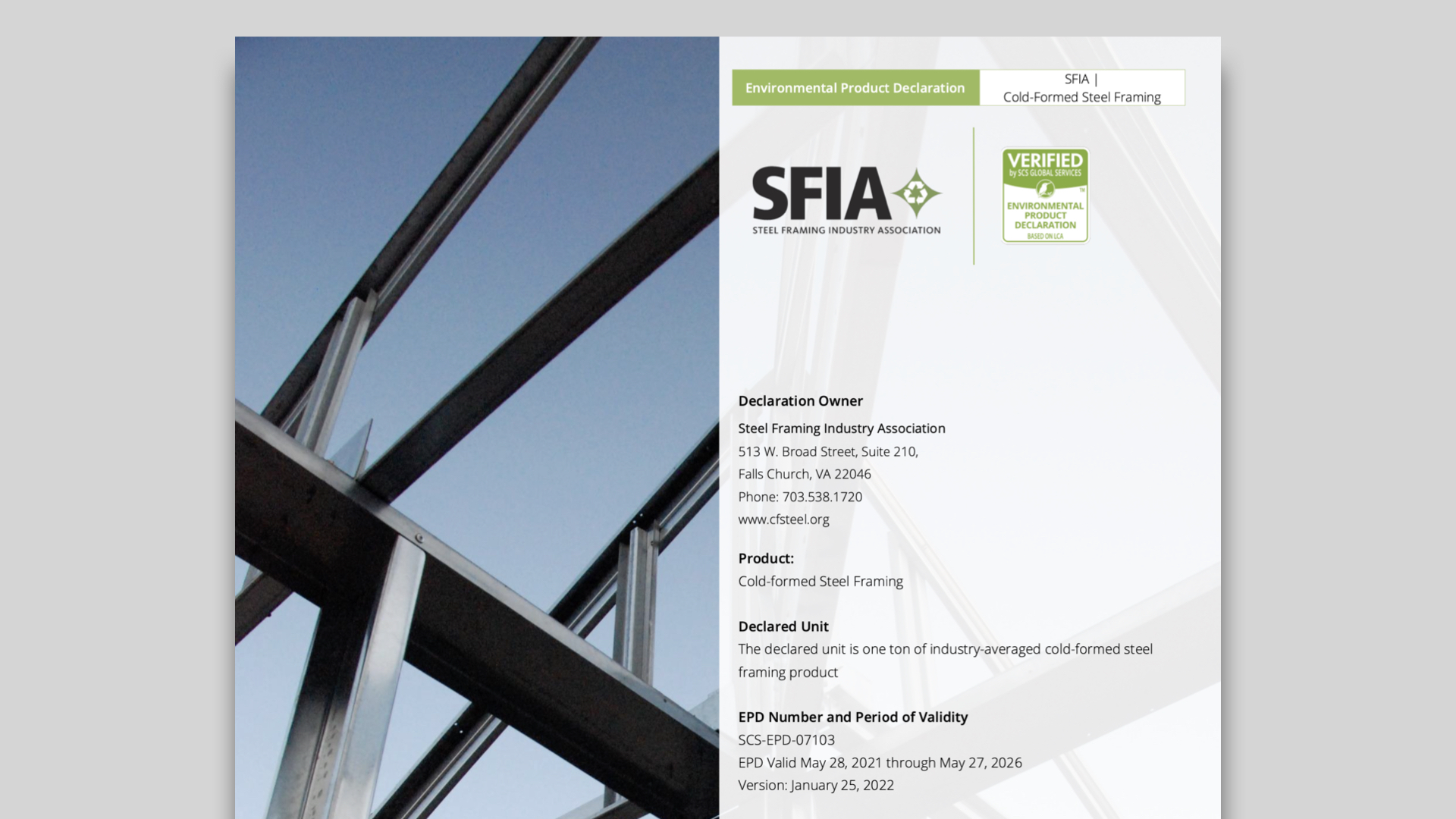
The Steel Framing Industry Association (SFIA) developed an Environmental Product Declaration for Cold-Formed Steel Framing, a tool for contractors, building owners, architects and others delivering advanced building designs that meet the latest LEED™ and other sustainable rating systems, programs and standards.
The Environmental Product Declaration for Cold-Formed Steel (CFS) Framing — SCS-EPD-07103 (version Apr. 11, 2025) — is good through May 27, 2026.
Outlasting the Life of a Building
Properly designed and constructed steel structures provide long-term durability and demonstrate extended service lives. Building codes and industry standards require that steel-framed structures be designed to tolerate corrosion or be protected against it where corrosion may impair strength or serviceability.
Zinc-coated steel, a standard for CFS framing, will last far beyond the life of a building when properly installed and insulated. Zinc coatings protect steel by providing a physical barrier as well as cathodic protection for the underlying steel. Because of its corrosion resistance, CFS is especially appropriate for use in the high-demand structural configurations featured in mid-rise construction.
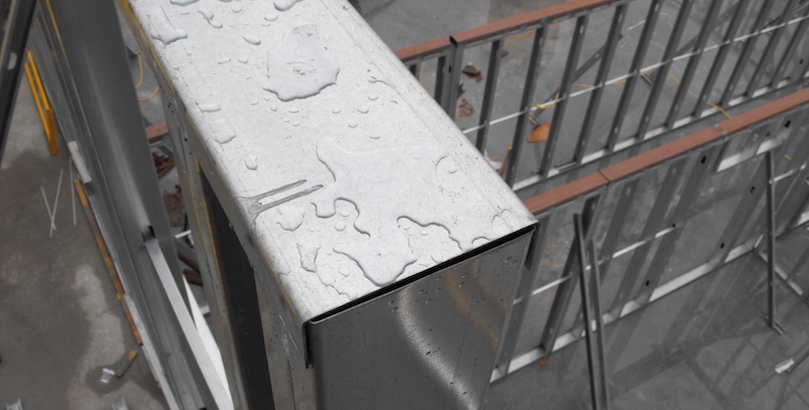
Zinc-coated steel will last far beyond the life of a building when properly installed and insulated.
LEED™ Video Provides Insights into Credits for Cold-Formed Steel Framing
The Steel Framing Industry Association (SFIA) produced a special video presentation, “Sustainability of Cold-Formed Steel (LEED v4),” that provides a detailed explanation of the credits and points that apply to CFS as well as available resources where applicable.
Additional Resources
- Why Building with CFS is the Most Sustainable Solution in Construction
- Steel Framing Provides Benefits to Investors Seeking Greener Buildings
- 3 Tips to Construct Greener Buildings with Steel Framing