
September 22, 2026 — Building housing in remote locations can make transportation, labor and onsite construction time especially important. A social housing project in northern Western Australia shows how cold-formed steel (CFS) framing helped address those challenges.
The Kullarri Building Company completed the Mistletoe Avenue Social Housing Project in Kununurra in 2022. The project provides a case study in local CFS production, off-site fabrication and digitally integrated manufacturing. Crews framed individual houses in one to two days, according to Howick.
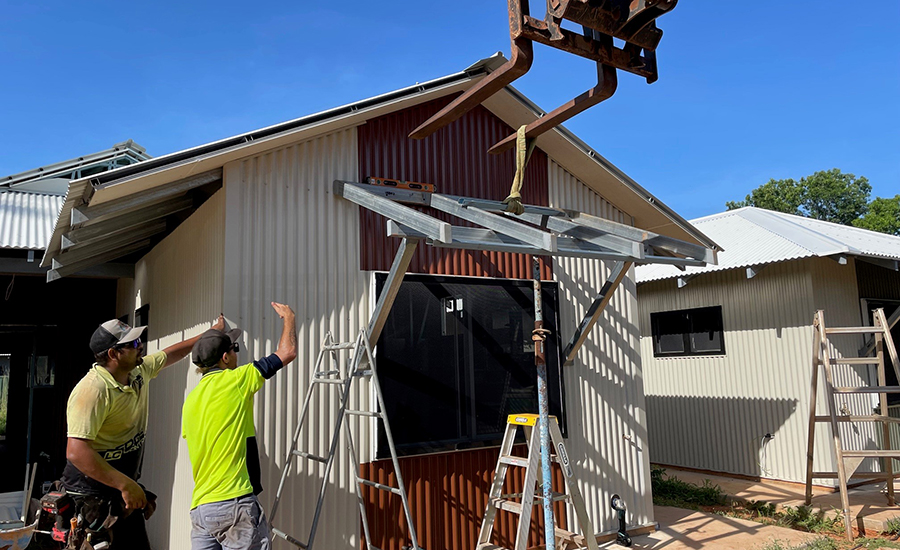
Cold-formed steel (CFS) framing crews reduced waste and framed individual houses at the Mistletoe Avenue project in one to two days.
The location presented its own challenges. Temperatures in Kununurra can exceed 40 degrees Celsius, or 104 degrees Fahrenheit. High humidity, torrential rain and strong winds add to the demanding construction environment.
Kullarri Building turned to Kimberley Manufacturing Pty Ltd, or KMPL, for the project’s steel frames and trusses. KMPL manufactures CFS framing in the region using Howick roll-forming technology. Local production reduced freight movements and overall onsite time, according to Howick. Howick is an SFIA member.
The Howick case study identifies four key CFS benefits from the project:
- Reliable framing supply during a timber supply crisis
- Individual houses framed in one to two days
- Reduced waste at the construction site
- About 20% lower production costs than conventional methods
Why Kullarri Building Chose CFS Framing
Kullarri Building specifies CFS framing where possible, according to Howick. For the Kununurra project, local fabrication kept framing production closer to the construction site. That reduced the number of freight movements required to support construction.
The framing also suited the demanding conditions in Kununurra. The region regularly faces extreme heat, humidity, heavy rain, high winds and termites.
KMPL also points to the economics of the framing system. The company says its CFS solution costs about 20% less to produce than conventional framing methods. KMPL attributes the difference to lower material requirements and fewer labor hours.
The project also unfolded during a timber supply crisis. Local steel production gave Kullarri Building another source for framing while timber supplies faced disruption.
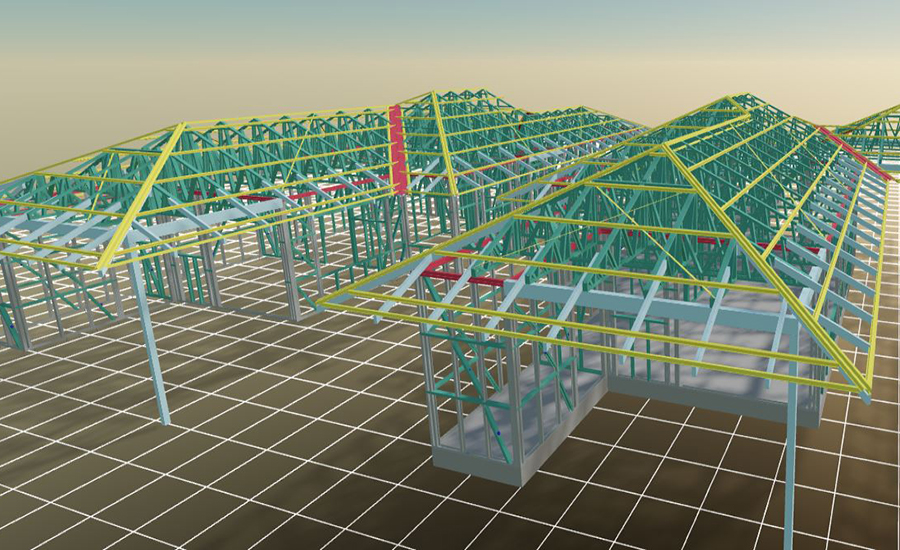
KMPL integrated Vertex design software with Howick roll-forming equipment to move framing information from design into fabrication.
Digital Design Moves Into Fabrication
KMPL integrated Vertex design software with its Howick roll-forming equipment. The connection helped move framing information from design into fabrication and supported rapid assembly onsite.
“The integration between Howick and Vertex is unparalleled – it rolled out and fabricated flawlessly,” KMPL Operations Manager Mick Palazzo said.
According to Howick, crews framed individual houses in one to two days. The project illustrates how fabrication decisions can affect work beyond the manufacturing facility. Local CFS production reduced freight movements and waste while helping shorten onsite framing time.
KMPL operates in Broome, in Western Australia’s Kimberley region. Both KMPL and Kullarri Building are Indigenous-owned companies. KMPL said it felt “particularly lucky” to contribute to social housing programs across the region.
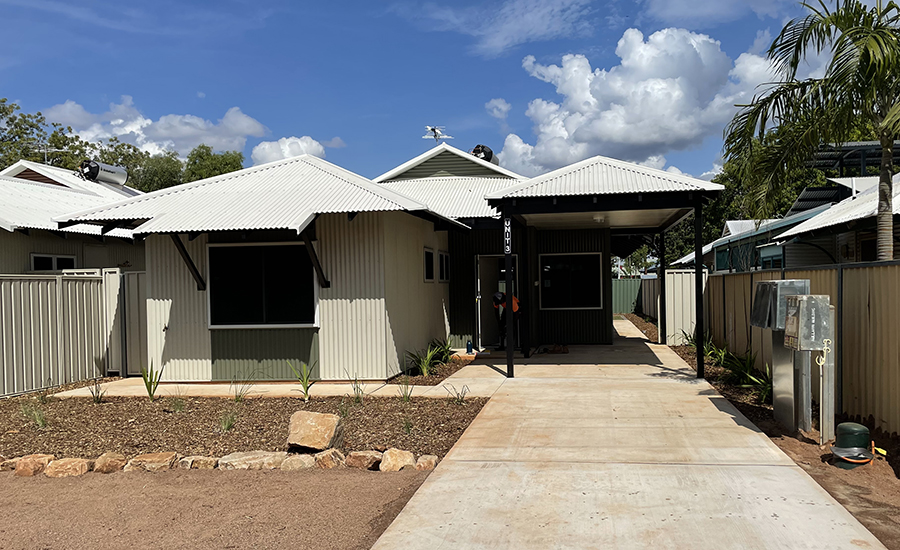
Framing manufacturer KMPL says its cold-formed steel (CFS) digital design enabled rapid onsite construction time.
Read the complete Howick case study.
About Howick
Howick Ltd. manufactures precision roll-forming machines and technology for cold-formed steel (CFS) framing. The company has developed roll-forming systems for nearly 50 years. Today, construction companies in more than 80 countries use Howick's technology to manufacture CFS framing components. Howick designs and manufactures its roll-forming systems at its facility in Auckland, New Zealand. The company also sources components from local suppliers and manufactures many parts in-house. For more information about Howick, visit www.howickltd.com. Howick is a member of the Steel Framing Industry Association.

Additional Resources
- Howick Case Study: CFS Panelization Delivers Walls for 100 Homes in 4 Months
- Howick Case Study: Panelized CFS Framing Accelerates Hotel Construction by 4 Months
- SFIA Member Howick’s Steel-Framing Tech Cuts Labor Hours by 50% to 70%, CEO Says