
Cold-formed steel (CFS) framing delivers durability, dimensional stability and construction efficiency. Developers increasingly choose steel when projects demand predictable schedules and consistent results. As a result, wood-to-steel conversions continue to gain momentum in hospitality construction.
The Avid Candlewood Suites in Mission, Texas, demonstrates this approach. The project team converted the four-story hotel from wood framing to a complete CFS framing system during the design phase.
“The project highlights how steel framing can transition an existing wood design into a stronger and more efficient steel structure,” says the article, “How to Overcome Wood Framing to CFS Framing Conversion,” by Scottsdale Construction Systems, an SFIA member.
Images provided by Scottsdale Construction Systems.
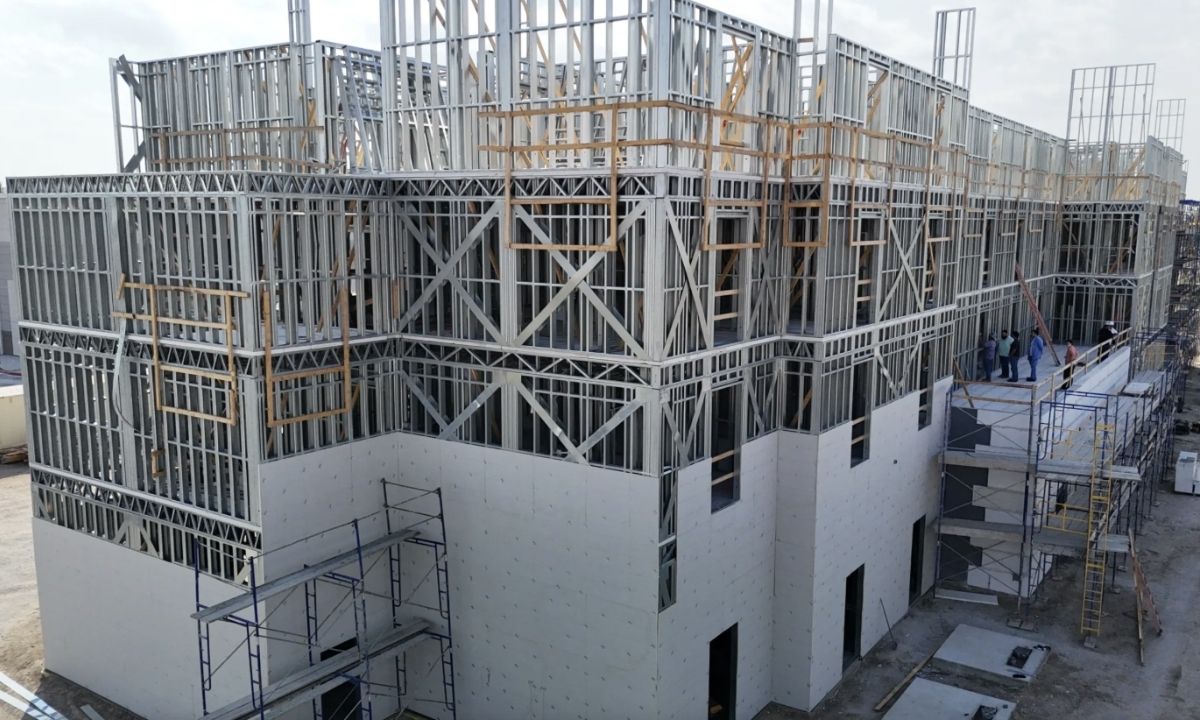
The four-story Avid Candlewood Suites in Mission, Texas, was converted from wood framing to a complete cold-formed steel (CFS) framing system.
Engineering the Wood-to-Steel Conversion
Converting the Avid Candlewood Suites from wood to CFS required a comprehensive structural review.
“Rather than discarding plans and restarting the process, the team leveraged CFS framing systems and roll forming technology to adapt the original concept into a practical, ready-to-build CFS solution,” says the article.
SFIA member ADTEK Engineers provided delegated engineering services. KSI-CFS fabricated the framing system using roll-forming technology from Scottsdale.
The engineering team evaluated gravity loads, wind loads, diaphragm behavior and lateral force paths. The design followed the 2018 International Building Code. Engineers designed the structure for a 124-mph ultimate wind speed, Exposure C conditions and Risk Category II requirements.
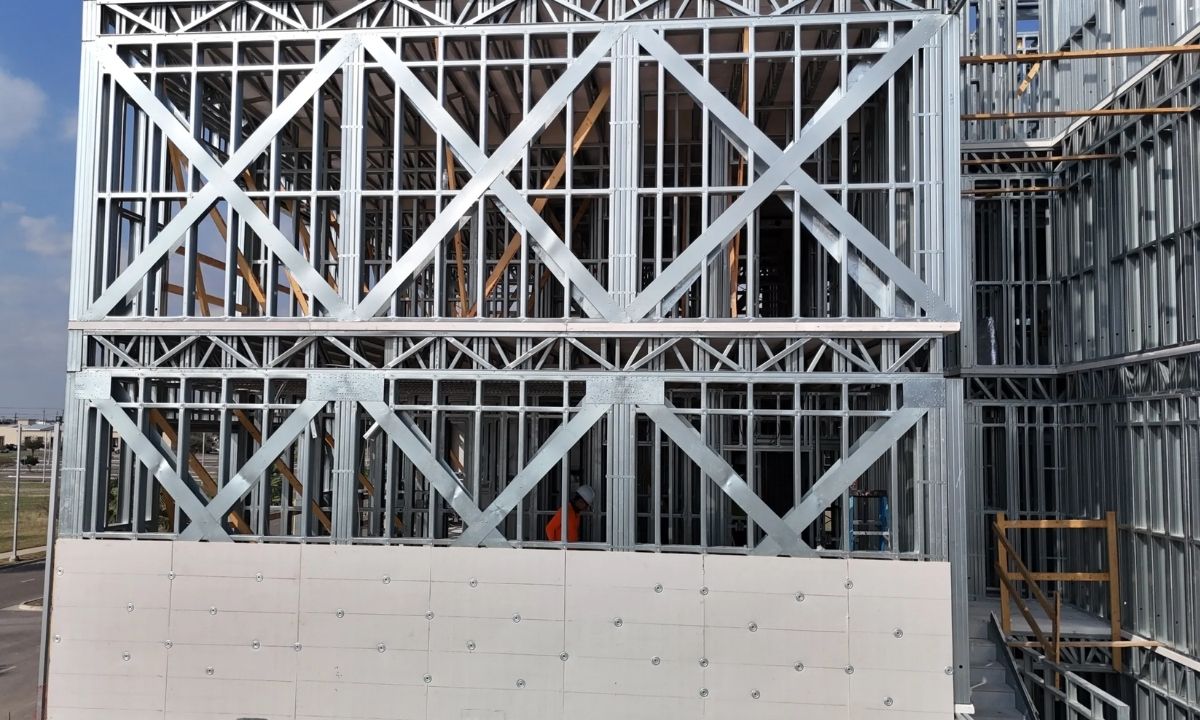
SFIA member ADTEK Engineers delivered delegated engineering services, designing the structure for 124-mph ultimate wind speeds under Exposure C and Risk Category II criteria.
ADTEK Engineers Performs Lateral Analysis
The project team faced a challenge when complete lateral loading information was unavailable during the conversion process. Under AISI S202, the engineer of record must provide loading information to the delegated CFS designer.
“Since wood design often overlooks the full lateral stability, loading for the lateral system was not provided,” says the article.
To keep the project moving, ADTEK Engineers performed an independent lateral analysis and developed an alternative solution.
The team adopted X-braced CFS wall assemblies to support the building’s lateral system. Engineers also designed heavier framing members in select first-floor areas. Those locations carried the highest gravity and overturning loads. This approach optimized performance without overdesigning the entire structure.
The design team also focused on deflection and serviceability. Engineers controlled floor vibration, wall movement and vertical deflection throughout the building. Those measures support guest comfort, protect finishes and improve corridor performance.
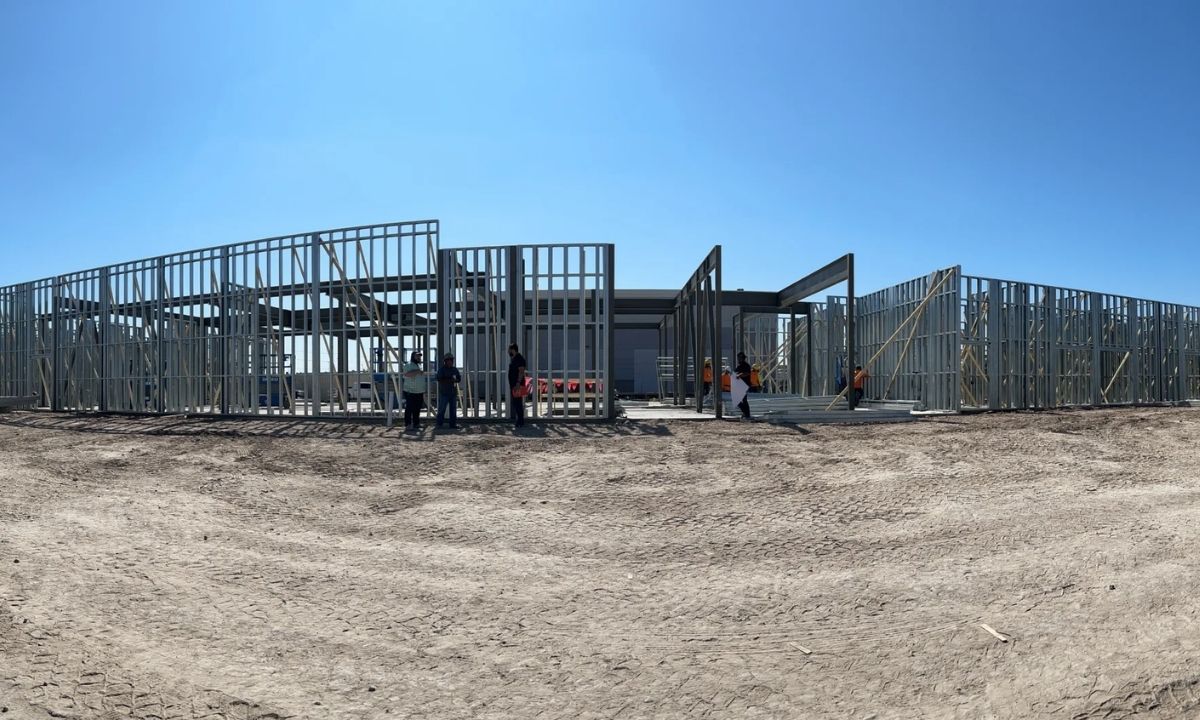
Engineers designed heavier framing members in select first-floor areas that carried the highest gravity and overturning loads. This approach optimized performance without overdesigning the entire structure.
Turning Engineering Into Fabrication
Converting a four-story hotel from wood to steel required close coordination between engineering, fabrication and installation. Scottsdale’s software platform helped connect those phases and maintain accuracy throughout the conversion process.
- ScotSteel served as a 3D design platform for drafting, framing layouts, quantity takeoffs and production-ready framing data
- ScotStruct provided structural analysis and design capabilities for walls, bracing, floors and other key elements
Together, the tools helped streamline redesign decisions and move engineering data efficiently into fabrication.
The project demonstrates that a wood-to-steel conversion involves more than replacing one material with another. Engineers must evaluate loads, optimize members, coordinate connections and align fabrication requirements. Effective coordination helps project teams execute complex conversions while maintaining design intent and construction efficiency.
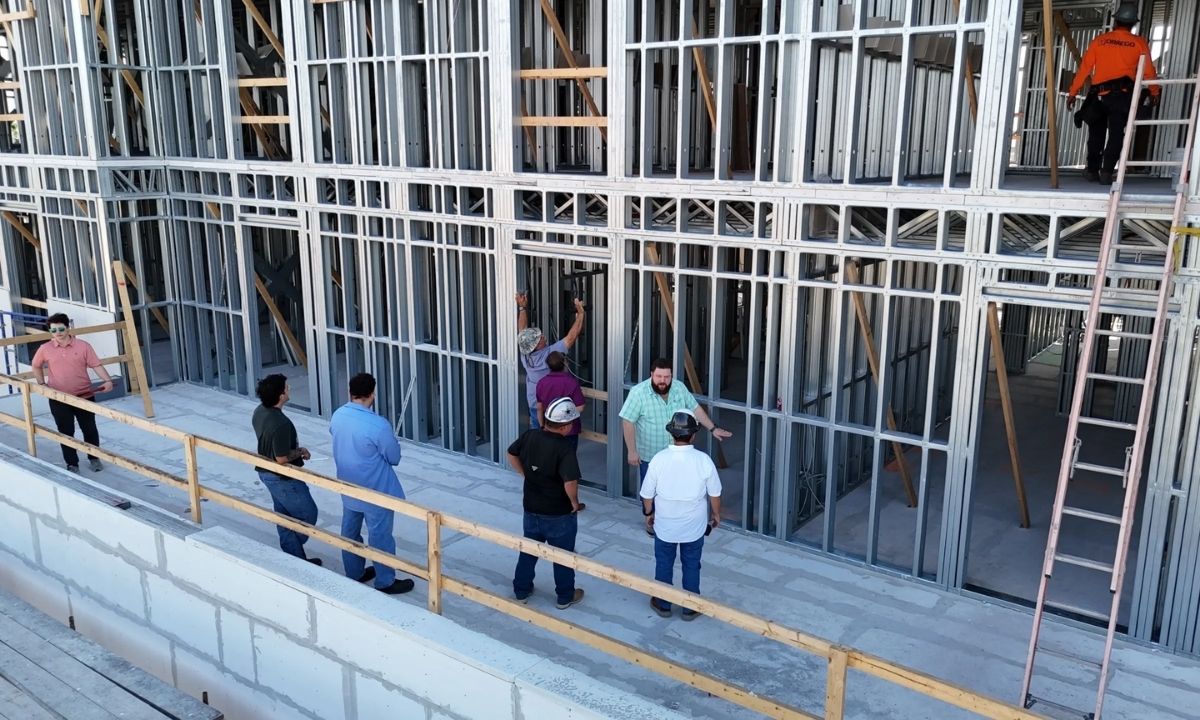
Converting a four-story hotel from wood to steel required close coordination among the engineering, fabrication and installation teams. This collaboration helped maintain design intent and construction efficiency throughout the project.
More Wood-to-Steel Conversions Expected
The project highlights the advantages of offsite manufacturing. Crews fabricated exterior walls, interior walls and floor trusses before delivery to the jobsite. This approach reduced field labor and helped streamline installation.
The Avid Candlewood Suites demonstrates how a wood-to-steel conversion can address structural challenges while maintaining project momentum. The project combined engineering analysis, coordinated fabrication and efficient installation to deliver a practical cold-formed steel framing solution.
As developers seek durable and efficient building systems, wood-to-steel conversions will likely become more common. The Avid Candlewood Suites shows how project teams can successfully transition from wood to cold-formed steel while meeting performance, constructability and schedule goals.
Read the full article from Scottsdale Construction Systems.

About Scottsdale Construction Systems
Scottsdale Construction Systems is a global leader in cold-formed steel framing technology, providing advanced roll forming machinery and software solutions for efficient, precision-built structures. With over 25 years of innovation, Scottsdale empowers builders to deliver smarter, faster, and more sustainable construction. For more information, visit scottsdalesteelframes.com.
Additional Resources
- Scottsdale: Modular Steel Warehouse Showcases Large-Span Cold-Formed Steel Design
- Scottsdale Delivers Innovative Thermal Solutions for Cold-Formed Steel Framing
- Scottsdale Posts Comprehensive Guide to Steel Framing for Modern Construction