
Steel Framing Drives Hurricane Ready Housing Solutions
DreamWeaver Homes is advancing plans for its Puerto Rico manufacturing facility using cold-formed steel (CFS) framing. It is moving the facility into production. The company, based in Pennsylvania, is responding to repeated housing loss across the island. Hurricanes and earthquakes have damaged or destroyed more than 250,000 homes. Thousands of families still live in temporary conditions.
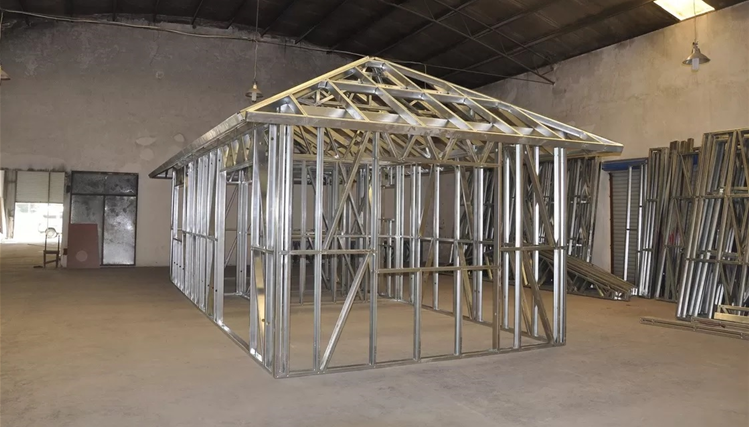
A 1,500 sq ft home built with cold-formed steel (CFS) framing weighs 65–70% less than concrete – reducing loads from up to 350 tons to as little as 80 tons. In Puerto Rico’s karst terrain, this lighter system improves safety, lowers foundation costs and expands buildability. Photo Credit: DreamWeaver Homes
DreamWeaver uses CFS framing to address the failures of traditional materials. Wood framing rots, burns and fails under hurricane-force winds. Concrete has become cost-prohibitive under 2018 building codes. Nearly 30% of Puerto Rico’s terrain is limestone with sinkholes and subsurface voids. These conditions drive foundation costs up to 40% of total construction cost.
Steel framing offers a lighter, noncombustible system. It lowers foundation demands and performs more reliably than wood or concrete.
The company has launched a $7.5 million Series A round. It will move the factory into production. The facility will produce high-volume CFS framing homes for Puerto Rico. These homes are engineered to exceed 2018 emergency building codes. They can withstand Category 5 hurricanes and meet seismic standards. The approach supports long-term resilience and aligns with disaster recovery funding.
Steel Framing Changes Construction Methods
India is rapidly expanding its infrastructure, with projects advancing at an accelerated pace. Developers face shrinking timelines and tighter capital scrutiny. They also face rising expectations for sustainability and structural reliability. For decades, reinforced concrete defined construction. However, it brings heavier foundations, longer curing cycles, limited flexibility and slower delivery. Today, India’s developers and engineers are shifting their approach to using more steel systems.
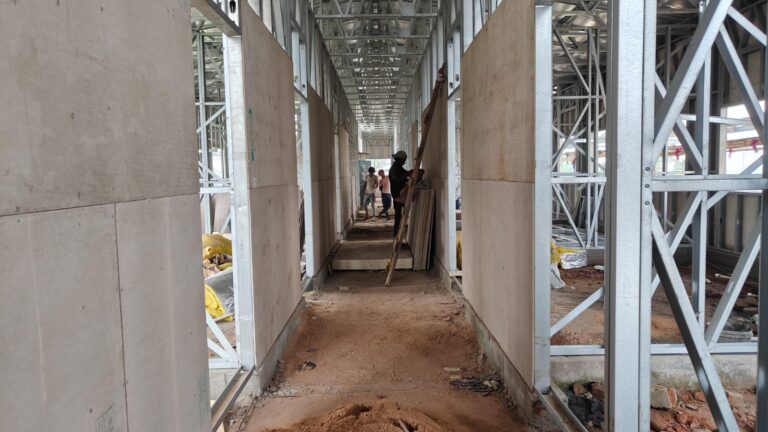
India’s infrastructure growth demands faster delivery and higher performance. Steel systems reduce foundation loads and accelerate construction schedules.
Wootz Buildsys is a pre-engineered buildings company in India. It is helping drive this transition by advancing steel solutions across many projects. Its focus on prefabricated steel framing systems improves construction speed, precision and consistency. This approach reinforces the value of performance driven building methods.
Across India, developers are recognizing the economic advantages of steel systems. These systems reduce foundation loads, accelerate timelines and support modular construction. Prefabrication helps limit site waste. Integrated insulation improves energy efficiency.
Steel Chassis Reshapes Modular Building Efficiency
MMC Modular, based in Australia, developed a system that rethinks modular construction from the ground up. Led by owner John Davis, the company focuses on solving long accepted problems of welded steel chassis. Davis draws on decades of experience across Australia, New Zealand and the United States. He identified issues with transport damage, labor demands and slow production. These challenges have limited modular growth.
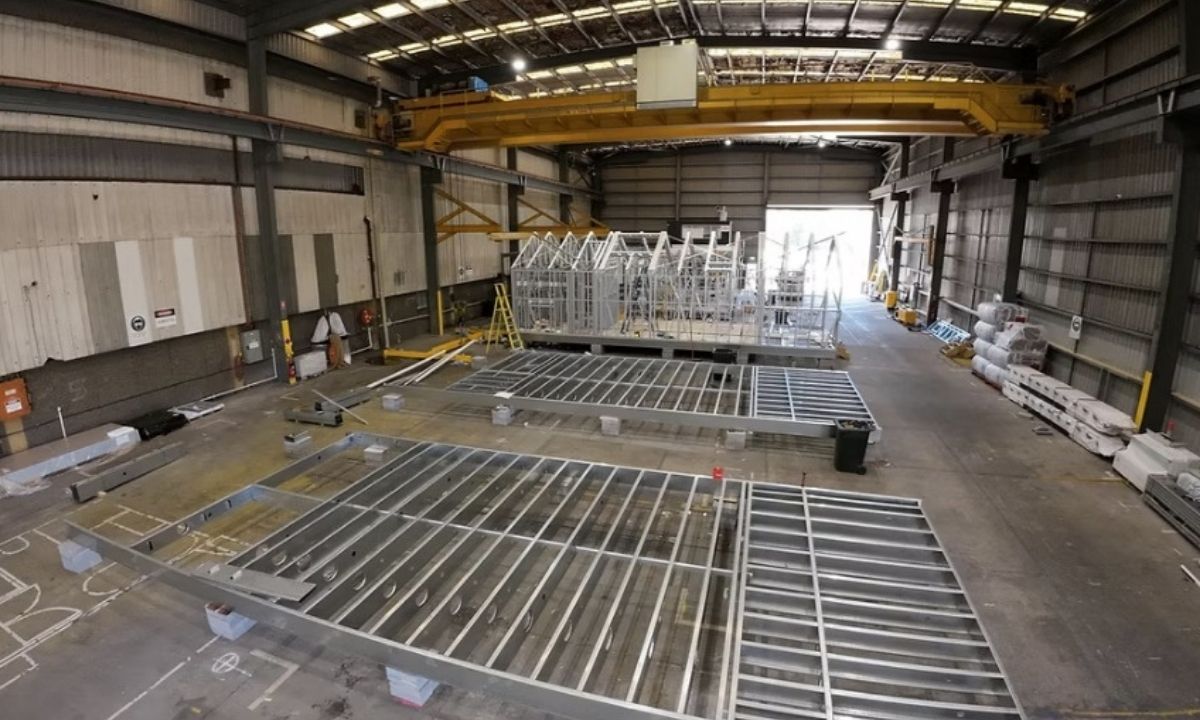
MMC Modular’s ModFloor system uses cold-formed steel (CFS) framing to replace traditional chassis. It reduces weight, limits transport deflection and eliminates welding and cutting. Photo Credit: MMC Modular
Using cold-formed steel (CFS) framing, the ModFloor system replaces traditional chassis. It delivers a lighter, more consistent solution. The system minimizes deflection during transport. It removes the need for welding, cutting and skilled labor. CFS framing components arrive ready to assemble. Small crews can complete chassis builds in hours. MMC Modular supports this with proprietary rollforming machinery. This increases production speed and allows rapid profile changes. It enables more efficient and scalable manufacturing.
MMC Modular extends the system beyond the chassis. It integrates design and procurement into a single workflow. Builders can reuse designs and reduce engineering overhead. They can also streamline material supply. The steel-based system lowers transport damage and crane requirements. It also reduces reliance on concrete. This expands modular construction into remote and multi-level applications. It also improves delivery certainty.
Additional Resources
- Update #19: Cold-Formed Steel Used for Apartment Project, Pickleball Complex and Fire Station
- Update #18: Cold-Formed Steel Accelerates Housing Projects in Pennsylvania, New Jersey and Brazil
- Update #17: Cold-Formed Steel Advances Healing Facility, History Center and Middle East ConTech
- Update #16: Cold-Formed Steel for Wildfire Recovery, Campus Housing and Martha Stewart Prefab Homes
- Update #15: Cold-Formed Steel for Student Housing, Greenhouse and Fire Station