
The Cold-Formed Steel Engineers Institute (CFSEI) 2026 CFSEI Expo will feature a technical session, May 20, focused on noncombustible construction and fire performance using cold-formed steel (CFS) framing.
Carl Welty of The Banning Land Trust and W. Donald Wheeler of Wheeler Steel Framing Supply will present the session titled, “Building for the 21st Century: Noncombustible Construction with Cold-Formed Steel.”
The 2026 CFSEI Expo will take place May 18-20, 2026, at the Westin Long Beach Hotel in Long Beach, California. Attendees who participate in the keynote will earn 1 PDH / 1 AIA LU Credit.
The session will provide engineers, designers and industry professionals with a practical look at how cold-formed steel (CFS) enables noncombustible construction. It will also examine how material choices influence fire performance in modern buildings.
2026 CFSEI Expo
Cold-Formed Steel Engineers Institute (CFSEI) 2026 Expo
May 18-20, 2026
Westin Long Beach Hotel
Long Beach, CaliforniaEarn up to 15 PDHs / 9 AIA LU Credits

CFSEI Expo Hotel Discount: Deadline April 27
The Westin Long Beach333 East Ocean Boulevard, Long Beach, CA 90802 Discounted Rate
$239/night + tax.
Guaranteed until Monday, April 27, 2026
Reserve Your Room
Fire Risk Demands a New Approach
Cold-formed steel construction provides a practical and affordable way to build noncombustible homes. But this is not always apparent in studies examining the damage after an urban wildfire event. Industry discussions tend to focus on reducing fire risk, not on building with noncombustible materials.
“Recommendations for fire risk reduction typically focus narrowly on ‘home hardening’ strategies designed to protect combustible wood construction from embers and other ignition sources that threaten our wooden homes,” says the abstract for this intriguing 2026 CFSEI Expo session.
Welty and Wheeler will show session attendees a broader approach. They’ll examine how noncombustible construction can address fire risk right at its source.
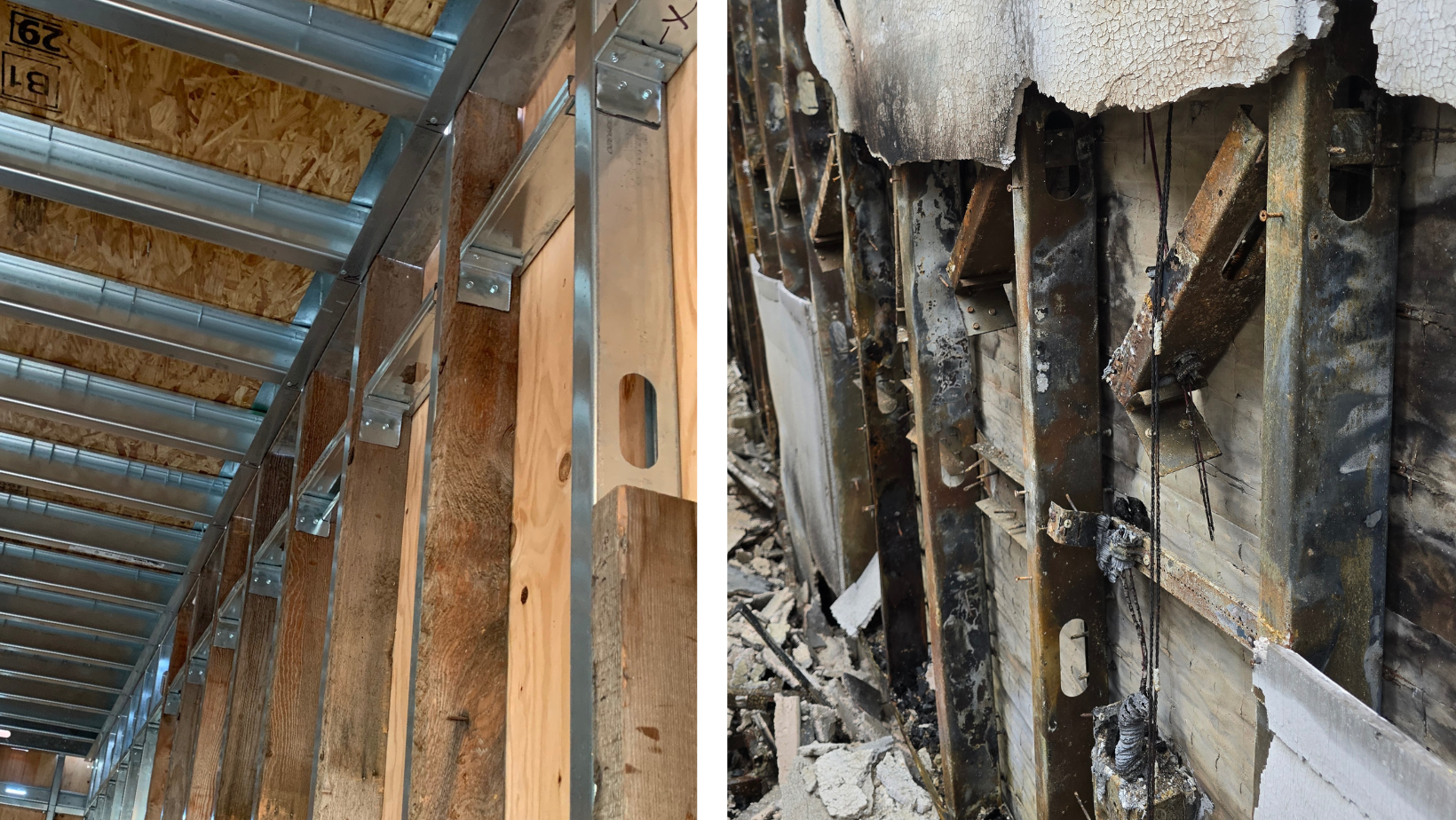
In the Palisades Fire, a home’s wood studs and plywood (left) burned away completely (right), leaving only cold-formed steel (CFS) framing, nail heads and the back of the exterior stucco.
The Data Reveals Wood Is a Problem
What does wildfire data reveal?
- The January 2025 Los Angeles fires destroyed more than 11,500 homes and killed at least 31 people.
- Single-structure fires claim more lives than large conflagrations. They kill 2,600 to 2,800 people each year in the United States.
“Modern conventional wood-framed houses present an alarming reality,” the session abstract adds. “They burn 8 times faster and generate 200 times more smoke and toxic gases than older homes.”
Adhesives and chemicals in manufactured lumber release deadly gases during a fire. Toxic outgassing causes more fatalities than flames, Welty and Wheeler say.

At the Palisades home, cantilevered cold-formed steel (CFS) deck joists and their foundation connection remained intact — where less wood meant less fire intensity.
Steel Framing Resists Fire in Southern California Blazes
Cold-Formed Steel (CFS) framing proved its resilience during the 2025 Southern California wildfires, where nearby wood-framed homes burned to ash. A Pacific Palisades home built with CFS maintained its structural frame, even as adjacent structures were destroyed.
Wood framing ignites at low temperatures and fuels fires. In contrast, steel does not burn or melt under typical fire conditions.
In both a Pacific Palisades home and a Malibu project, flames consumed plywood and wood components. But the steel studs and joists at these homes remained intact with no warping. These real-world examples challenge the myth that steel fails in house fires.
CFS framing also delivers cost savings through reduced labor, less waste and fewer callbacks. Builders can even reuse portions of the steel structure after a fire, improving sustainability and recovery.
Steel Framing Changes the Equation
Welty and Wheeler’s presentation will show how steel framing can build noncombustible homes at costs comparable to wood construction. Their session will address two critical challenges.
- Fire ignition
- Toxic outgassing
“Steel framing prevents fire ignition and spread at the source, while eliminating dependence on manufactured lumber that outgasses toxic chemicals responsible for rapid incapacitation and death in fires,” the session abstract notes.
The increase in large-scale fires reflects broader issues. Faster-burning modern homes highlight the need for change. The industry must rethink materials and construction methods, Welty and Wheeler say.
This 2026 CFSEI Expo session poses critical questions. It also provides insight into how noncombustible steel construction can solve these challenges.
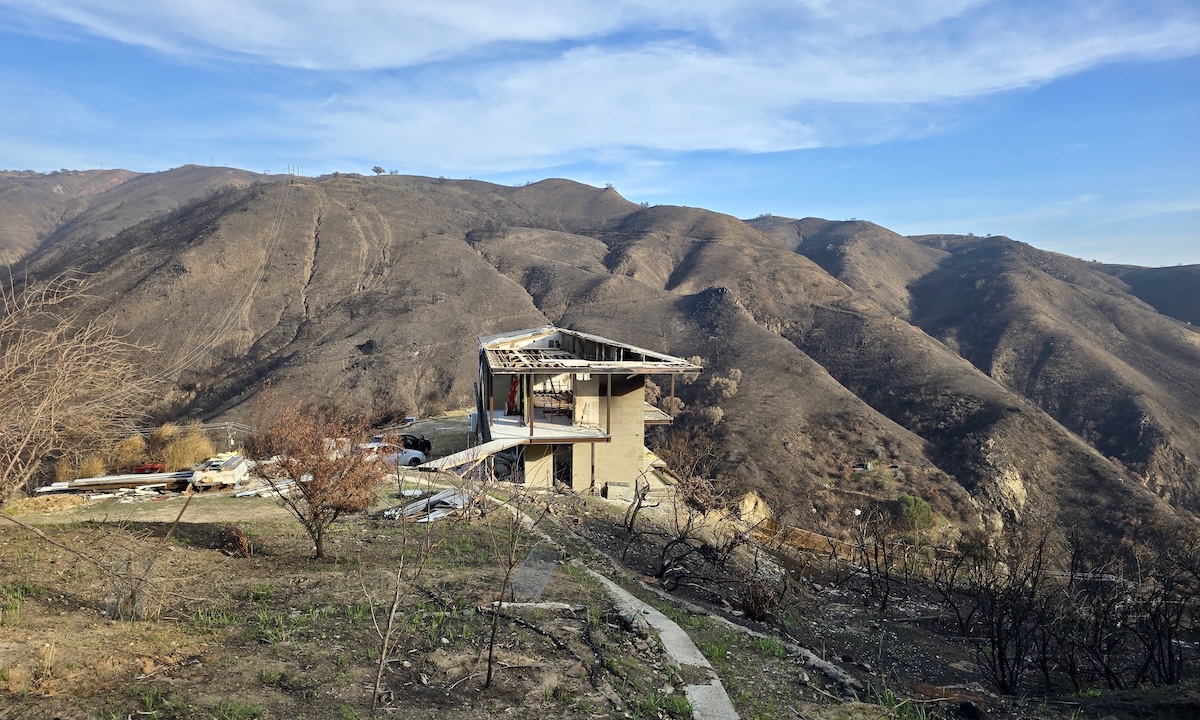
Partially constructed when the wildfire hit, this Malibu home’s cold-formed steel (CFS) framing package provided by Wheeler Steel Framing Supply withstood the flames.
Fire Safety: 5 Reasons to Use Steel
1. Steel is Noncombustible
Steel can’t burn, because it contains no elements that can serve as fuel.
2. Steel Maintains its Noncombustibility
Steel remains noncombustible throughout the entire lifecycle of a building — during construction, occupation and renovation and repair.
3. Steel Framing Reduces Fire Risk to Workers and Occupants
Fire-rated walls and floors help contain flames and preserve the integrity of a structure.
4. Steel-Framed Buildings Reduce the Impact on Municipal Fire Services
Fires have strained local fire departments, prompting many municipalities to adopt site-safety regulations for combustible buildings.
5. Steel-Framed Buildings Tend to Cost Less to Insure
CFS framing saved $1.32 million in builders risk insurance premiums over the 24-month construction of a four-story, 400-unit hotel — plus $66,000 annually in property insurance premiums compared to wood framing.
What Keynote Attendees Will Learn
The 2026 CFSEI Expo keynote session will highlight key lessons on fire performance and noncombustible construction. Welty and Wheeler will explore:
- CFS framing vs. wood framing performance in fires
- Home hardening compared to noncombustible construction
- Cost-effective methods to build noncombustible homes with CFS
- Fire impacts on structures in wildfires and single-family homes
- Drivers behind faster-burning modern homes and material influence
These insights help engineers and designers understand how cold-formed steel reduces fire risk and improves building resilience.
Industry Experts Leading the Session
The session will be presented by two experienced professionals in design and construction.

Carl Welty, Carl Welty Architects
Carl Welty
Carl Welty is a California licensed architect and principal of Carl Welty Architects. He has led green building and sustainable design for more than 30 years.
Welty serves as Director of Architecture and Planning at The Banning Land Trust. He focuses on affordable, energy-efficient design and resilient building systems.
He applies solar orientation and climate-responsive design to improve performance. He delivers durable, low-maintenance structures with improved fire, mold and termite resistance.
Welty designed a 9,000-square-foot Water Conservation Education Center using CFS framing. The design achieved a Title-24 Energy Compliance score 60% above baseline.
He also designed a 1,500-square-foot greenhouse using CFS framing. The structure met California school seismic requirements and reduced construction cost by 20%.
Welty earned his Master of Architecture from Yale University and his bachelor’s degree from California Polytechnic State University San Luis Obispo.

Carl Welty, Carl Welty Architects
W. Donald Wheeler
Donald Wheeler is a general contractor with more than 50 years of experience in residential and commercial construction. He specializes in custom residential steel construction from foundation to finish.
Wheeler manufactures and installs steel trusses and pre-cut framing materials, including concrete form material. He manages supervision, cost control and complex construction challenges.
He coordinates all phases of construction, from permit through open house. At Wheeler Steel Framing Supply, he supervises pre-cut steel framing at the Fullerton warehouse and supports onsite installation.
Wheeler taught CFS framing at Chaffey College for three years. He has presented on CFS internationally, including in Japan.
Wheeler participates in industry associations and appears in professional publications.
Join the Industry in Long Beach
The 2026 CFSEI Expo session will provide a timely opportunity. Attendees will hear directly from industry professionals advancing noncombustible construction with CFS farming.
Professionals attending the 2026 CFSEI Expo will gain insight into how CFS improves fire performance and reduces risk. “Building for the 21st Century: Noncombustible Construction with Cold-Formed Steel” offers a practical look at design strategies that support safer, more resilient buildings.
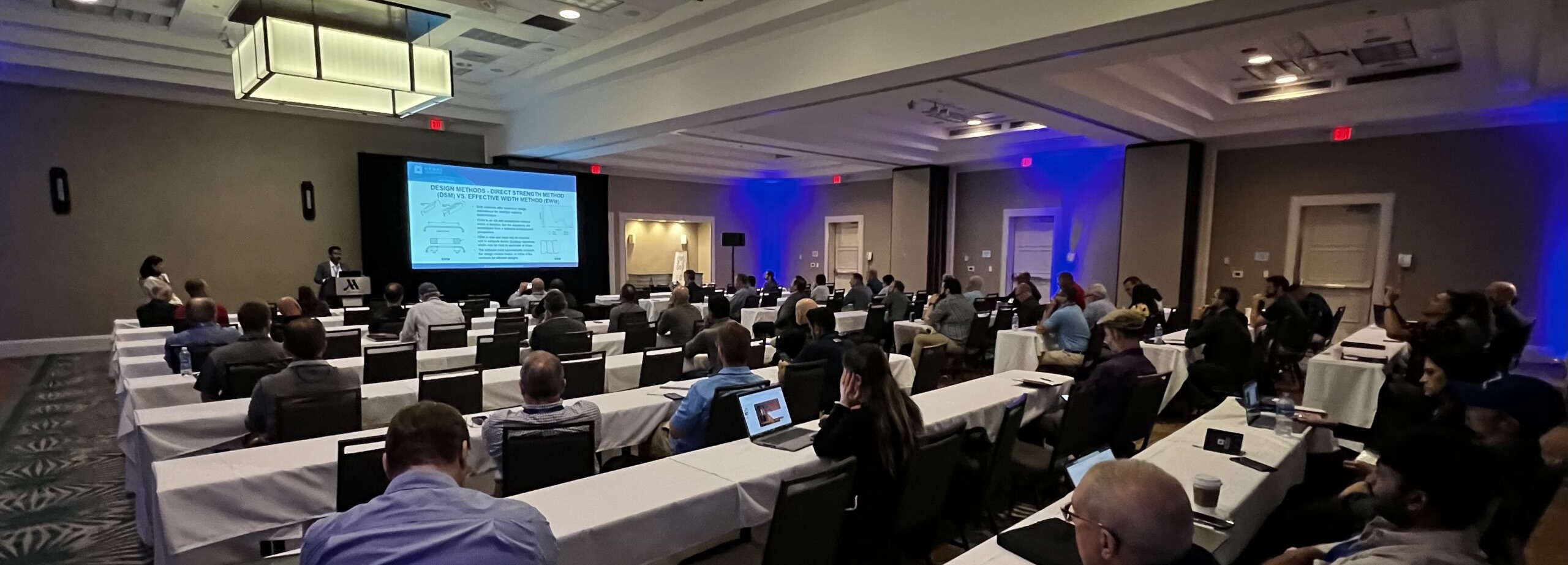
Attendees packed last year’s CFSEI Expo in Raleigh, North Carolina. More are expected this year.

Cold-Formed Steel Engineers Institute
The Cold-Formed Steel Engineers Institute (CFSEI) comprises hundreds of structural engineers and other design professionals. Together, they are finding a better way to produce safe and efficient cold-formed steel (CFS) designs for commercial and residential structures. CFSEI members develop industry standards and design methods. CFSEI issues technical bulletins, organizes seminars and provides online training so that engineers and design professionals can improve their knowledge and skills. CFSEI is part of the Steel Framing Industry Association (SFIA) family. For more information, visit www.cfsei.org.
Additional Resources
- Register for the 2026 CFSEI Expo in Long Beach, California (May 18-20)
- CFSEI Announces Speakers for 2026 CFSEI Expo in Long Beach, California (May 18-20)
- Insights and Inspiration Take Center Stage at 2025 CFSEI Expo in Raleigh