
Photo Credits: Nucor Corporation
The Environmental Protection Agency says that LEC products “have less climate impact associated with mining, manufacturing and transportation,” says a Walls & Ceilings article written by Adam Shoemaker, CSI, CDT, LEED AP BD+C, director of corporate sustainability for ClarkDietrich, a member of the Steel Framing Industry Association (SFIA).
Shoemaker says that steel production has evolved over time to be more efficient, with modern advancements leading to more sustainable products. In construction, architects and builders can now specify LEC cold-formed steel (CFS) framing to reduce the environmental impact of their projects.

Adam Shoemaker, ClarkDietrich corporate sustainability manager

The use of recycled steel sets a lower carbon benchmark by avoiding several energy-intensive processes involved in producing new steel from iron ore.
The Seven Steps of Steelmaking
LEC steel’s sustainability comes from choices made throughout the steelmaking process, says the article, “Steel Framing’s Sustainability Revolution,” written by Shoemaker and published by Walls & Ceilings.
“Building and infrastructure materials make up 17 percent of global greenhouse gas emissions, so ensuring sustainable supply chains for LEC building products has significant impact.” Shoemaker says.
According to Shoemaker, the steelmaking process consists of seven steps:
- Raw Materials: The use of recycled steel sets a lower carbon benchmark by avoiding several energy-intensive processes involved in producing new steel from iron ore. The shift to recycled material, primarily through the use of an electric arc furnace (EAF), highlights the essential role of recycling to reduce steel’s carbon footprint.
- Raw Material Preparation: Raw materials are processed to optimize their suitability for steelmaking. For Basic Oxygen Furnace (BOF) production, iron ore requires more extensive preparation to enhance iron content and remove impurities. In contrast, EAF mills, using predominantly recycled steel, require less preparation, mainly sorting and sizing, before entering the furnace.
- Ironmaking: Iron ore is converted into molten iron in the BOF route, while the EAF route skips this step.
- Steelmaking: Molten iron or recycled steel is transformed into steel by adjusting its chemical composition.
- Semi-Finished Products: Steel is cast into shapes like slabs, billets, or blooms.
- Hot-Rolled Products: Steel is hot-rolled into various products such as rebar and coils.
- Finishing Operations: Final treatments like painting, galvanizing, and cold rolling occur before the steel is shipped to manufacturers for end-use products.
After the seventh step, master coils of steel are shipped to companies such as SFIA member CFS framing manufacturers for shaping into end-use products.

Master coils of steel are shipped to CFS framing manufacturers for shaping into end-use products.
CFS Framing for LEED Credits
The key difference between LEC steel framing and its traditional counterpart lies in the production process. LEC steel is typically made with high recycled content at EAF mills, resulting in up to 30% less embodied carbon.
This steel comes with documentation such as Environmental Product Declarations (EPDs) and Life Cycle Assessments (LCAs), crucial for certifications like LEED.
Under LEED v4.1, teams using LEC steel framing can earn up to two points through the “Material and Resources Credit: EPDs” by including qualifying products, Shoemaker says.
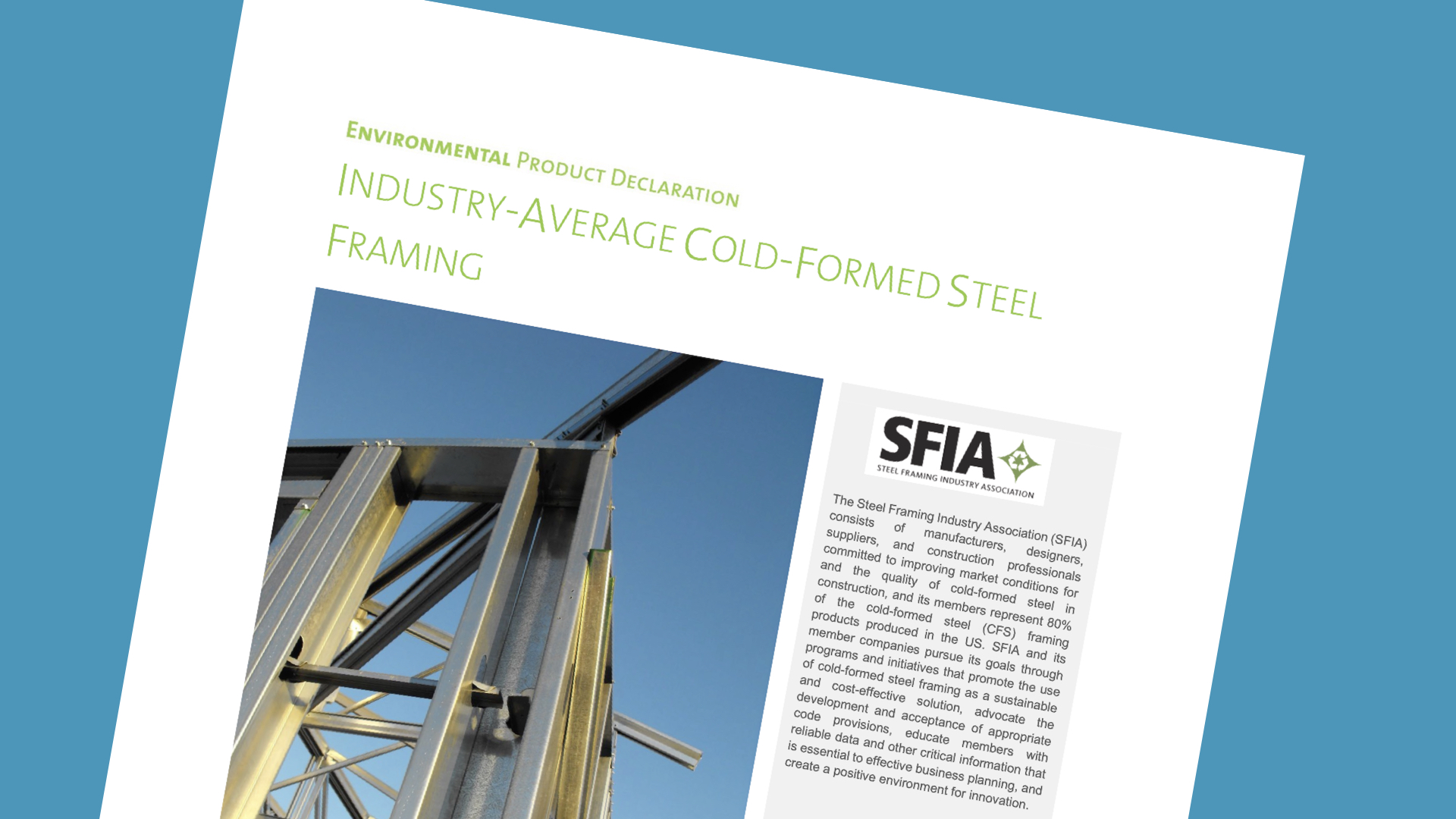
SFIA’s new industry-average EPD provides independently verified environmental impact data for cold-formed steel framing products.
SFIA EPD
The Steel Framing Industry Association (SFIA) Environmental Product Declaration for Cold-Formed Steel Framing (EPD) is a must-have tool for contractors, building owners, architects and others who strive to deliver advanced building designs that meet the latest LEED™ and other sustainable rating systems, programs and standards.
The SFIA EPD for CFS Framing can be seamlessly integrated into project specifications as an option with company-specific EPDs. SFIA offers a Specifications Review Service for steel framing, which is a completely free checkup.
Balancing Sustainability in Steel Production
Steelmaking has advanced significantly, and while EAF mills are ideal for producing low embodied carbon steel, BOF mills still play a crucial role in meeting market demand due to limitations in steel recycling.
“Maintaining a balance between EAF and BOF sources can support a resilient supply chain, help mitigate price volatility, and allow for quick and flexible adaptations to demands,” Shoemaker says.
As both steel production methods continue to evolve, there is potential for further sustainable advancements for CFS framing in the future.
“If one thing is for sure, it’s that this is only the beginning of further sustainable evolution,” Shoemaker says.
Additional Resources:
- SFIA 103: Sustainability of Cold-Formed Steel — LEED v.4 (On-Demand Course)
- Truth vs Hype? Comparing the EPDs of Steel, Concrete and Wood
- Steel Framing Industry Offers 4 Tools to Help Reduce Construction’s Carbon Footprint