
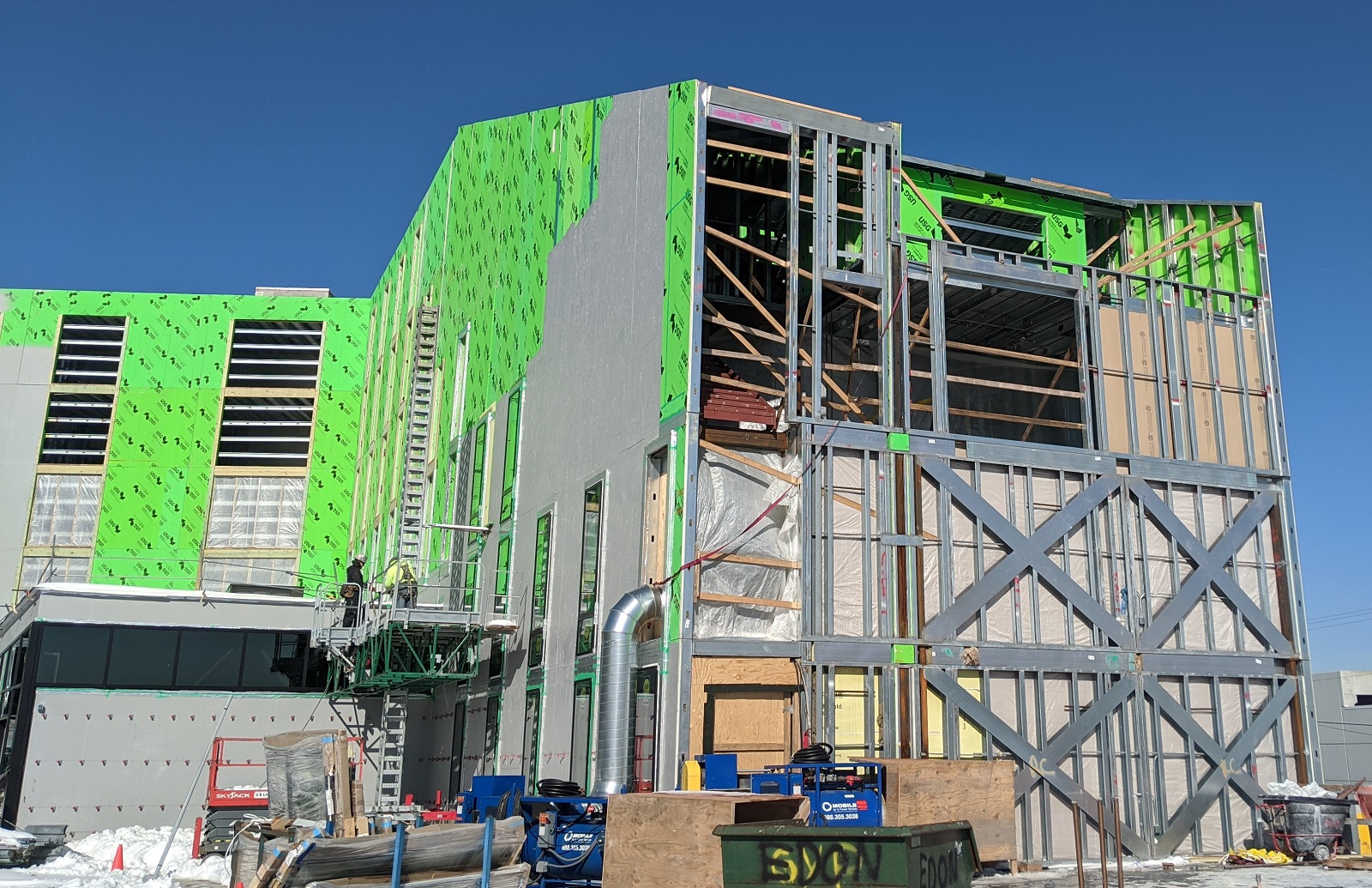
Above: The Steel Network supplied load-bearing cold-formed steel (CFS) framing for the construction of the Element by Weston Hotel in Chattanooga, Tennessee, saving 3 months of construction time. Photo Credit: The Steel Network
To meet ongoing demands for cost reduction and faster construction, an increasing number of owners and general contractors are opting for panelized construction with cold-formed steel (CFS) framing.
While prefabricated construction can significantly accelerate the build process, it requires careful planning and additional time during the design phase, says Tony Coviello, PE, SE, at McClure in a recent article. A strong design team, including early collaboration with a specialty structural engineer, is essential to ensure the success and efficiency of the overall project.
McClure played a pivotal role as the specialty engineer for Chicago’s steel-framed Triangle Square project, collaborating early with the design team to ensure a seamless and efficient design process.
6 Keys to Design Success
Panelized CFS construction achieves the best results when a collaborative design team is established early in the process, with all members fully understanding both the benefits and limitations of the system, says the McClure blog post, Introduction to Panel Design & Construction with Cold-Formed Steel.
The panel engineer should be involved in the building design process alongside the structural engineer and architect from the outset, McClure says. The two engineers must collaborate and reach consensus on various design aspects of the project, which include:
- Spandrel design beam locations and deflection requirements
- Location of panel support (exterior panels)
- Lateral load (wind and earthquake) resisting system responsibility
- Stiffness assumptions of the lateral load resisting system
- Concrete strength design at bearing locations
- Limitations of cold-formed steel framing
After coordination on the building’s design, a CFS specialty engineer will then create and submit preliminary shop drawings and supporting calculations for approval. Once these are approved, individual piece drawings and an erection plan will be produced and submitted. Upon their approval, panel construction can begin.

The Metreau Apartments in Green Bay, Wisconsin featured 11,508 lineal feet of prefabricated cold-formed steel (CFS) wall panels from Wall-tech. By panelizing the entire job, the owner received the building earlier and saved $250,000 in construction and carrying costs.
The Steel Framing Advantage
Cold-formed steel (CFS) leads the way as the preferred framing material for prefabricated structures for multiple reasons. CFS is:
- A pre-engineered material that can be cut to exact lengths
- Dimensionally stable and does not expand or contract with changes in moisture content
- Lightweight compared to wood and concrete
- Resilient and will not warp, split, crack or creep when exposed to the elements
- Sustainable and 100% recyclable
- Durable and has a high tensile strength
- Noncombustible and is a safeguard against fire accidents
Success Begins with the Design Team
Panelized CFS construction is a highly effective technique, particularly in projects with repetitive floor plans, tight construction schedules, and a design team well-versed in its benefits and limitations.
“Prefabrication panel construction is an incredibly powerful construction technique to employ where floor plans are repetitive, construction time frames are compressed, and the design team is fully aware of the benefits and constrictions of its use,” Coviello says. “The first step in ensuring a successful project is having a specialty structural engineer with the experience and expertise necessary to improve the chances of success.”
Read the full McClure article.
Additional Resources:
- Steel Framing Helps Speed Up Construction by 50% for Housing Developer
- 5 Ways Steel Framing Optimizes the Construction Supply Chain
- Builders Embrace Steel Framing for Offsite Construction