
(Above) Dan Wies of Wies Offsite
Cold-formed steel (CFS) stud prefabrication doesn’t necessarily require a large building and complex operations involving machines, designers, cranes, and steel coils. In fact, most prefabrication facilities start out in a contractor’s warehouse.
There are many ways to get started fabricating CFS framing and other parts, pieces, and components of a building. Here are 5 ways you can begin prefabricating components and products without investing in a big factory.
My list shows how you can easily incorporate prefabrication techniques into your workflows. This list can also serve as a test to help you see what will work best for your company.

Precutting CFS studs saves labor. Photo courtesy Wies Offsite
6 Ways to Make a Big Impact in a Small Space
Right now, and likely for the foreseeable future, contractors face a shortage of workers in the trades. There are many ways to make our people and projects more efficient. Below are a few examples of “big” things you can do in a minimal amount of space:
1. Precut CFS Studs
This requires no warehousing. Take some field measurements or get measurements within tolerances and order CFS studs to the needed length ahead of time to limit cutting on jobsites. Besides the labor savings in not having to cut, the other trades will thank you for not running a chop saw 24/7.
Don’t be afraid to order multiple precut lengths, you’ll have to check with your supplier to see if there’s a minimum order for this process. Here are some additional considerations:
- Some cold formed manufacturers will charge a fee for shorter lengths
- Consider whether the upcharge on shorter lengths is worth it
- Decide whether to precut CFS studs on site or in your facility
2. Start Kitting Materials
After getting through the submittal process, you know what parts and pieces you’re going to use on a project. Pre-loading a gang box with all the screws, shots, pins, safety equipment and tools necessary to get a project off the ground can save time and money.
- Create a checklist template around each project to have your shop make sure that the correct supplies are getting to the correct job
- Use your material take off to get started on what should be allocated to the project before the mechanics ever step foot on a project
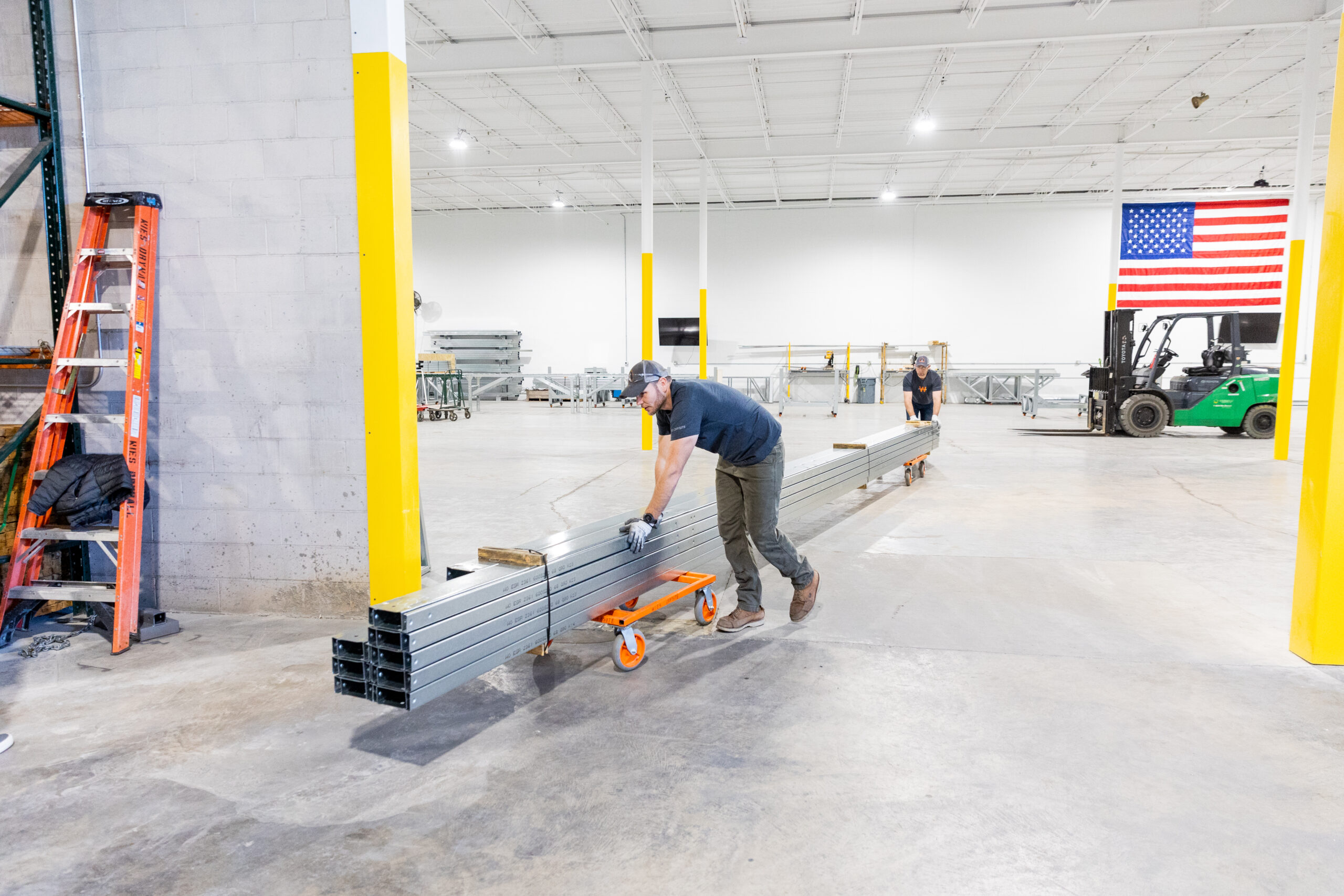
Prefabrication with cold-formed steel will make your workforce much more effective. Photo courtesy Wies Offsite
3. Get Started with Building Information Modeling
There are many different ways to get into prefabrication. One of the most impactful, yet one of the largest hills to climb for many contractors, is 3D modeling. You can model the CFS studs, clips, soffits and, really, the entire building. There are so many different ways to strategize around componentizing a construction project.
There are multiple ways to get started with BIM:
- Working with a design or engineering firm
- Training a person within your organization, who already understands how to build a building, to learn to use BIM software
- Finding freelancers
Of course, this will take some consideration on your part because of the nature of the modeling process. If you train someone in-house or hire a freelance, this person will design and set the game plan for the project. They will carry a ton of influence over your field staff and the execution of the project.
My colleague James Hillegas has some great ideas on how to get started with BIM. Check out his column, “How to BIM,” on BuildSteel.
4. Prebuild Soffit Components
Prefabricating vertical soffit pieces where multiple CFS studs are screwed together is making a layup with nobody guarding you. You don’t need to BIM or 3D model these components. Rather, just pull measurements off the drawing and follow these steps:
- Double check the field dimensions with a foreman or superintendent
- Make a jig similar to what you would make in the field
- Cut the pieces in your warehouse
- Once delivered to the job site, place them in their correct locations and tie them in horizontally
Even if you do not want to send out completely assembled jigged soffit components, you can precut the main pieces beforehand and send them out in bundles to be assembled in the field.
The Steel Framing Advantage
Cold-formed steel (CFS) leads the way as the preferred framing material for prefabricated structures for multiple reasons. CFS is:
- A pre-engineered material that can be cut to exact lengths
- Dimensionally stable and does not expand or contract with changes in moisture content
- Lightweight compared to wood and concrete
- Resilient and will not warp, split, crack or creep when exposed to the elements
- Sustainable and 100% recyclable
- Durable and has a high tensile strength
- Non-combustible and is a safeguard against fire accidents
5. Start Blocking
This is one of my favorites. Both wood blocking and steel strapping can be preconfigured in the shop. Here’s how to handle wood blocking, based on a project’s stud spacing and how many pieces you need:
- Cut the blocking to the correct length
- Pre-notch the groove where a CFS stud flange needs to bypass
You can either use a router and chop saw combination to create an assembly line, or you can use a radial arm saw to do both.
Steel strapping can be ordered or cut to the lengths needed to minimize waste and cutting on projects.
6. Precut Drywall
Depending on the project and different staggers needed in drywall for fire barrier. Ordering precut drywall for specific projects requires zero warehouse space. If a project has a bunch of walls that go just past the ceiling, then get a CFS stud kicker. Ordering drywall that goes to that height is an incredible time saver.
Make Your Workforce More Effective
As a construction industry, we face workforce shortages every day. Prefabrication and other strategies can help us make the workforce we have much more effective.
About Wies Offsite
Wies Offsite and its parent company, Wies Drywall & Construction Corp., St. Louis, Missouri, a Steel Framing Industry Association (SFIA) member, provide services ranging from cold-formed steel (CFS) prefabricated panels to traditional drywall framing and installation. Dan Wies, president, says the companies believe in treating people well and providing customers with exceptionally high-quality products and services.
Additional Resources
- CFS Prefab 101: What is It All About?
- How to BIM: Creating Your Team
- GC Turns to CFS Prefabrication to Solve Local Labor Shortage