
September 9, 2026 — Scottsdale Construction Systems, an SFIA member, has introduced a new multi-profile roll former and expanded its online engineering tools for cold-formed steel (CFS) framing.
The company will feature both developments at METALCON 2026 in Orlando, Florida. The conference runs Oct. 7 – 9 at the Orange County Convention Center. Scottsdale will exhibit at Booth #765.
Images provided by Scottsdale Construction Systems.
KFS Framemaker 1220 Expands Roll-Forming Capabilities
Scottsdale has added the KFS Framemaker 1220G3 to its line of multi-profile roll forming machines. The machine expands the range of CFS members that fabricators can manufacture within the KFS Framemaker family.
Its multi-profile capabilities allow fabricators to produce framing for different customers, markets and project types using the same equipment.
Scottsdale integrates the roll former with its broader systems for CFS framing design and production. These technology offerings include ScotSteel design software, ScotRF production software, the recently launched ScotFab cloud-hosted production management platform and online ScotCalc Engineering Tools.
The company will highlight the KFS Framemaker 1220G3 at METALCON 2026.
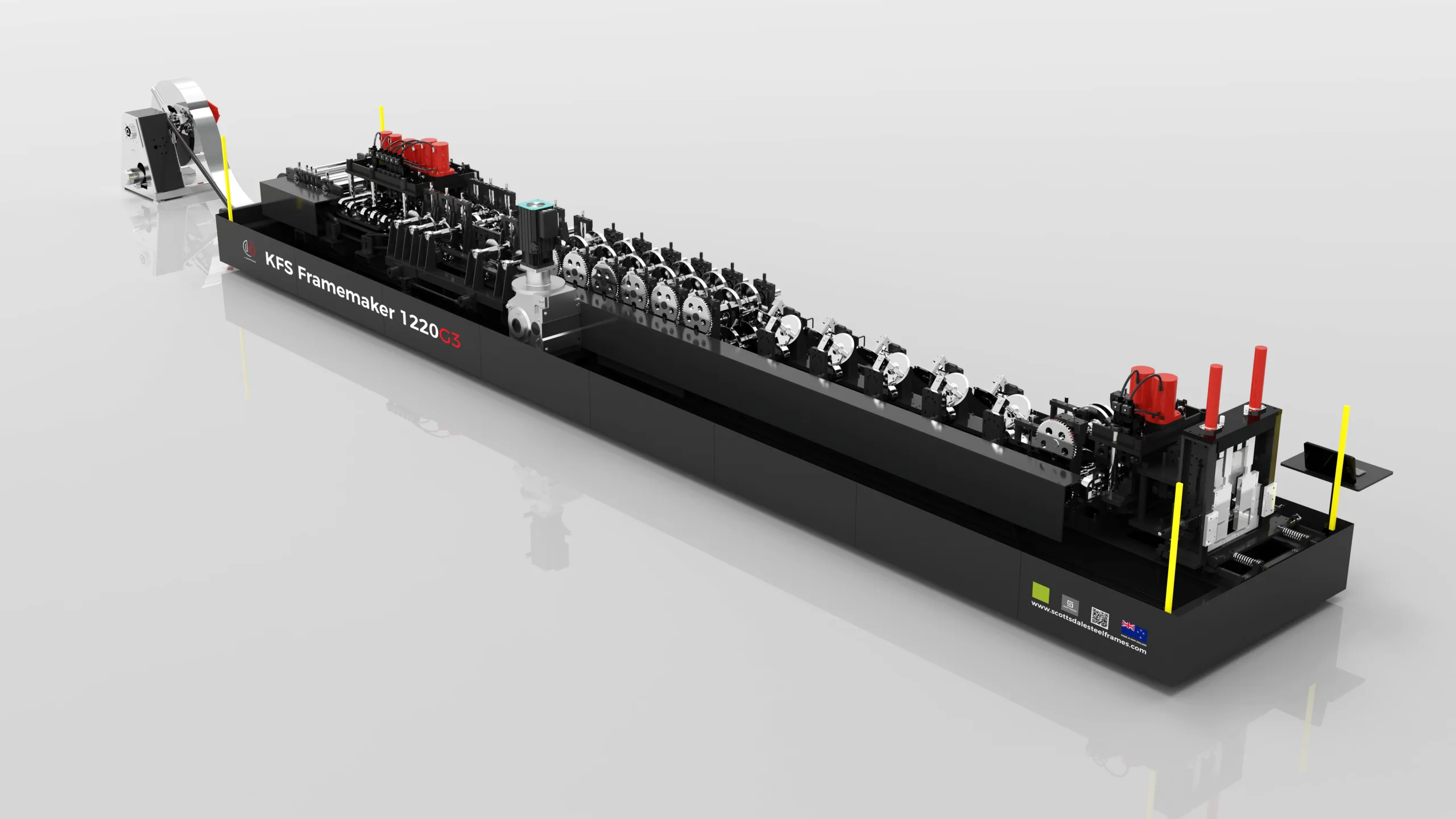
Scottsdale’s KFS Framemaker 1220G3, the newest addition to the company’s multi-profile roll forming machines.
ScotCalc Adds More Engineering and Analysis Tools
Scottsdale has also expanded ScotCalc Engineering Tools, its collection of free online tools for CFS design and analysis. The tools help engineers, designers and fabricators evaluate engineering, material and manufacturing considerations before production begins. The tools do not replace engineering verification, coil certification or final engineering approval.
Stud Analyzer
The ScotCalc Stud Analyzer estimates structural demands on CFS wall studs before engineers conduct full verification. Users enter basic building geometry, loading conditions, stud dimensions, spacing, sheathing and bracing information.
The tool calculates loads, moments, shear forces, bracing requirements and preliminary SFIA stud options. Designers can compare wall configurations and identify potential design issues early. Fabricators can also estimate material needs and determine whether existing equipment can manufacture required profiles.
Coil Analyzer
The ScotCalc Coil Analyzer helps fabricators evaluate steel using data from a Mill Test Report or claimed material specification. It compares material properties against acceptance pathways in AISI S100-16.
The tool evaluates yield strength, tensile strength, elongation, thickness, coating and available documentation. Results can identify ductility concerns, candidate ASTM specifications and conditions requiring additional engineering review or testing.
CFS Member Checker
The ScotCalc CFS Member Checker evaluates how individual CFS profiles perform under specified loads and design conditions. It brings member properties, structural demands and engineering checks into one online workflow.
Engineers and fabricators can use the results to evaluate member performance before moving into fabrication. The tool also connects engineering decisions with material requirements and the capabilities of available roll forming equipment.
Scottsdale will showcase ScotCalc alongside its roll-forming technology at METALCON 2026.
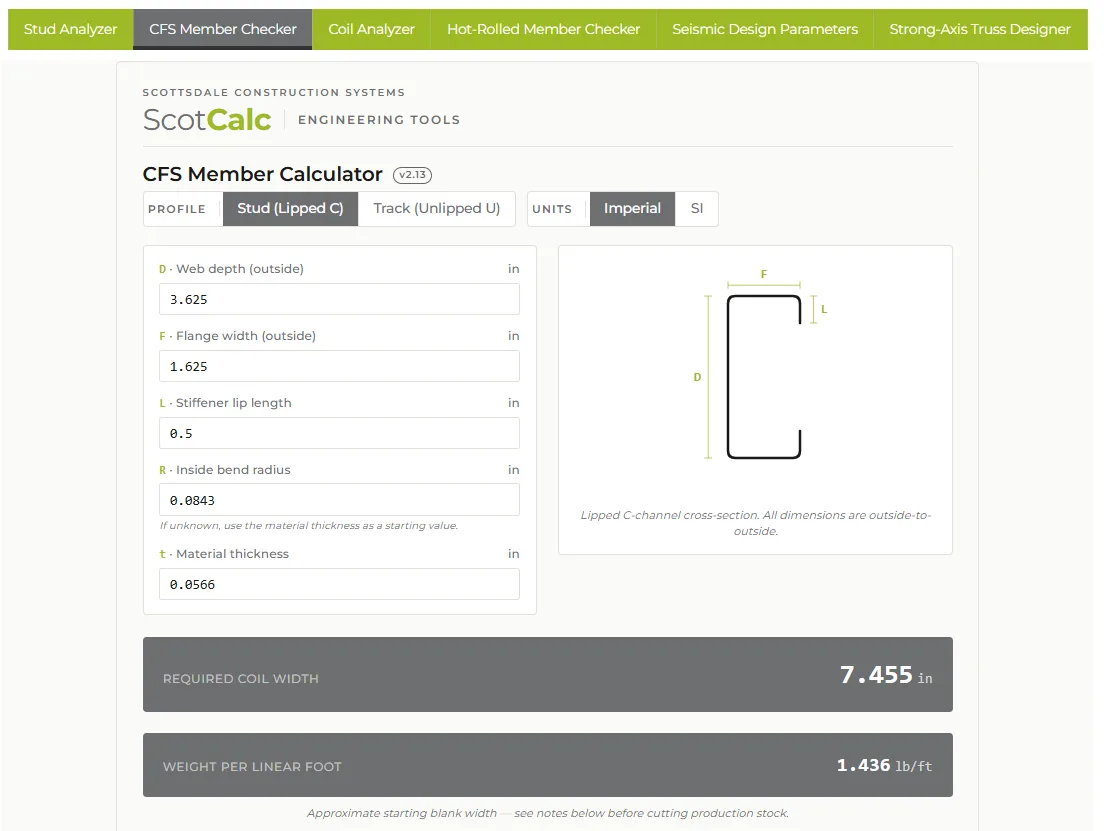
The ScotCalc Engineering Tools for cold-formed steel (CFS) design include three new modules — the Stud Analyzer, Coil Analyzer and CFS Member Checker.
Read Scottsdale’s full article.
Additional Resources
- Scottsdale Showcases Steel-Framed Barndominium for Veterans Live at METALCON 2025
- Scottsdale Case Study: Wood-to-Steel Conversion Advances Hotel Construction Project
- Scottsdale: Modular Steel Warehouse Showcases Large-Span Cold-Formed Steel Design