
When comparing steel and wood framing, construction costs extend beyond the initial price of materials. Insurance, labor, project schedules and long-term performance can influence the total cost of a building.
Howard Akin, CEO of SFIA member Accurate Steel Fab, discusses the cost advantages of cold-formed steel (CFS) framing.
Akin joined Matt Stillwell of SFIA member FRAMECAD on the Steel Framing Connections podcast. Their conversation explored construction costs, offsite manufacturing, engineering and emerging opportunities in residential construction.
Beyond Materials Costs
Developers frequently compare steel and wood framing based on material and installation costs alone. However, those comparisons often overlook expenses that affect the overall project.
“Everybody assumes wood is less,” says Akin. “But they’re forgetting a lot of ancillary costs that steel doesn’t have.”
According to Akin, developers should consider:
- Insurance costs: Noncombustible steel framing can reduce certain construction and property insurance expenses
- Construction schedules: Offsite manufacturing allows crews to fabricate wall panels and roof trusses during site preparation
- Labor requirements: Prefabricated panels reduce onsite cutting, assembly and layout work
- Long-term performance: Steel maintains dimensional stability without moisture-related shrinking or swelling
Akin described a planned 300-unit multifamily development to demonstrate potential insurance savings. The project’s estimated builder’s risk insurance cost reached $650,000 with wood framing. The comparable estimate for CFS framing totaled $300,000, representing a savings of $350,000.
Initial steel framing costs may be slightly higher or lower than wood, depending on the project. However, savings in insurance, labor and construction time can make a difference over the building’s lifetime.
Engineering and Detailing Control Costs
Efficient CFS framing begins with proper design and engineering. Accurate Steel Fab uses specialized detailing and structural engineering to prepare framing components before manufacturing. Akin explained that efficient building designs can require seven to eight pounds of steel per square foot of floor space. Less efficient designs may require 12 to 14 pounds.
That difference highlights how proper design and detailing can significantly reduce steel requirements and material costs. Early coordination between architects, engineers and detailers helps eliminate unnecessary material.
Accurate Steel Fab reviews detailed framing drawings and component information before fabrication.
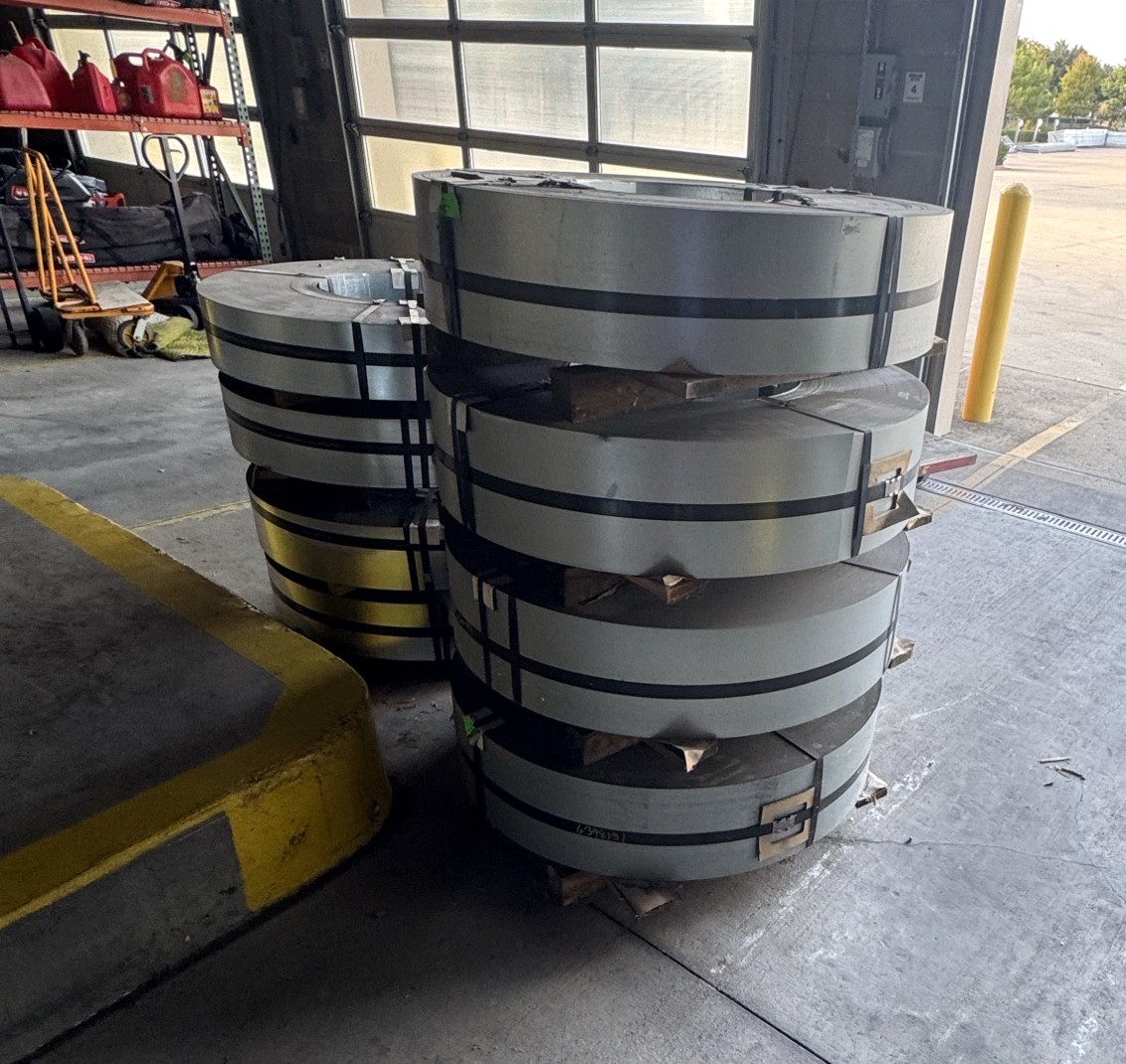
Steel coils at Accurate Steel Fab’s manufacturing facility provide the raw material for producing cold-formed steel framing components. Photo Credit: Accurate Steel Fab
Prefabrication Reduces Onsite Labor
Construction speed represents one of CFS framing’s greatest advantages. Accurate Steel Fab manufactures steel wall panels and roof trusses while contractors complete site preparation and foundation work.
“We can be running walls and roof trusses and everything else while the dirt work’s going on,” says Akin. “So the minute we pour a slab, we’re there and it’s going up.”
Manufacturing also changes the installation process. Traditional wood framing often requires crews to measure, cut and assemble individual components onsite. Accurate Steel Fab delivers prefabricated wall panels with identification numbers showing their installation locations.
That approach provides:
- Simplified installation through numbered panels and predetermined assembly sequences
- Reduced field fabrication because crews receive preassembled framing components
- Improved quality control through detailed engineering and factory production
- More predictable schedules by coordinating manufacturing with site preparation
Technology Improves Manufacturing Efficiency
Accurate Steel Fab continues improving its manufacturing processes through automation and production tracking. The company uses FRAMECAD roll-forming technology to manufacture CFS framing components for residential and commercial projects. FRAMECAD’s Nexa software helps organize panel sequences, track manufacturing output and monitor equipment utilization.
Each manufactured steel member also receives a unique identification number, supporting material traceability throughout production.
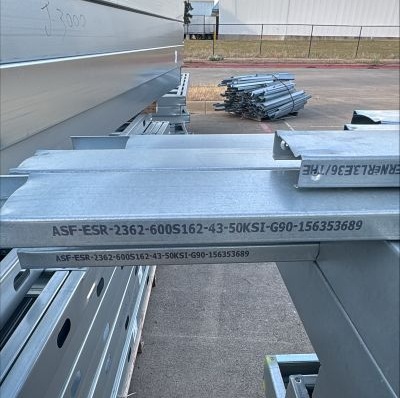
Cold-formed steel framing components manufactured by Accurate Steel Fab feature identification markings that support material traceability and quality control. Photo Credit: Accurate Steel Fab
Looking ahead, artificial intelligence and manufacturing data could further improve efficiency. These technologies may help identify production bottlenecks and give customers greater visibility into project progress.
New Housing Opportunities
Accurate Steel Fab manufactures framing for projects ranging from accessory dwelling units to large custom homes and multifamily buildings. Recent projects include several 5,000-square-foot homes and an approximately 8,000-square-foot residence. Production housing offers additional opportunities, where repeatable designs can improve manufacturing efficiency and reduce construction time.
Akin also sees potential for smaller, more affordable homes. He cited prices of $150,000 to $250,000 for approximately 1,000-square-foot ADUs, with framing manufactured offsite for onsite assembly.
For developers, the message is clear: Framing decisions should consider overall construction costs, not just the price of materials.
Additional Resources
- Accurate Steel Fab: Accelerating Project Delivery With Pre-Panelized Steel Components
- FRAMECAD Podcast: Don Allen Explains How SFIA Is Unifying the Steel Framing Industry
- FRAMECAD Launches “Steel Framing Connections” Podcast Focused on Real-World CFS Projects