
Image Credit: ClarkDietrich
Resilient building design has become important due to the rising frequency and intensity of natural disasters, which include forest and grass fires. Should designers specify wood framing in the face of rising construction costs? That could be a big mistake, since the combustible nature of wood will make a structure more vulnerable to fire damage and loss. Cold-formed steel (CFS) framing is a better all-around choice.
Jenny Hull, LEED green associate and marketing specialist at ClarkDietrich, an SFIA member, has explored the advantages CFS has over lumber in enhancing the resilience of low- and mid-rise structures. CFS framing, with its strength, durability and fire resistance, offers advantages over lumber in improving building resilience and fire safety, while lowering insurance costs, she says.
Cost of Fires: $8.9 Billion
Fires in the United States result in billions of dollars in damages, firefighting efforts and insurance claims annually. Direct property loss due to 353,500 residential building fires in 2021 amounted to approximately $8.9 billion, according to the U.S. Fire Administration.
CFS framing “offers a compelling solution to the fire safety challenges posed by wood construction,” Hull writes. It’s non-combustible in nature, and it maintains its structural integrity when exposed to high temperatures. Those qualities “make it an ideal choice for resilient building design, with fire resistance standing out as a key advantage,” she says.
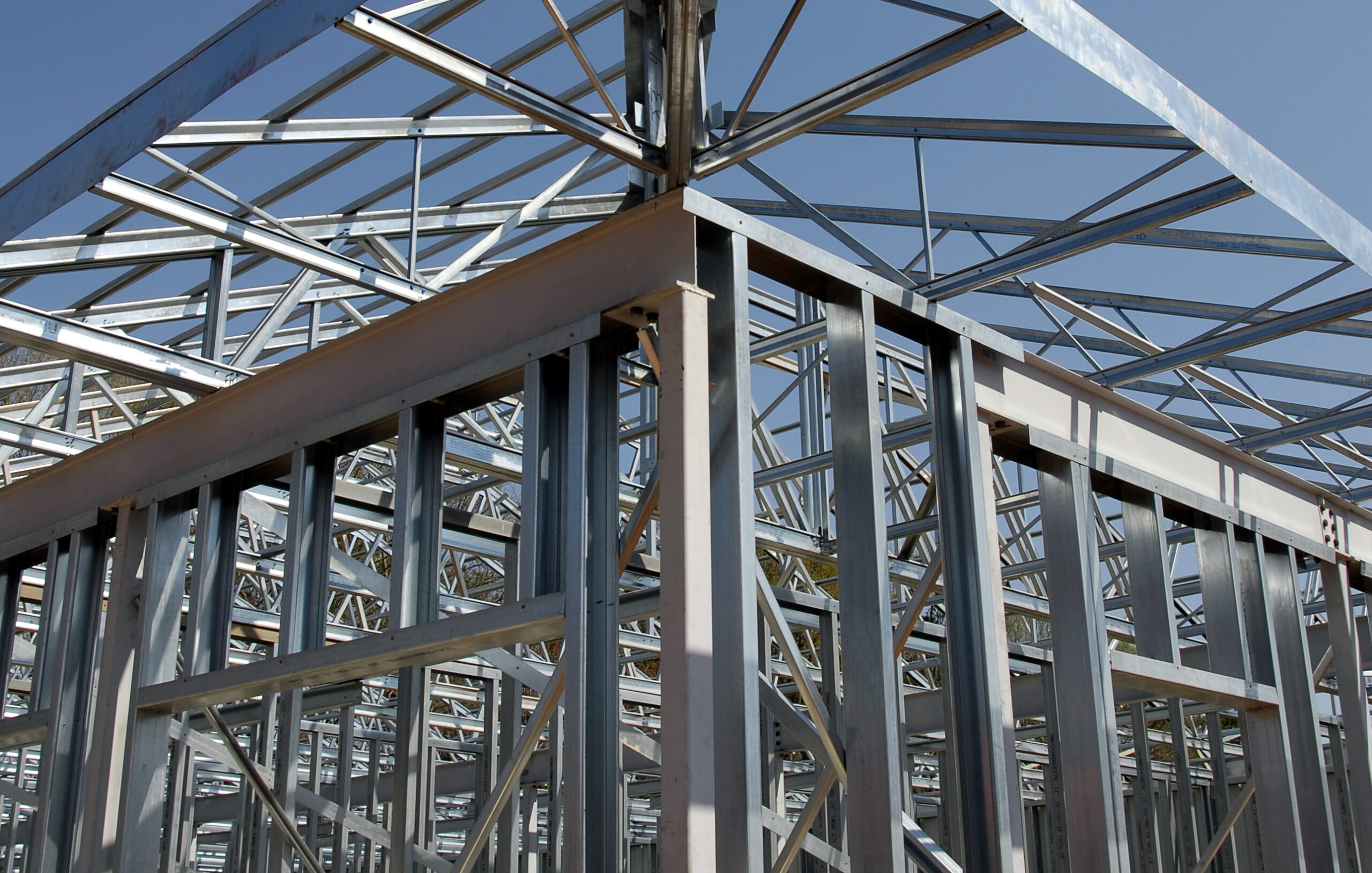
Steel remains non-combustible throughout the entire lifecycle of the building — during building construction, occupation, and future renovation and repair.
Insurance Savings: Up to 75% with CFS
Steel-framed buildings offer lower insurance premiums due to their reduced fire risk. Builders risk insurance savings can range from 25 to 75 percent, depending on factors such as location, building type and insurer policies, a Steel Framing Industry Association (SFIA) report says.
Building Codes Limit Wood’s Use
Building codes, such as the International Building Code, place strict limitations on the use of combustible materials in Type I and Type II high-rise buildings. While IBC allows for the use of wood in many building types, there are restrictions and limitations, especially in taller structures.
However, CFS is recognized by IBC as an approved, non-combustible material for enhanced fire safety in Type I and Type II structures.
“In a world increasingly vulnerable to natural disasters and fires, resilient building design is not merely a desirable choice—it’s a necessity,” Hull says.
She adds: “Cold-formed steel framing emerges as a superior alternative to lumber, offering exceptional fire resistance, reduced insurance costs and compliance with stringent building codes.”
SFIA Issues Paper on Resiliency
The Steel Framing Industry Associat
ion (SFIA) has developed an issues paper, CFS and Resiliency, that relates resiliency to the inherent properties of steel framing.The paper refers to the comprehensive definition for resiliency developed by the Department of Homeland Security in partnership with the National Institute of Building Science in High Performance Based Design for the Building Enclosure – A Resilience Application Project Report. The document also provides design guidelines for developing resilient exterior envelopes.
CFS: ‘A Beacon of Strength and Security’
Choosing CFS over wood contributes to safer, more resilient communities while mitigating financial and environmental risks associated with fires.
“In an era defined by uncertainty, cold-formed steel stands as a beacon of strength and security in the construction industry,” Hull says.
Additional Resources
- 5 Reasons CFS Contributes to Building Resiliency
- eBook: Strength in the Face of Disaster: How Cold-Formed Steel Framing Keeps Buildings Safe
- Why Are We Still Building Homes Like It’s 1832?