
Image: Prefabricated steel-framed “pods” deliver results faster and more safely than traditional methods for large buildings such as hotels, hospitals and apartment complexes.
A recent survey by Consigli Construction Co., Inc. found that more than 200 subcontractor and supplier respondents in the Northeast have been using prefabrication construction 20% more than they did prior to the COVID-19 pandemic in early 2020.
“The pandemic has forced subcontractors to embrace more technology to pre-fabricate and utilize design-assist more often to improve speed-to-market,” says the “2021 Market Outlook: Material and Labor Supply Update” from Consigli.

The prefabricated construction market is projected to grow at a compound annual rate of 6.9% from $112.4 billion in 2019 to $153 billion by 2023.
Speed-to-market: The New Focus
The report cites material prices — copper, hard woods, lumber, metal, PVC, etc. — as the drivers motivating subcontractors and vendors to implement technological advancements into their shop and field processes. According to the Consigli report:
- Copper prices are up 33%, since February 2020
- Steel prices are up 40%, but should stabilize in mid Q2, or even drop
- Lumber prices have increased 73%
“Residential building will continue to influence [lumber] pricing over the coming months,” the Consigli 2021 Market Outlook says. But, an easing of lumber prices may not necessarily come quickly. Reuters reports that housing starts have surged to a nearly 15-year high and that “soaring lumber prices amid supply constraints could limit builders’ capacity to boost production.”
Kyle Little, chief operating officer at Sherwood Lumber, a privately held New York-based wholesale distributor, and a former lumber trader, says high lumber prices are here to stay. “Our belief is that this cycle that we’re currently in [high-priced lumber] … is here for the foreseeable future,” Little told CNBC.
In contrast, some are expecting steel prices to fall significantly. Caroline Bain, chief commodities economist at Capital Economics, for example, forecasts US steel prices to nose dive from $1,600 per short ton today to $1,000 per short ton by year-end, according to FXStreet.
“In addition, we expect further gains in domestic supply, in large part incentivized by current high prices,” says Bain in the FXStreet article. “Pre-announced plans for capacity additions also suggest that potential domestic output could rise by about 5% this year and 7% in 2022.”
Anyway, Consigli found that rising material prices are being counterbalanced by technology that can improve a project’s speed-to-market.
“Cost saving material management software, tool upgrades and robotics are improving efficiencies which is allowing subcontractors the flexibility in managing on-site workforce restrictions,” the Consigli 2021 Market Outlook says.
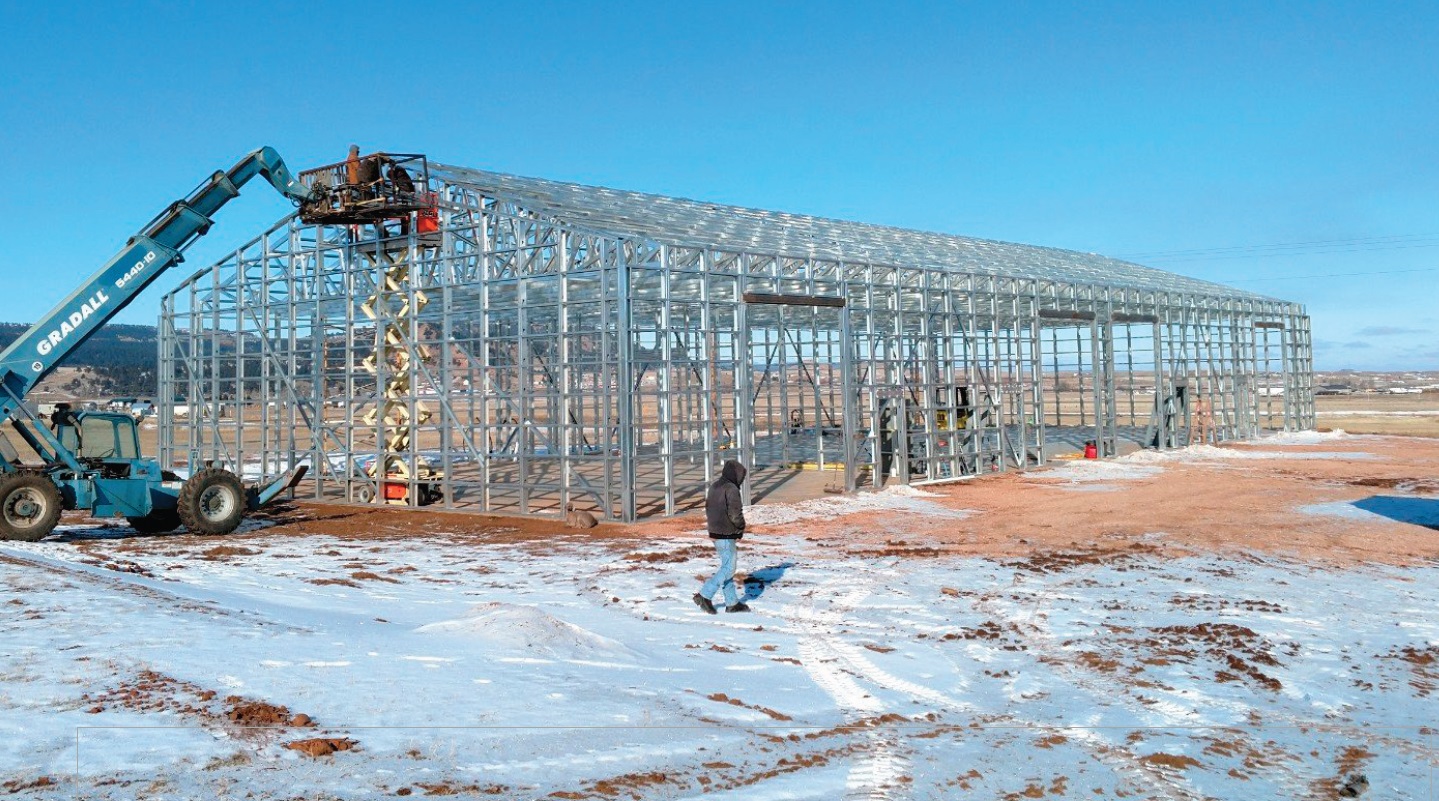
With cold-formed steel framing components and an automated fabrication system, a crew of four untrained laborers built this 60-by-140-ft. pole barn in two months.
Innovations Using CFS
Cold-formed steel (CFS) framing is enabling building professionals to find ways to complete projects more efficiently, in less time, and with lower costs. For example:
- The use of portable steel roll-forming machines to fabricate mobile structures is an emerging technology gaining traction within the U.S. Navy
- South Valley Prefab’s exterior finish CFS-framed panels cut installation labor by 90 percent in the construction of Denver’s new RiNo District hotel
- Using CFS framing components and an automated fabrication system, Straight Cold Rollin in Wyoming used four untrained laborers to build a 60-by-140-ft. pole barn in two months
Design-Assist Increases
Subcontractors and vendors in the Northeast also reported seeing increased requests for design-assist proposals.
- 71% of respondents noticed an increase in requests for design-assist proposals
Design-assist, along with growing prefabrication, confirms that speed-to-market is becoming a priority for owners and developers.
“Ensuring the construction manager has a defined process for properly implementing this approach will benefit project schedules,” the Consigli 2021 Market Outlook says. “Vetting subcontractors for similar project experience, backlog capacity and financial wherewithal should be a focus.”
According to Building Design & Construction, investments in construction technology come at an opportune time.
“[Technology can] improve efficiency and give subs the flexibility they need to manage on-site workforces at a time when skilled labor is in short supply in some markets,” Building Design & Construction says.
More Resources
- Prefabrication with Cold-Formed Steel Saves 14 Working Days Per Floor, and More
- Panels to Pods: Prefabricated Steel Building Components Expected to Grow
- How to Build a Profitable Cold-Formed Steel Factory