
July 28, 2026 — A clarification to ASTM E136, which took effect January 1, 2026, is helping eliminate inconsistent interpretations of one of the building industry’s most important noncombustibility tests. Now reflected in the 2024 International Building Code, the revised language gives testing laboratories, manufacturers, code officials and designers clearer guidance for determining whether materials meet the requirements for noncombustible construction.
The clarification does not change ASTM E136’s technical requirements. Instead, it removes ambiguity in the pass-fail criteria, helping to ensure that laboratories test building products and report results consistently.
That consistency matters because cold-formed steel (CFS) framing systems include non-steel materials, such as structural sheathing, cladding and fire-resistant boards for bracing, load transfer and thermal performance. These materials must also satisfy code requirements for noncombustible construction.
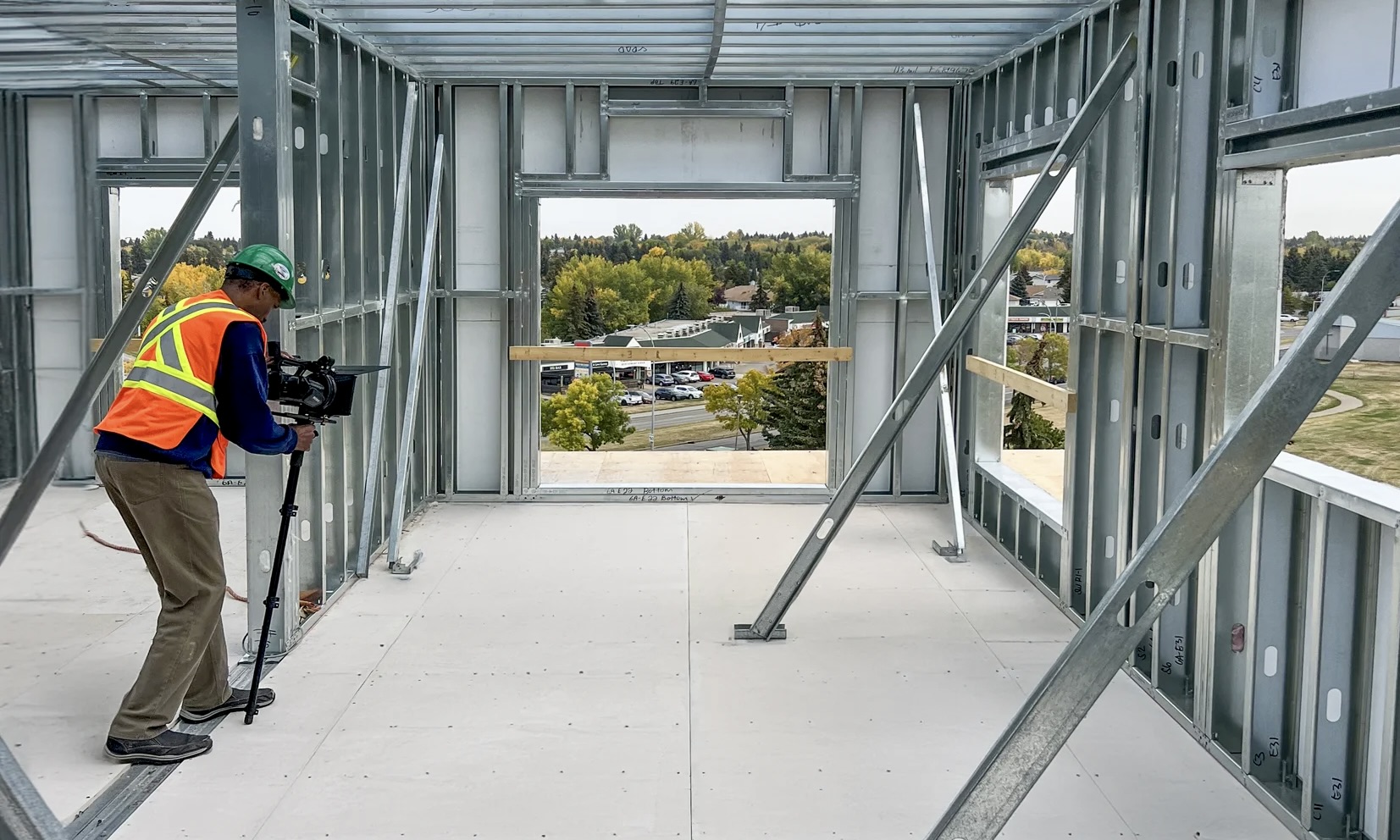
Builders and designers should specify noncombustible floor panels that comply with ASTM E136 to help ensure assemblies meet code requirements. Image courtesy of NEXGEN, an SFIA member
Structural Sheathing for Modern Construction
Section 703.3 of the IBC requires these materials to pass the ASTM E136 combustibility test for Types I, II, III and IV construction. Updated language in ASTM E136 clarifies how laboratories test these materials and determine pass-fail results.
On projects where combustible construction is permitted, designers and builders have long used plywood and oriented strand board with CFS framing for structural applications, including floor diaphragms, roof diaphragms and shear walls. Plywood also has long served as the structural subfloor and flange bracing for floor, roof and wall assemblies built with cold-formed steel.
As demand for noncombustible construction grows, manufacturers have introduced alternatives to plywood. Designers have used concrete and gypsum toppings over steel decks for decades. But they have sought lighter, more sustainable systems that avoid the water and added weight of those assemblies.
Structural sheathing products have emerged as one solution. They are lighter and thinner than concrete-over-steel floor systems and can serve as vertical shear walls or sloped roof sheathing. Many of these products use glass-fiber reinforcement with either portland cement or magnesium cement. One product also combines laminated sheet steel with cement board.
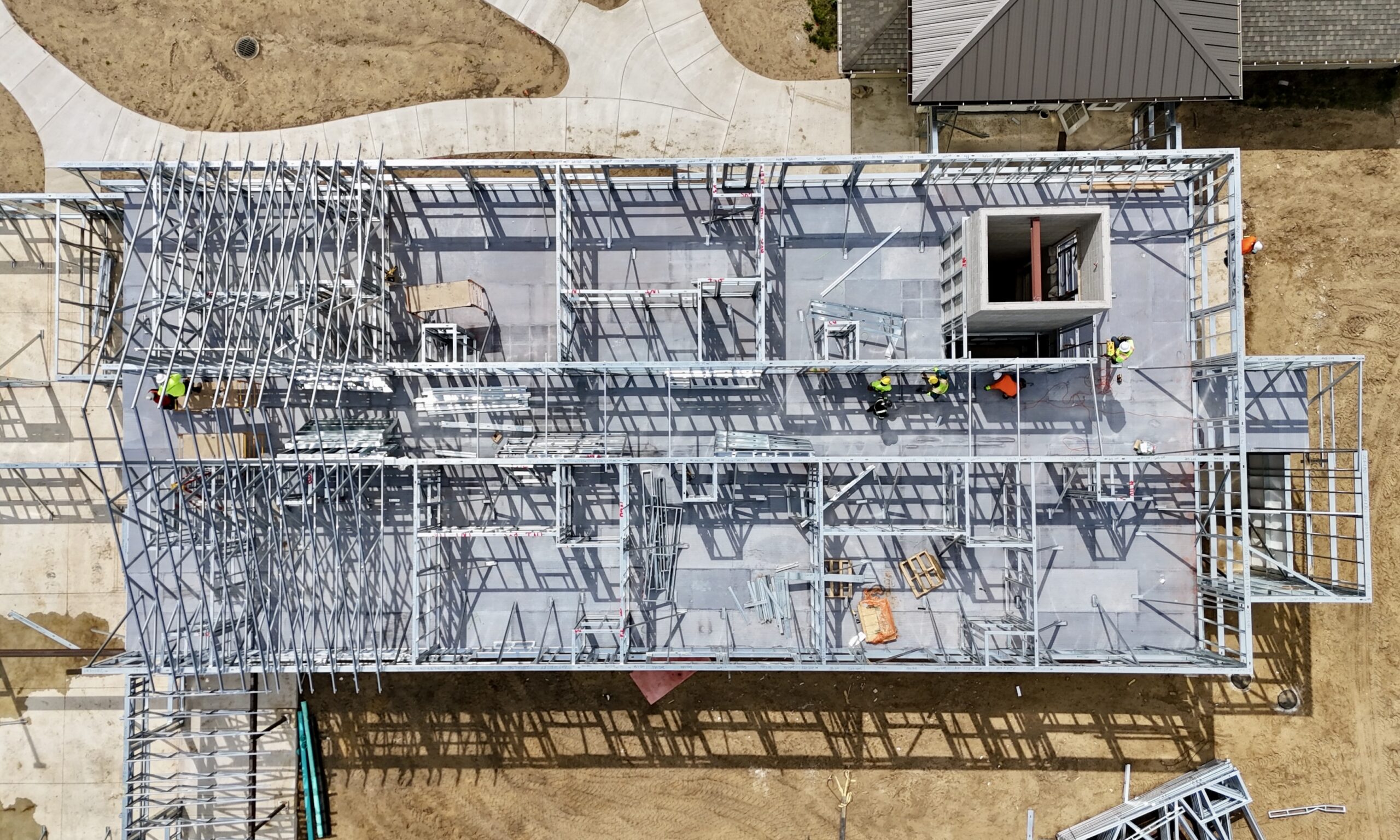
ASTM E136-compliant floor panels help create noncombustible floor assemblies that satisfy IBC requirements for Types I through IV construction. Image courtesy of NEXGEN, an SFIA member
Enhanced Clarity, Greater Compliance
Steel framing has been used for more than a century. Yet code organizations revise building codes and standards every few years. Even when technical requirements remain unchanged, ambiguous language can lead to inconsistent interpretation in the field.
ASTM E136 illustrated that problem. The need for clarification centered on Section 15.2.1 of the 2021 edition and earlier versions of the standard. This section establishes the pass-fail criteria for the vertical tube furnace test used to evaluate building materials.
Previous versions of the section stated:
The recorded temperatures of the surface and interior thermocouples do not at any time rise more than 30°C (54°F) above the stabilized furnace temperature measured at T2 prior to the test.
The word “and” created confusion. A limited number of testing laboratories interpreted the language to allow a passing result when only one thermocouple — internal or external — exceeded the temperature limit while the other did not. Under that interpretation, laboratories would classify a test as failing only if both thermocouples exceeded the limit. That interpretation did not reflect the standard’s intent. Neither thermocouple was supposed to exceed the prescribed temperature.
Most testing laboratories did not interpret the standard that way. Nevertheless, ASTM members brought the issue before the ASTM E05 committee, which approved language clarifying the requirement. ASTM incorporated that clarification into ASTM E136-2022, and the International Code Council adopted it in the 2024 IBC.
The updated ASTM E136 standard now separates the requirement into two distinct provisions, specifying that neither the internal nor external thermocouple may rise more than 30°C (54°F) above the stabilized furnace temperature for a material to pass the test.
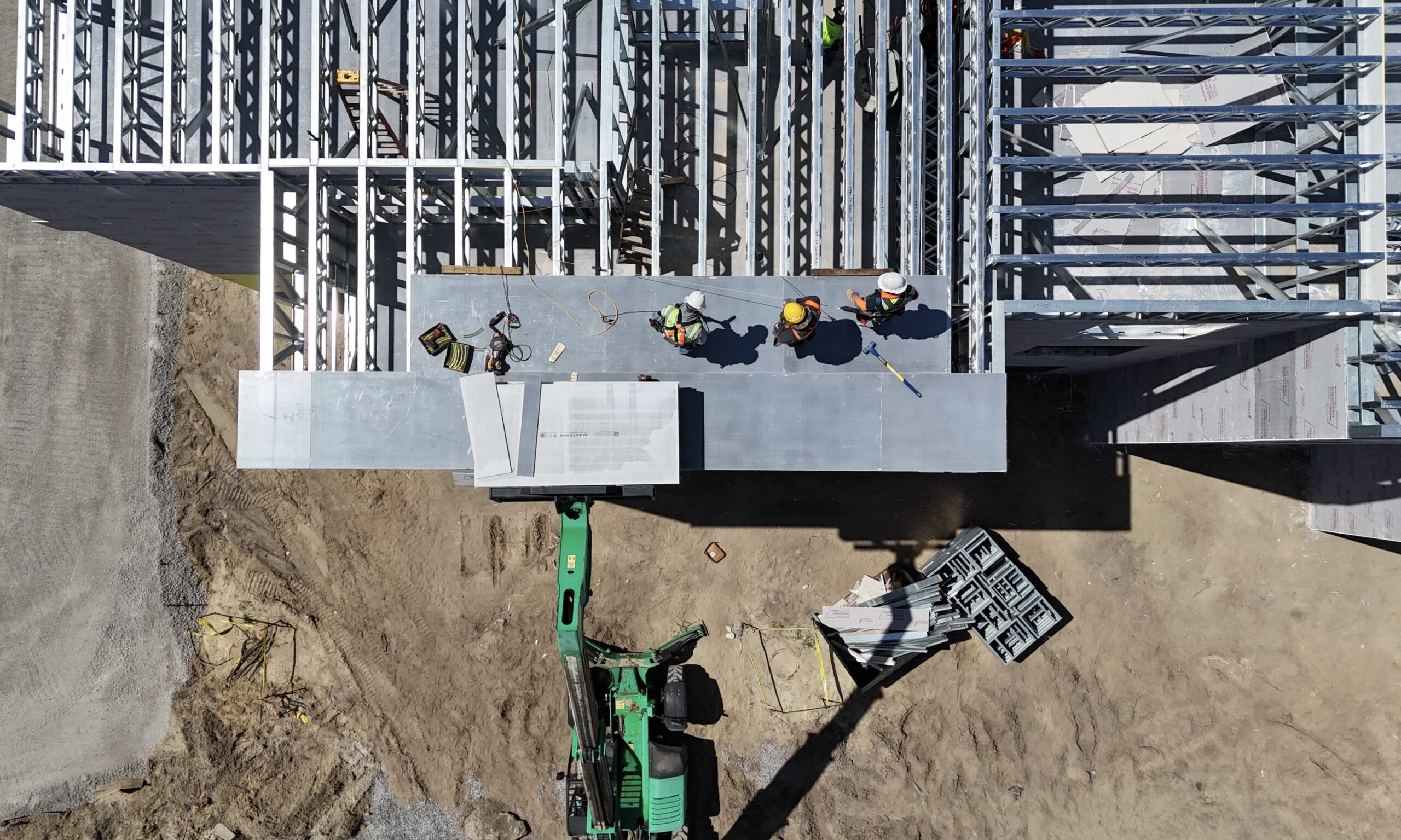
ASTM E136 now clarifies that both internal and external thermocouples to remain within a prescribed temperature limit for materials for a panel to qualify as noncombustible. Image courtesy of NEXGEN, an SFIA member
Assessing Combustibility
The vertical tube furnace test determines whether a material qualifies as noncombustible for use in Types I through IV construction under Chapter 7 of the IBC.
The test subjects a material sample to rigorous heat that simulates a fire.
Technicians attach two thermocouples to the specimen — one on the surface and one at its center — before placing it in a vertical tube furnace operating at 750°C (1382°F) for 30 minutes. During the test, technicians continuously monitor and evaluate the specimen’s response to heat and flame.
To qualify as noncombustible, the specimen temperature cannot exceed 30°C above the stabilized furnace temperature. If the material loses less than 50% of its weight, flaming cannot continue beyond the first 30 seconds. If weight loss exceeds 50%, the specimen cannot exhibit flaming at any point during the test.
By establishing these performance criteria — and clarifying the language that governs them — ASTM E136 helps ensure that tested building materials will not ignite, burn or contribute significant heat to a fire.
In 2024, manufacturers of magnesium oxide sheathing products formed the Magnesium Oxide Building Products Association to advance understanding and adoption of MgO products in the North American construction industry. MgOBPA members recognized that inconsistent interpretations of ASTM E136 allowed some products marketed in North America to be classified as noncombustible despite not meeting the standard’s intended pass-fail criteria. The association sought to raise awareness of the issue within the construction industry.
Supporting the Specification of Steel Systems
Clear, consistent language in building codes affects how designers specify materials, how laboratories test them and how code officials approve them for use in noncombustible construction.
The recent clarification helps ensure that testing laboratories, manufacturers and code officials evaluate materials using the same pass-fail criteria.
For the steel framing industry, that consistency matters. Cold-formed steel is noncombustible. It is well suited for Types I through IV construction, where fire-performance requirements rank among the industry’s most demanding. As designers and builders seek more sustainable alternatives to concrete fill and plywood, they can have greater confidence that products meeting ASTM E136 and the 2024 IBC comply with code requirements.
Manufacturers and testing laboratories increasingly evaluate modern MgO boards as components of complete wall and floor assemblies that combine noncombustible structural steel framing with compatible fire-rated sheathing and floor systems.
With the clarified ASTM E136 language now reflected in the 2024 IBC, the industry is better positioned to specify and build noncombustible assemblies with greater confidence, supporting safer and more resilient buildings.
Additional Resources
- Fire Changes Everything: Why Cold-Formed Steel Is Reshaping Housing Construction
- Update: Insurance Costs Are Re-Shaping Construction Choices — And the Data Speaks for Itself
- Data and Noncombustible Materials Hold the Key to Safer Construction, Says SFIA’s Don Allen