
Featured image above: A shipment of SFIA-certified studs prepares to leave CEMCO’s City of Industry, California, plant. Documented testing, traceability and third-party verification provide engineers and building officials with confidence in code compliance. All photos: Marco Johnson
By Marco Johnson, editor of BuildSteel.org
When a structural engineer specifies cold-formed steel (CFS) framing, the assumption is straightforward: the material delivered to the jobsite will perform as designed.
Yet that performance depends on far more than the shape of a stud or track section. It begins with steel production, material testing, manufacturing controls, traceability systems and compliance programs that help verify framing members meet industry and code requirements before they ever leave the plant.
A recent visit to the CEMCO manufacturing facility in City of Industry, California, offered a look at how those processes work in practice and why quality assurance remains a critical component of modern cold-formed steel construction. The facility produces framing products for commercial, institutional and residential projects throughout the western United States.
For architects, engineers, building officials and owners, the lesson extends beyond a single manufacturer. It illustrates how certified manufacturing programs help ensure that the framing products installed in a building match the performance expectations established by project specifications and building codes.
Eric Larson, vice president of sales at CEMCO and president of the Steel Framing Industry Association (SFIA), stands beside a shipment of SFIA-certified cold-formed steel framing members ready for delivery to a jobsite. Each member can be traced back to the steel coil from which it was manufactured.
The Importance of Material Traceability
Cold-formed steel framing members begin as large steel coils delivered from steel mills.
According to Eric Larson, vice president of sales at CEMCO and president of the Steel Framing Industry Association (SFIA), quality starts with purchasing steel that meets required specifications and maintaining documentation throughout the manufacturing process.
At the City of Industry plant, incoming coils are immediately identified and tagged.
“When the full coil comes in, we tag it and identify it immediately,” said Brian Thornton, City of Industry plant operations manager. “From that six-digit coil number, we can trace it from the product to the slit coil to the master coil and back to the mill.”
As coils move through the production process, information is transferred from the original master coil to slit coils and eventually to finished framing members. Each product can be traced back through multiple stages of production to the originating steel mill.
“The steel has got to be purchased through spec, and that’s why every one of these coils gets traced all the way back to that code number on the stud,” Larson said. “All the mill certifications for the mechanical properties can be proven through the steel and then reported to the stud.”
That traceability provides more than recordkeeping. It creates a documented chain of custody that links the finished framing member to its source material and mechanical properties.
For projects requiring extensive documentation, including hospitals and other highly regulated facilities, manufacturers may be asked to provide records demonstrating that framing products satisfy specified material requirements. Traceability systems make that possible.
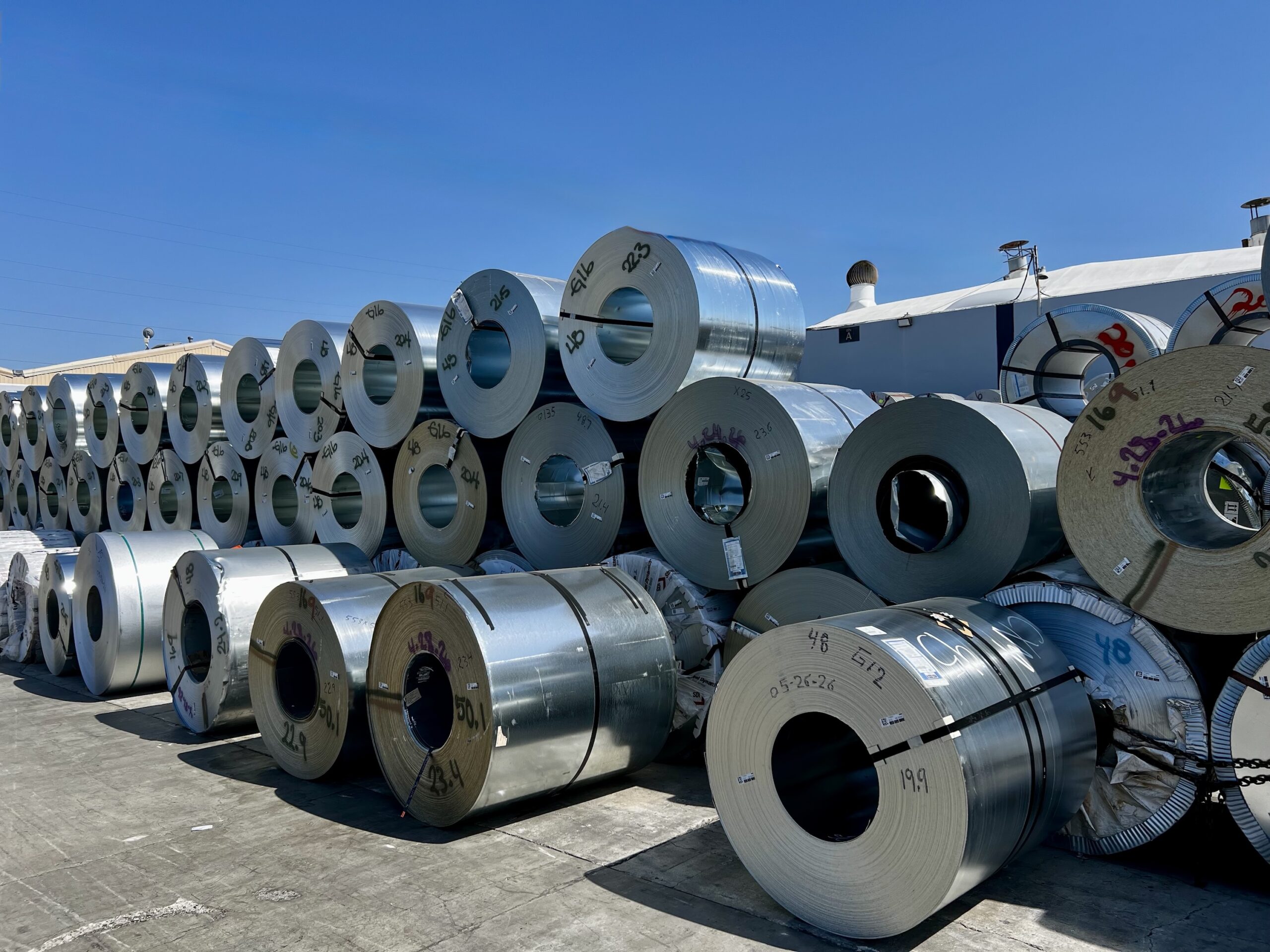
Steel coils await processing at CEMCO’s City of Industry, California, facility. Manufacturers track each coil throughout production, creating a documented chain of custody from steel mill to finished cold-formed steel framing member.
Testing Beyond Mill Certifications
Material certifications supplied by steel mills represent one level of verification. Many manufacturers also conduct their own testing programs.
At CEMCO, samples are taken from incoming steel lots and tested in a laboratory accredited by the International Accreditation Service to verify properties such as tensile strength, yield strength and elongation. Test results are associated with the same tracking system that follows the steel through manufacturing.
“We take a coupon off these coils and send it to our lab,” Larson said. “All the mechanical properties follow that coil number all the way to the studs.”
The approach reflects a broader industry emphasis on verification rather than assumption.
For design professionals, material properties are not abstract numbers in a specification. They influence structural capacity calculations, connection design, load paths and code compliance. Reliable testing and documentation help ensure those calculations align with the material delivered to the project.
From Coil to Stud
After arriving at the plant, steel coils are slit into narrower widths that correspond to specific framing products. Those slit coils are then fed into roll-forming lines where steel is progressively shaped into studs, tracks, joists and other components.
The City of Industry facility operates multiple slitting lines and six dedicated stud production lines, along with equipment that produces numerous accessory products used in drywall, structural and plaster applications.
Modern roll-forming operations are highly automated, but consistency remains the ultimate objective. Manufacturers increasingly evaluate production systems not only on speed but also on their ability to produce repeatable, dimensionally accurate products that satisfy quality requirements throughout extended production runs.
That consistency becomes especially important in projects that rely on prefabrication, panelization, Building Information Modeling (BIM) workflows or tightly coordinated construction schedules.
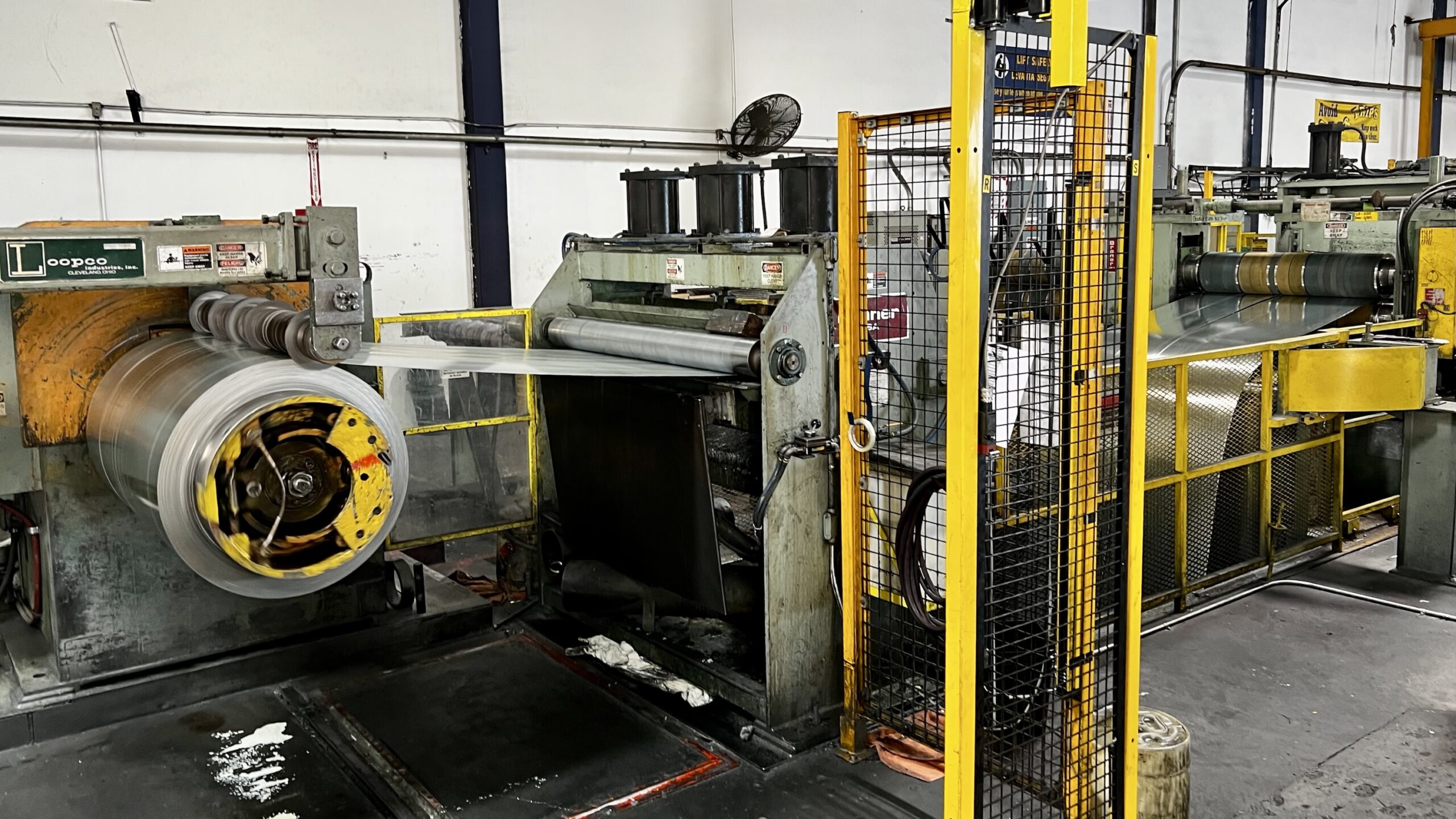
A coil slitting line converts wide mill-produced steel coils into narrower widths used for cold-formed steel framing products. After passing through rotary cutting dies, the slit steel temporarily accumulates in a deep looping pit before being wound into individual slit coils.
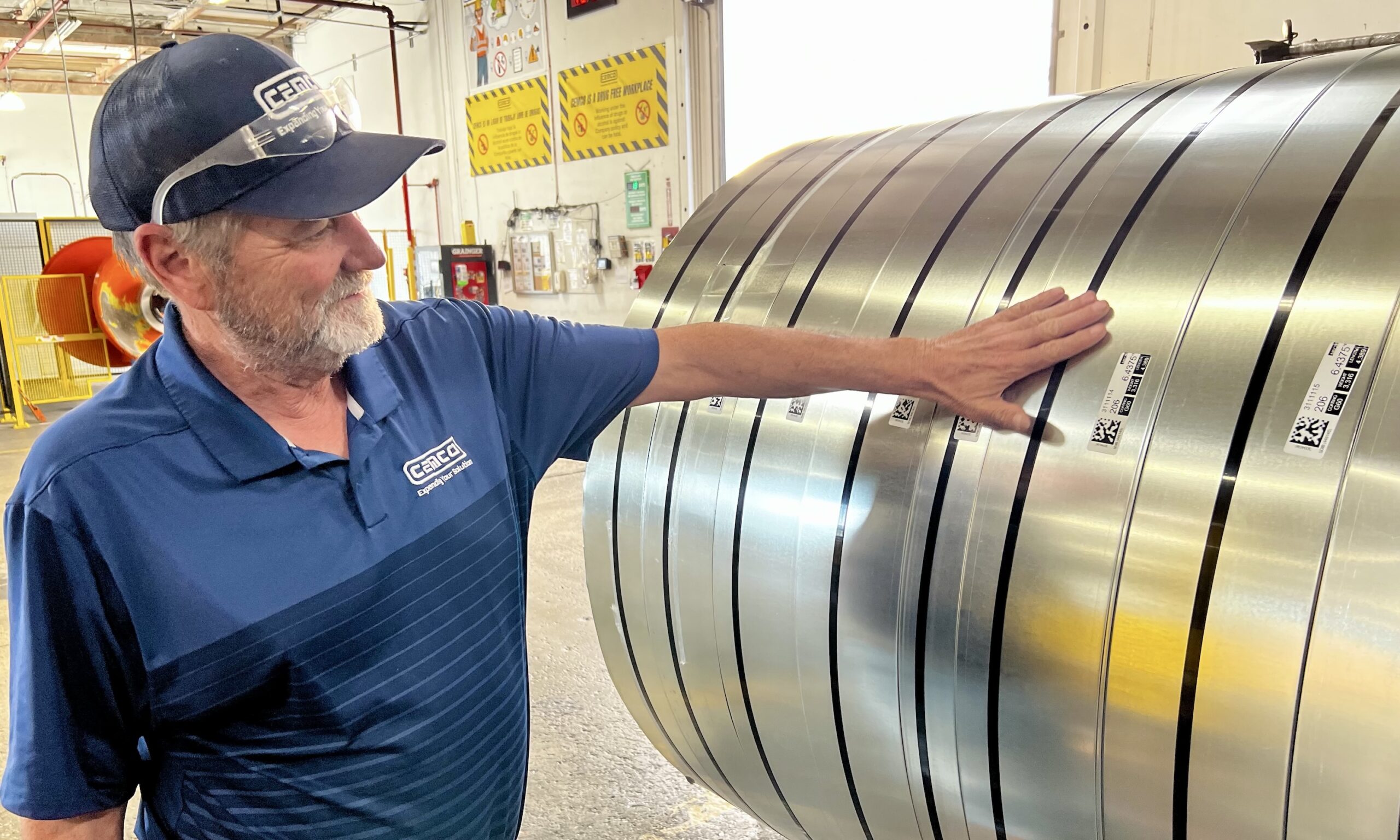
Brian Thornton reviews the tagged slit coils at CEMCO’s City of Industry, California, facility. The tags record information including the original coil lot, coating type, weight and length, helping maintain material traceability throughout the manufacturing process.
Verifying Compliance
Manufacturing quality control does not end when a stud exits a roll former.
The SFIA Stud Code Compliance Certification Program provides an additional layer of oversight. The program verifies that participating manufacturers produce framing members in accordance with applicable code requirements and industry standards.
Under the program, third-party inspectors conduct audits that review manufacturing procedures, quality-control records, testing programs and product compliance. Inspectors also verify dimensions and physical characteristics of framing members.
The certification process gives specifiers, contractors and code officials greater confidence in the products they receive.
According to SFIA, certified products carry markings that allow users to identify the manufacturer and trace products back through the quality-control system. The certification program helps designers, contractors and building officials confirm that framing members comply with applicable building code requirements.
For building owners and developers, that verification can reduce uncertainty and support long-term confidence in building performance.
Why Manufacturing Matters
The importance of manufacturing quality is often overlooked because cold-formed steel framing performs much of its work after walls are enclosed and finishes are installed.
Yet framing members provide the structural framework for countless buildings, including schools, hospitals, multifamily developments, hotels, offices, warehouses and data centers.
As outlined in BuildSteel’s “Cold-Formed Steel (CFS) Framing 101: A Practical Guide for Designers, Builders and Owners,” cold-formed steel offers a combination of strength, dimensional stability, noncombustibility, recyclability and design flexibility that continues to drive adoption across multiple building sectors.
Those benefits, however, depend on consistency. Larson said quality control ultimately comes down to ensuring customers receive products that meet project specifications.
“We’re not going to ship a substandard product,” he said.
A framing member that varies from specified thickness, mechanical properties or dimensions can affect performance, constructability and compliance. Robust quality-control systems help minimize those risks.
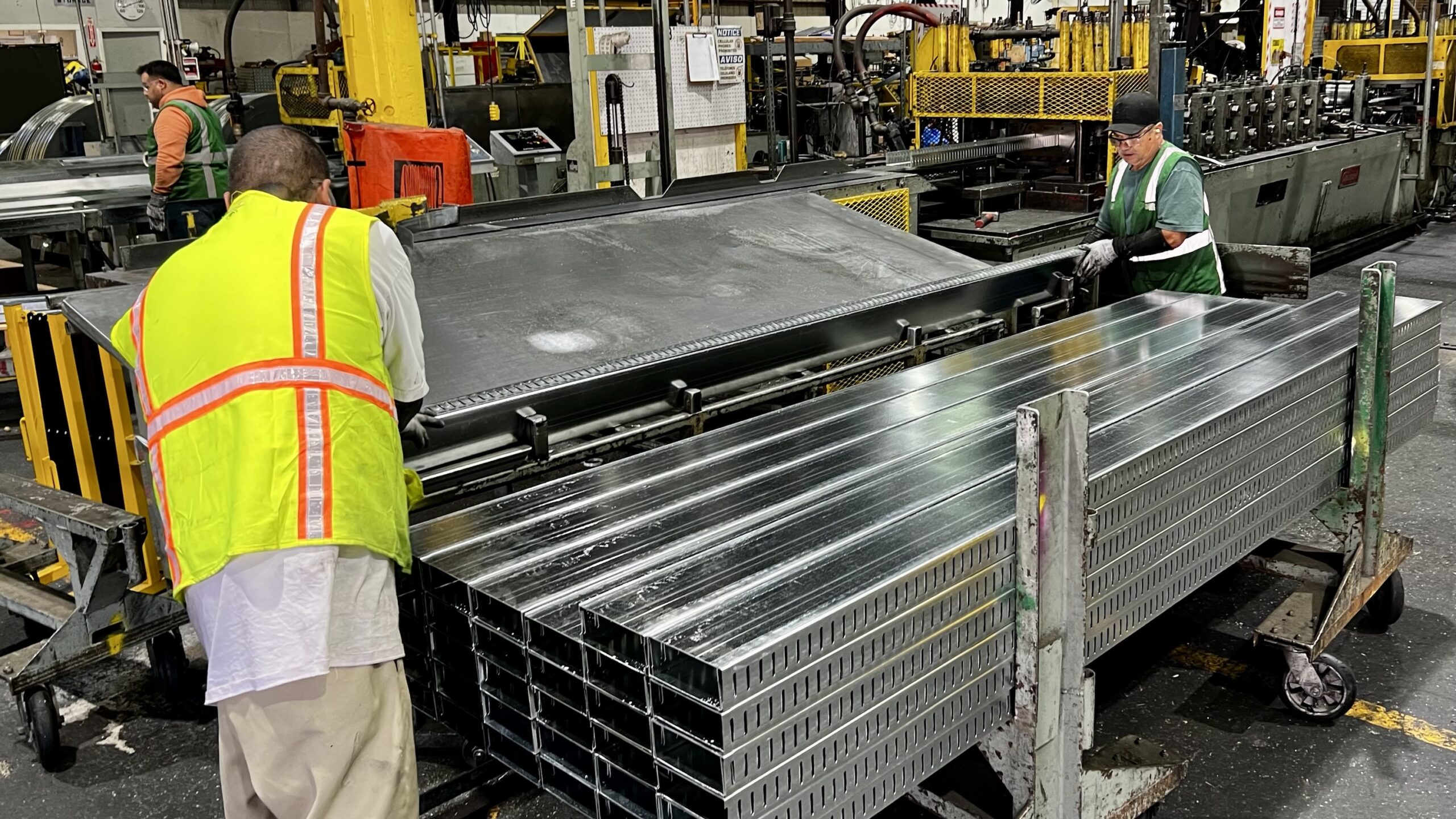
Workers handle freshly formed cold-formed steel (CFS) products as they exit one of CEMCO’s roll-forming lines. The manufacturing process transforms the flat steel from slit coils into precisely shaped framing members used in commercial, institutional and residential construction.
Looking Beyond the Product
The manufacturing operation also highlights another reality of modern cold-formed steel production: quality extends beyond the framing member itself.
CEMCO maintains an in-house machine shop that fabricates and repairs tooling, replacement components and production equipment used throughout the facility. The capability allows production lines to return to service quickly when components wear or fail.
While such practices vary among manufacturers, they reflect the broader emphasis many producers place on operational reliability, process control and continuous improvement.
For project teams, these behind-the-scenes investments may never be visible. Their effects, however, appear in product consistency, manufacturing efficiency and dependable project delivery.
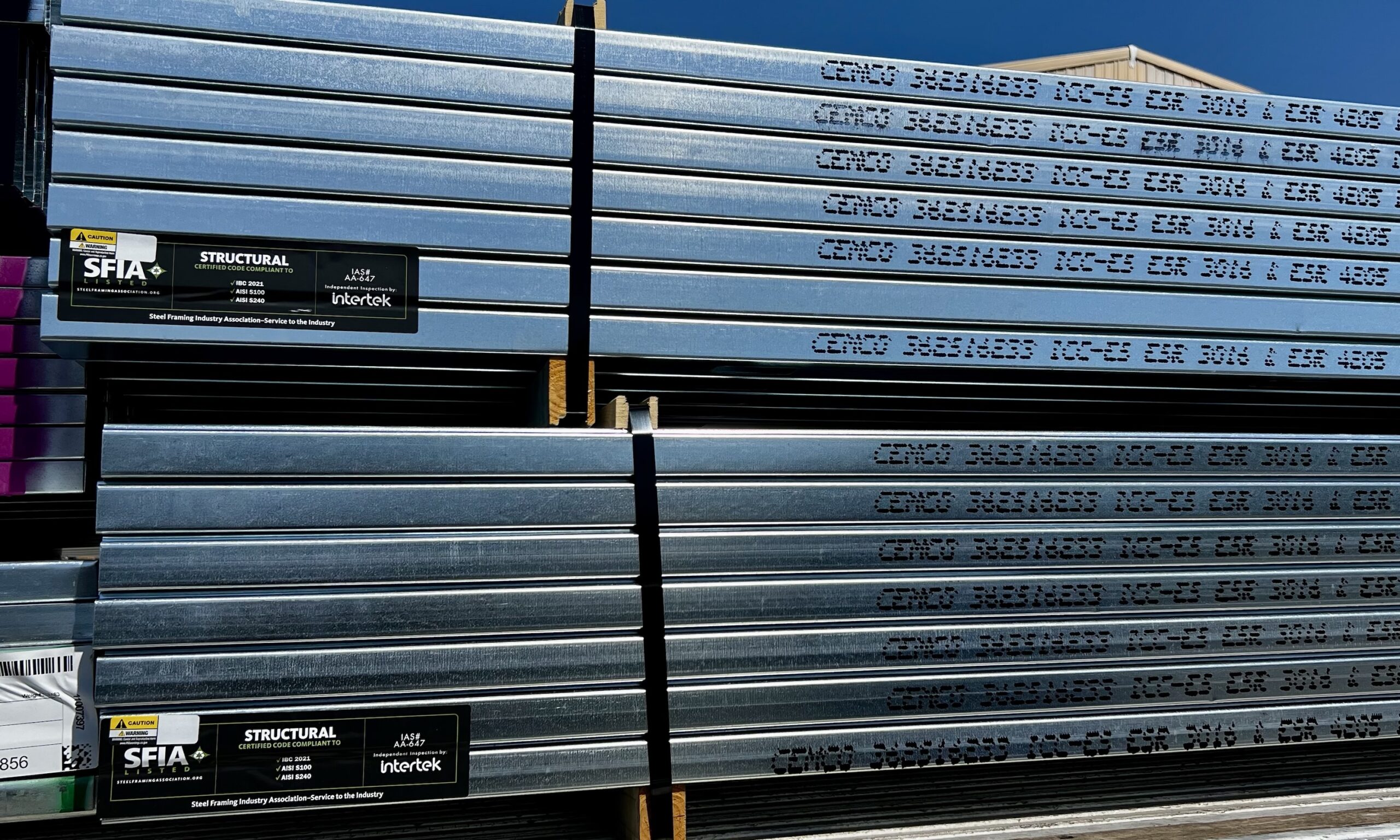
Bundles of SFIA-certified cold-formed steel framing members await shipment from CEMCO’s plant. Inkjet markings on each member provide product identification and traceability, allowing engineers, architects and building officials to connect the framing members to the documentation behind them.
A Question Worth Asking
For engineers and architects, specifying cold-formed steel involves more than selecting a framing profile. It also requires understanding how manufacturers produce, test and certify framing members.
As construction projects become increasingly complex, documentation, traceability and quality assurance are growing in importance. Whether the project is a hospital, multifamily development, school or data center, stakeholders want confidence that installed materials meet design requirements.
Cold-formed steel manufacturers participating in certification and compliance programs help provide that assurance.
Of course, it’s important that CFS framing members meet a project’s design requirements. But the next time a project team reviews framing specifications, another question may be worth asking: How is product compliance verified?
The answer begins long before the framing reaches the jobsite. It begins with a steel coil and a quality-control system designed to follow it every step of the way.
 Mark “Marco” Johnson is editor of BuildSteel.org and a marketing communications consultant specializing in cold-formed steel (CFS) framing systems. He provides content development, digital marketing, video production and strategic communications services for the Steel Framing Industry Association (SFIA) and the Cold-Formed Steel Engineers Institute (CFSEI). He also writes regularly about CFS design, engineering, construction and industry research.

About SFIA
The Steel Framing Industry Association (SFIA), a unique organization representing steel mills, coil coaters, stud and connector manufacturers, component fabricators, Cold-Formed Steel Engineers Institute (CFSEI) members, suppliers/distributors, contractors and others, provides members with exclusive access to technical cold-formed steel (CFS) framing services, including CFS certification, environmental product declarations, market data and analysis, technical design guides, specification review services, architectural services, the Steel Framing Learning Portal, the SFIA Awards and more. SFIA is an accredited ANSI Standards Development Organization. Follow SFIA on LinkedIn, Facebook, Instagram and X.

Additional Resources
- Cold-Formed Steel (CFS) Framing 101: A Practical Guide for Designers, Builders and Owners
- CFS 101 In Practice: Real-World Examples of Project Teams Using Cold-Formed Steel
- Checklist for Architects and Engineers Writing CFS Specifications