
Data centers remain one of construction’s strongest market sectors. The rapid growth of these facilities is creating significant demand for steel products, including cold-formed steel (CFS) framing systems.
“Building a data center consumes huge quantities of steel,” writes Don Allen in ‘The Steel Deal,’ a bylined article for Walls & Ceilings. “Steel framing and accessories account for much of that demand.”
Allen, executive director of the Steel Framing Industry Association (SFIA), examines how the expanding data center market is driving business for CFS manufacturers, suppliers and framing contractors.
Featured image: Don Allen, executive director of the Steel Framing Industry Association (SFIA), visits a data center construction project in Kenilworth, New Jersey, in January 2026.
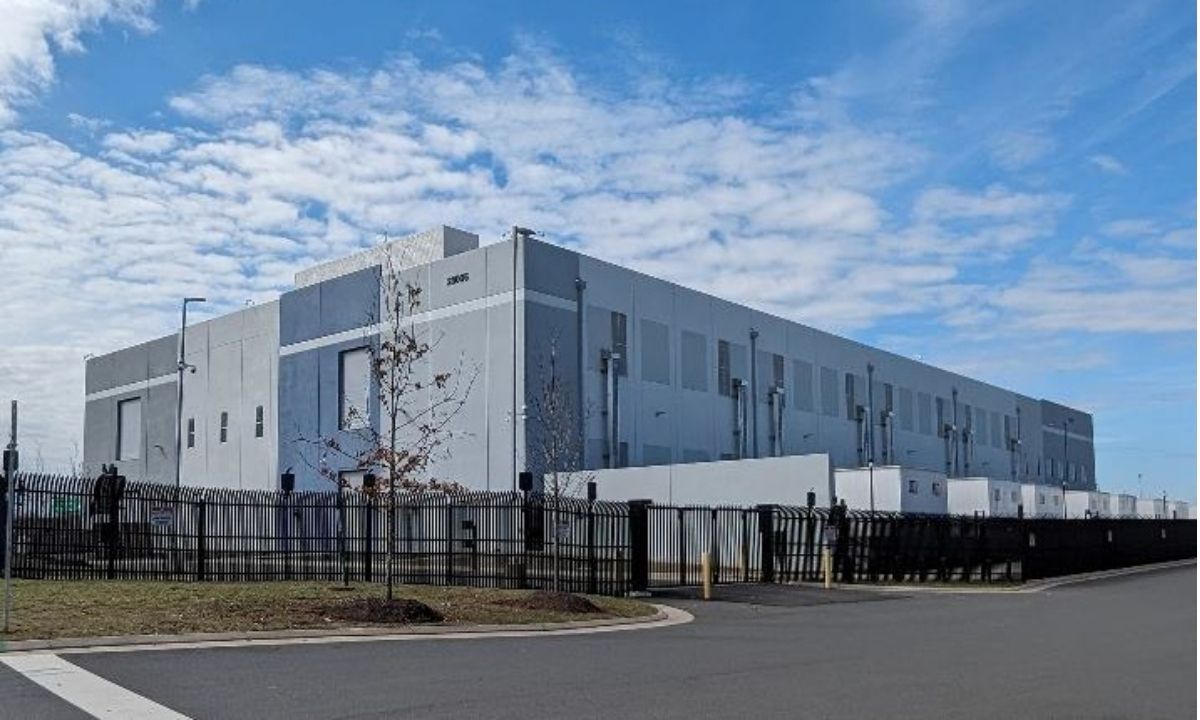
Data center construction continues to drive demand for steel, with cold-formed steel (CFS) framing and accessories playing a critical role throughout these fast-growing facilities.
Data Centers Fuel Steel Framing Growth
Developers spent more than $65.8 billion on data center construction in 2025, “The Steel Deal” article states. And construction activity continues to accelerate.
During a recent project visit, Allen observed extensive steel use throughout the facility. Besides cold-formed steel framing, Allen saw strut systems, conduit, piping, equipment racks and electrical cabinets in use.
Data centers and megaprojects are offsetting weakness in other construction sectors, Allen says. Labor shortages and high interest rates continue to challenge many construction markets.
He expects data center activity to remain a strong driver of steel framing consumption through 2026 and beyond. He also believes domestic producers will supply most of this steel.
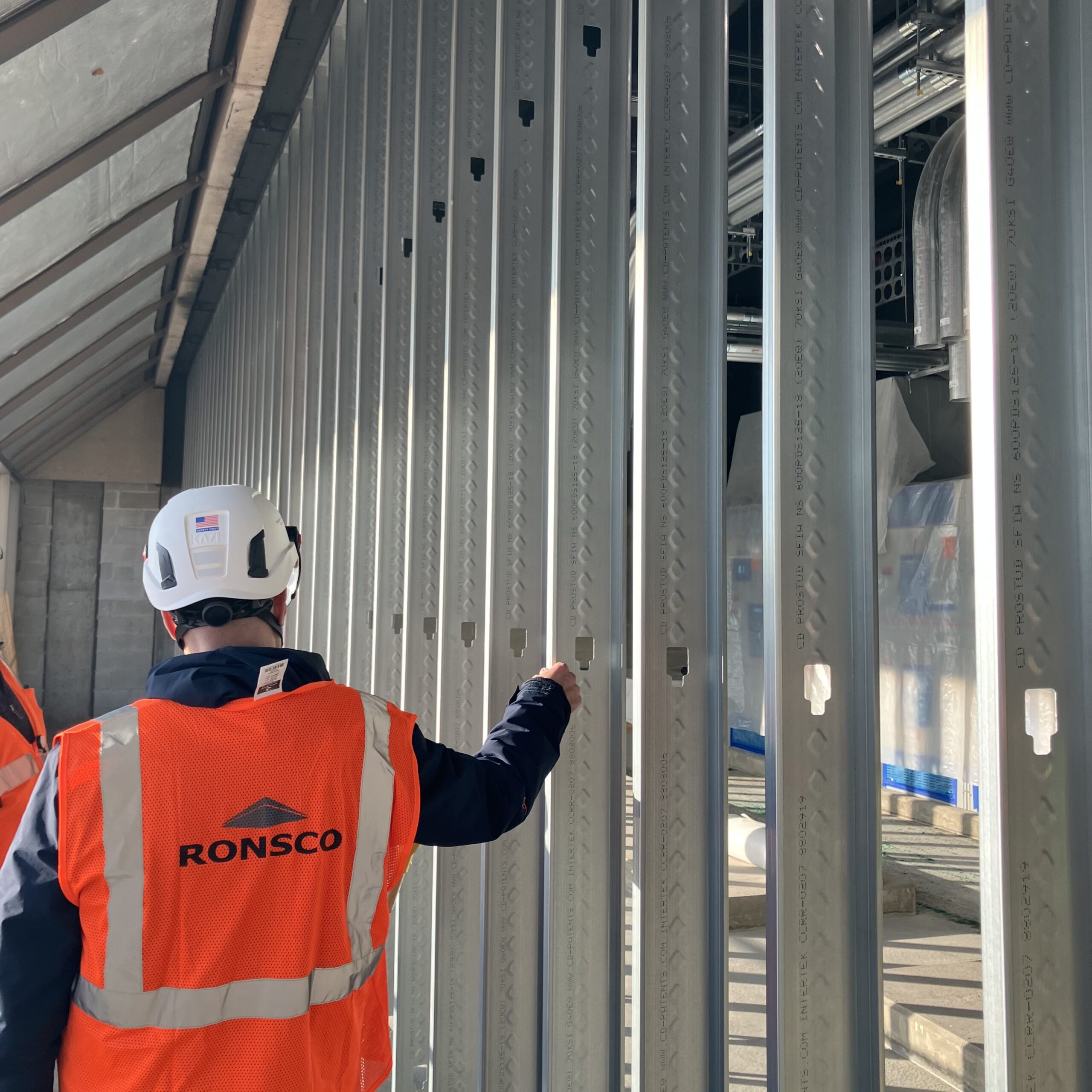
Lee Zaretzky, president of SFIA member Ronsco, Inc., inspects cold-formed steel (CFS) wall framing at a data center under construction in New Jersey. Credit: SFIA
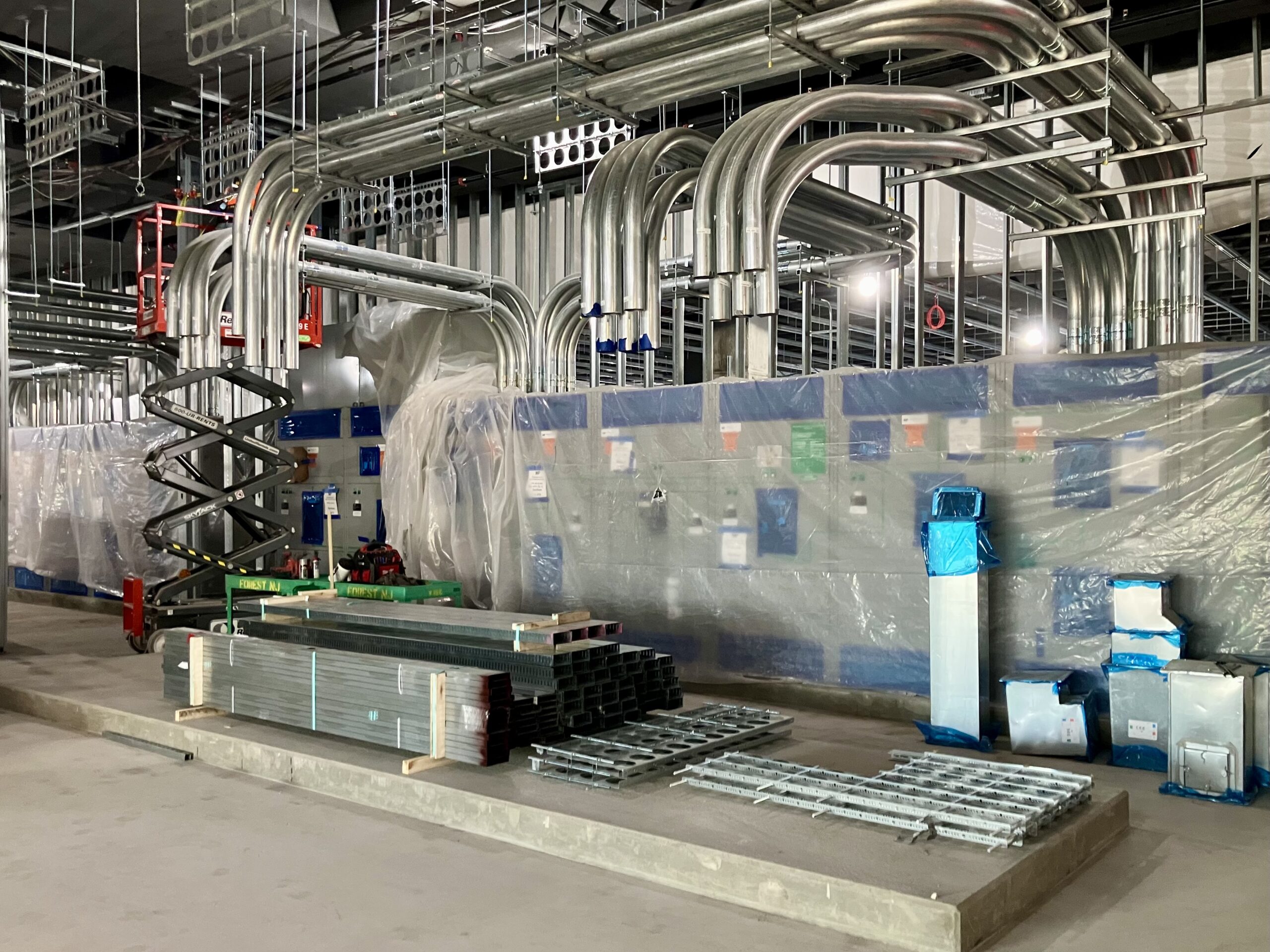
Steel framing, as well as steel components for conduit support, are neatly stacked and awaiting installation in front of data center switchgear. Credit: SFIA
AI Boom Drives Data Center Construction
Data centers store and process information that powers cloud computing, mobile devices, security systems and connected appliances. They also provide the computing capacity needed to support the rapid expansion of artificial intelligence.
Demand for AI-driven computing continues to exceed expectations. Large technology companies are investing billions of dollars to expand data center capacity and secure their positions in the AI race.
“With new demands for faster and more complex computing, the need for large, powerful data centers has outstripped projections from just a few years ago,” says Allen.
Those investments have fueled a wave of megaprojects across the United States. By late 2025, developers were spending nearly $5 billion per month on data center construction.
Because major technology companies remain well capitalized, many continue investing despite higher borrowing costs. Their spending has made data centers one of construction’s fastest-growing sectors.
Why Data Center Developers Choose Cold-Formed Steel Framing
- Fast-track Construction: Lightweight components support rapid installation and help teams meet aggressive schedules
- MEP Integration: Framing systems accommodate extensive conduit, piping, cable trays and equipment supports
- Consistent Quality: Precision-manufactured components improve fit, reduce waste and streamline installation
- Noncombustible Construction: Steel does not contribute fuel to a fire and supports facility safety goals
- Future Expansion: Flexible systems simplify facility upgrades, capacity increases and phased expansions
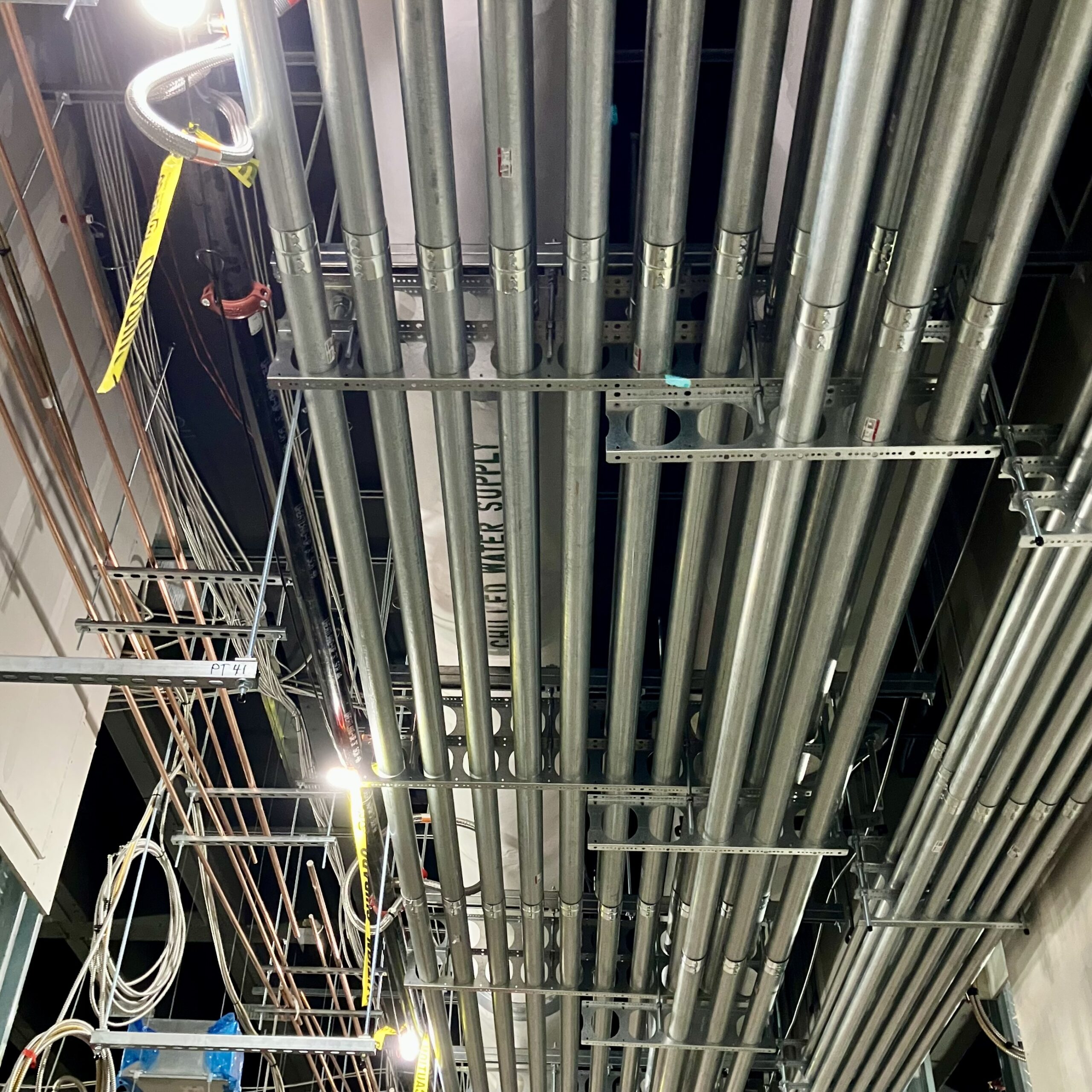
Miles of conduit run below chilled water supply pipes and other mechanical and electrical systems. Credit: SFIA
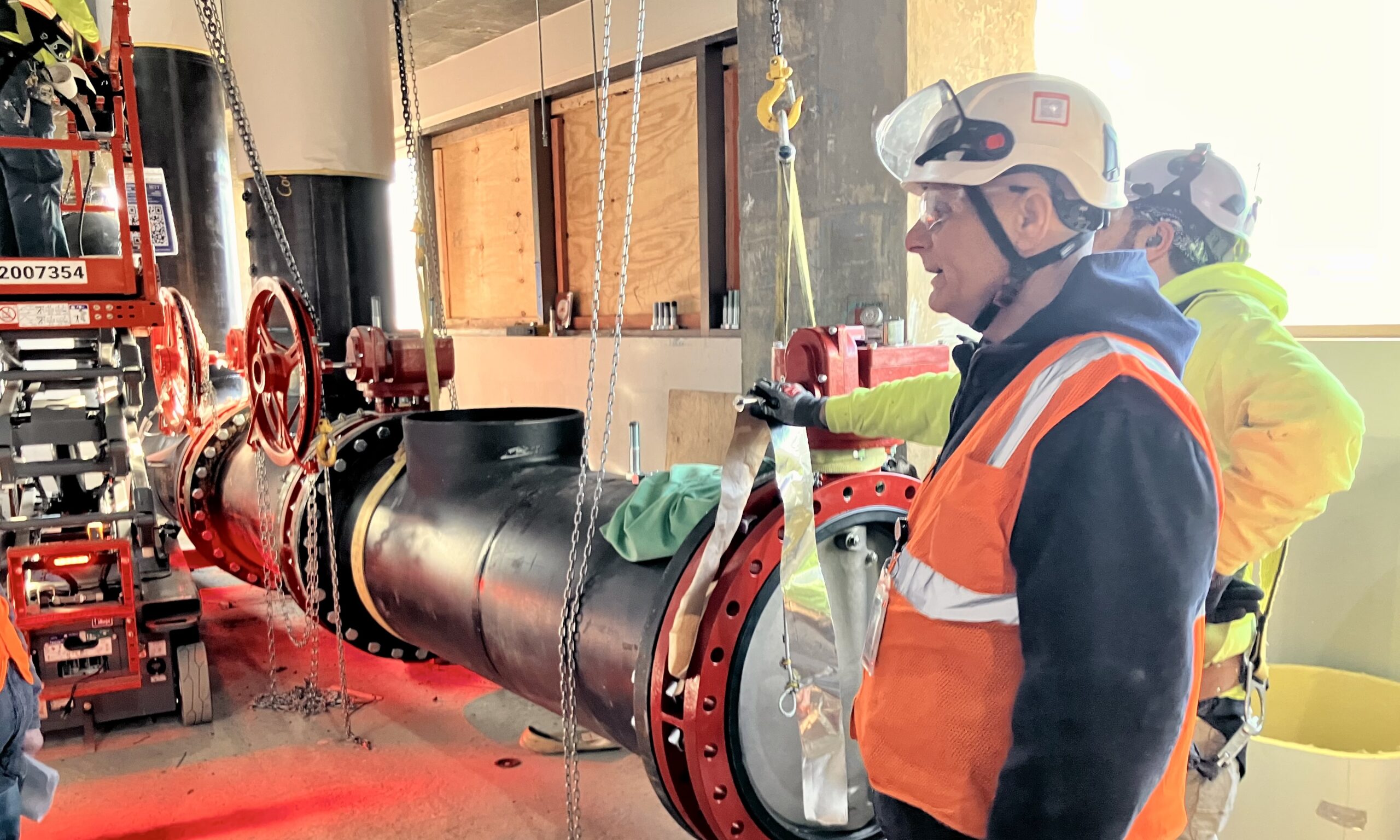
Large chiller pipes and valves are pre-assembled and sealed in staging area before being lifted into place. Credit: SFIA
Energy Requirements Expand Project Scope
Data centers require massive amounts of electricity and cooling capacity. As a result, many projects now include dedicated power generation systems.
Developers are adding solar farms, battery storage systems and other on-site energy resources to support operations. Some projects are even planning onsite nuclear generation.
“Many data centers will come online before the power grid can meet their energy demands, so developers are creating their own power sources,” says Allen.
Allen observed dedicated areas for power generation and cooling equipment at the site. Temporary heating systems also maintained working conditions during winter construction.
The cooling system relied on chilled water distributed through large cast-iron pipes and valves. Electricians were also installing switchgear and testing electrical equipment throughout the building.
Extensive conduit networks, equipment supports and mechanical systems filled the facility. Coordinating the installation of these systems required careful planning and sequencing.
Power, Water and Land Drive Decisions
Data center construction spans the country, but projects continue concentrated in a handful of regions. Developers evaluate land, power, network connectivity and water resources when selecting sites.
“Construction location depends not only on demand, but on available land, power sources, network connectivity and water,” says Allen.
For years, northern Virginia dominated data center construction because of its extensive network infrastructure and proximity to government operations. Today, many of the largest AI-focused projects are being developed elsewhere.
Data center development is shifting south. According to Allen, Texas and Louisiana recently exceeded Virginia in construction spending. Texas is expected to lead data center and energy project construction spending in 2026.
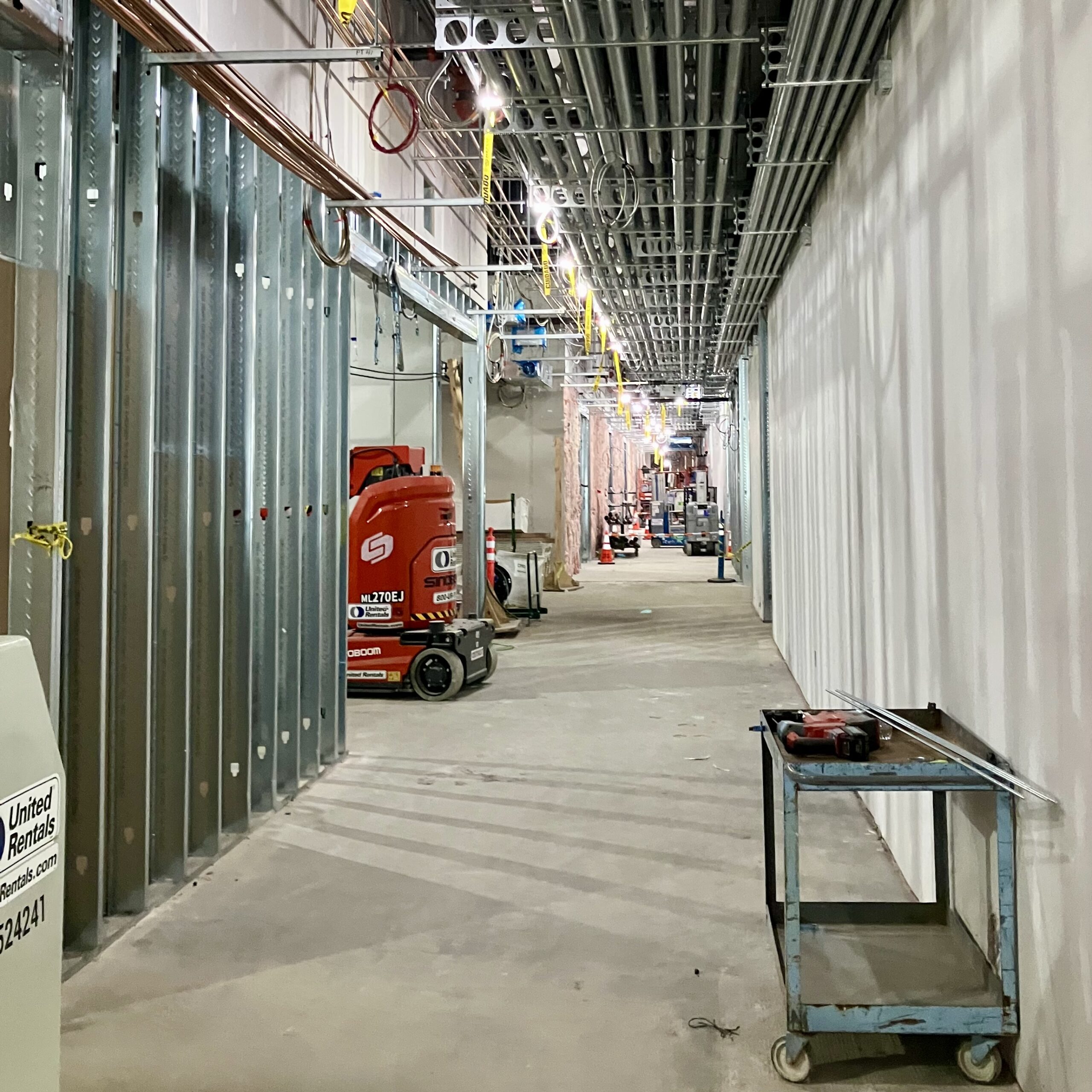
Conduit, wires, and pipes run parallel to and through cold-formed steel framed partitions. Credit: SFIA
Edge Data Centers Create New Opportunities
While megaprojects attract the most attention, smaller edge data centers continue expanding. These facilities place computing power closer to users and networks.
Allen recently toured an edge data center located 14 miles from Wall Street. The project converted a former manufacturing complex into a four-story processing facility.
Unlike sprawling AI campuses, edge facilities provide computing needs closer to where data is generated and consumed. Their locations reduce latency and improve processing speeds.
Edge facilities also create opportunities beyond the largest AI projects. They support a growing market for medium-sized construction projects and urban redevelopment.
The project demonstrates how developers can repurpose existing buildings to support growing demand for processing capacity.
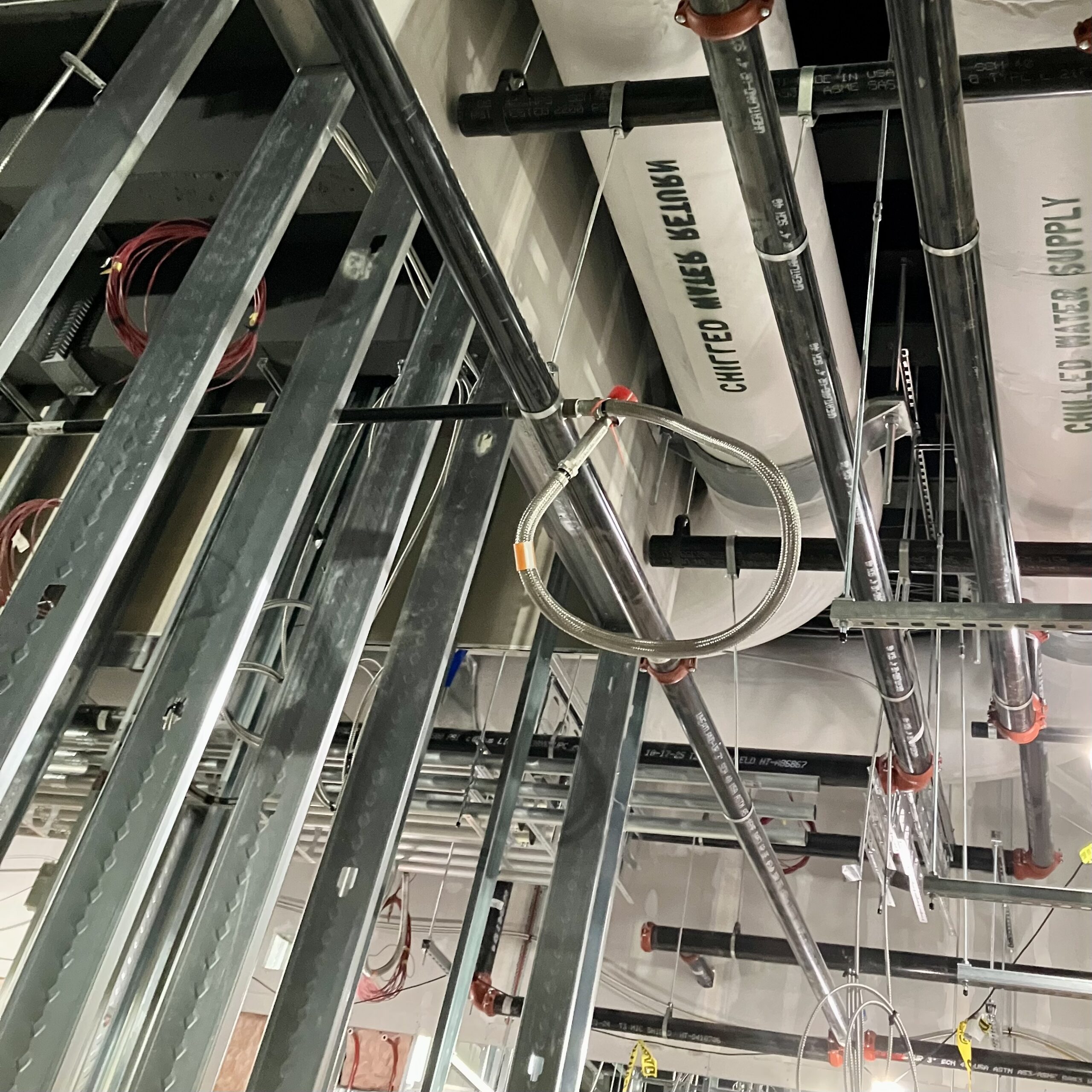
Data centers use large quantities of cold-formed steel (CFS) framing to support walls and the extensive mechanical, electrical and plumbing systems they contain.
Steel Supports Data Center Expansion
From framing and shaftwall systems to conduit supports and equipment enclosures, steel plays a critical role throughout data centers. As developers expand processing capacity and build new facilities, demand for steel-intensive building systems continues to grow.
“Steel continues to prove itself as a reliable, available, consistent and affordable construction material that meets the varied demands of data center construction,” says Allen.
With data center investment expected to remain strong, steel framing systems are positioned to play an important role in the sector’s continued growth.
Read the full article from Walls & Ceilings.
Additional Resources
- Data and Noncombustible Materials Hold the Key to Safer Construction, Says SFIA’s Don Allen
- Steel Framing Shows Strength Amid Price Pressures and Uncertainty, Says SFIA’s Don Allen
- Data Centers Drive Construction Growth, Opportunities for Cold-Formed Steel Framing Business