
In a recent “If Walls Could Talk” podcast, Jill Bloom of Walls & Ceilings spoke with Don Allen, executive director of the Steel Framing Industry Association (SFIA). The discussion highlighted how SFIA is aligning the industry, strengthening code compliance and expanding the role of steel framing.
Partnerships Strengthen Noncombustible Construction
SFIA continues to build momentum across the industry. Stronger participation and a more connected strategy drive that progress.
“Member participation is strong, and we have a lot coming up,” says Don Allen.
That progress depends on collaboration across the construction ecosystem. SFIA continues to expand partnerships within and beyond the steel industry. SFIA works with groups across the noncombustible construction space. These partnerships strengthen advocacy efforts and support fire-resilient building strategies.

Dozens of industry partners supported the CFS10 Project, advancing full-scale seismic testing of cold-formed steel (CFS) and demonstrating the collaborative strength of the steel framing industry.
“It’s important to have partners in the noncombustible arena when working with legislators,” says Allen. “That support helps drive policies that address risks like wildfires.”
Wildfires continue to reshape construction across North America. Longer fire seasons and persistent drought conditions increase both intensity and frequency. Builders now prioritize fire-resilient design and noncombustible materials. These strategies reduce ignition risk and protect structures.
CFS framing plays a critical role in wildfire mitigation. The noncombustible system resists flame spread and maintains structural integrity under extreme heat.
Surge in Fires: The Case for Steel Framing
Download this free article brief exploring the rise of fires in mid-rise wood construction across the U.S., highlighting incidents in California and Texas.
The report outlines the key advantages of steel framing as a noncombustible alternative to significantly reduce fire hazards.

Industry Collaboration Expands Steel’s Impact
Collaborative efforts also align the industry around priorities like sustainability and material transparency.
SFIA continues to extend collaboration into adjacent markets. The association engages groups tied to wood construction where it adds value. That outreach supports hybrid systems and expands the role of CFS in integrated building design.
“We even have information about how load-bearing cold-formed steel can support floor slabs made of cross-laminated timber,” says Allen. “Partnering with other associations gives us leverage and background on the issues they’ve been working through.”
Together, these efforts position steel framing as a leading solution for resilient, transparent and performance-driven construction.

Prefabricated cold-formed steel (CFS) framing and CLT floors helped Western Michigan University cut the construction timeline of the Golden Oaks residence hall by 25%, creating a stronger and more sustainable student housing solution.
Code Alignment Advances Compliance
Code compliance remains a core focus for SFIA. Allen said the codes have remained consistent, but unclear definitions created confusion.
“The codes have been relatively similar for a long time,” says Don Allen. “However, the way they defined things was not very clear.”
Allen pointed to nonstructural framing as an example, where many professionals begin in the industry.
Codes require “G40 or equivalent” corrosion protection, but the language created confusion. Did that mean paint, galvanized coatings or newer materials like magnesium or aluminum?
“We’ve worked to define those requirements and incorporate them into the codes and ASTM standards,” says Don Allen. “We also coordinate with other associations to ensure alignment across the industry.”
SFIA partnered with the Gypsum Association and tool manufacturers. These efforts addressed jobsite issues such as screw spinout and improved field performance.
Members recently approved updates to the SFIA Code Compliance Certification program. The revised program maintains strict standards while reducing cost and time burdens.
“It will be just as stringent, but easier for members to comply,” says Allen.
The program also adjusts inspection frequency based on performance. This approach improves efficiency while maintaining accountability.
“We’re encouraging architects, specifiers and structural engineers to require certified, code-compliant products,” says Don Allen. “Through SFIA membership, manufacturers can demonstrate that compliance, which gives them a clear advantage in the market.”
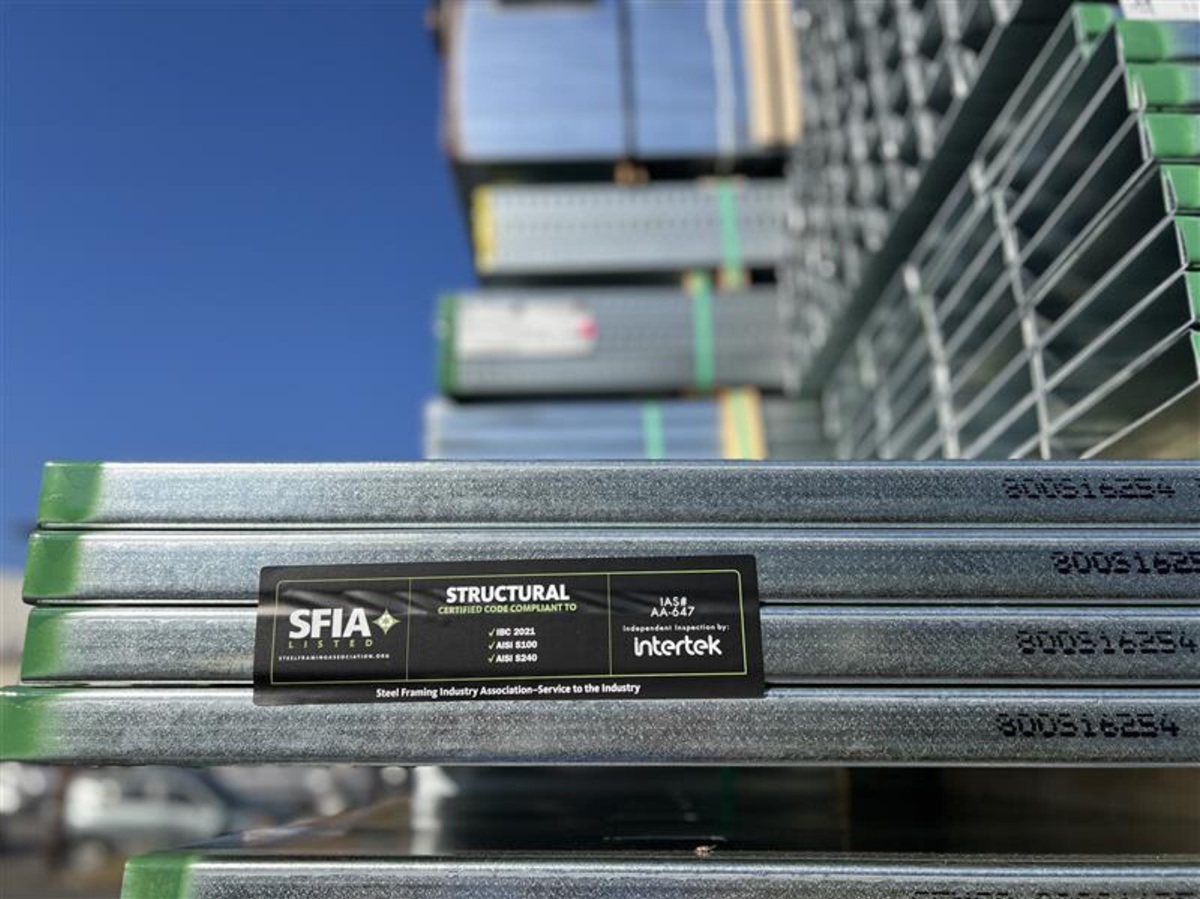
Designers, builders and owners want systems they can trust. The Steel Framing Industry Association (SFIA) certification program ensures products meet building codes and perform as intended.
Delivering Value Across the Supply Chain
SFIA represents the full steel framing ecosystem. This structure delivers value at every level.
“Unlike associations that focus only on manufacturers, we represent the entire steel framing industry,” says Don Allen. “We span the full supply chain, from steel mills to contractors.”
Members gain access to market data, certification programs and technical resources.
“We track tonnage data across regions and combine it with market indicators,” says Allen.
Tech Support and BuildSteel™
Allen pointed to data centers as a major growth driver. These projects demand large, complex and highly coordinated construction systems.
“Data centers have become a major consumer of steel framing,” says Allen. “SFIA supports these projects with contractor certification, along with truss and panel fabricator certification programs.”
These programs help ensure quality, consistency and performance across high-demand projects.
Members also gain visibility and technical support through BuildSteel. The platform highlights projects, shares short-form content and provides practical guidance for design and construction.
“If a member completes a project, they can submit it to BuildSteel and we help tell that story,” says Allen. “We also provide videos and technical resources that show the industry how to meet code and get the details right.”

SFIA members gain visibility and technical support through BuildSteel, which highlights projects, shares practical design guidance and helps tell the story behind successful cold-formed steel construction.
Participation Drives Member Value
SFIA provides a wide range of resources, but members must stay engaged to realize that value. Active participation drives results across the organization.
“The key is to get involved,” says Don Allen. “When you join an association, you need to participate.”
SFIA relies on committees, volunteers and industry expertise to move initiatives forward. Members help shape programs and priorities.
“We’ve got strong committees and great volunteers, but we always need more involvement from our members,” says Allen.
That engagement builds relationships across the industry. Members who participate gain connections, share knowledge and help move the industry forward.

About SFIA
The Steel Framing Industry Association (SFIA), a unique organization representing steel mills, coil coaters, stud and connector manufacturers, component fabricators, Cold-Formed Steel Engineers Institute (CFSEI) members, suppliers/distributors, contractors and others, provides members with exclusive access to technical cold-formed steel (CFS) framing services, including CFS certification, environmental product declarations, market data and analysis, technical design guides, specification review services, architectural services, the Steel Framing Learning Portal, the SFIA Awards and more. SFIA is an accredited ANSI Standards Development Organization. Follow SFIA on LinkedIn, Facebook, Instagram and X.

Additional Resources
- SFIA’s Don Allen Shares Insights on Technology, Training and Code Advocacy on “If Walls Could Talk”
- SFIA Approves Updates to Code Compliance Certification Program
- Cold-Formed Steel (CFS) Framing 101: A Practical Guide for Designers, Builders and Owners