
Images provided by Scottsdale Construction Systems
The construction industry is experiencing a shift toward steel framing systems. Steel Framing Industry Association (SFIA) data shows cold-formed steel (CFS) product manufacturing volume in the United States increased 3.8% during Q3 2024 compared with Q2 the same year. Globally, the steel framing market is expected to reach $150 billion by 2025.
The article, “Steel Framing System: Complete Guide for Modern Construction in 2025,” by Scottsdale Construction Systems, an SFIA member, says steel framing systems are now “crucial in today’s construction landscape.”
“This surge in popularity isn’t surprising, given the numerous advantages that steel framing offers over traditional construction methods,” Scottsdale says.
The $150 billion global steel framing market represents a significant shift toward steel framing systems.
Benefits of Steel Framing
Scottsdale’s “Complete Guide for Modern Construction in 2025” says that steel framing systems “use high-strength steel members to create a building’s structural skeleton.”
“The advantages of steel structures extend far beyond basic structural integrity,” says the Scottsdale post. “From a structural perspective, steel offers an impressive strength-to-weight ratio that allows for longer spans and fewer support columns or walls.”
Additional benefits of CFS framing include:
Noncombustibility
CFS framing is noncombustible, a quality that enhances fire resistance and building safety. In addition, steel’s performance during seismic events and high winds makes it an ideal material for disaster-prone areas.
Economic Value
Steel framing offers a cost-effective long-term choice due to its minimal maintenance, pest resistance and durability. Additionally, CFS framing members support energy efficiency through integration with high-performance insulation and speeds up construction through efficient fabrication and installation processes, making it a smart investment for builders.
Sustainability
Steel framing is fully recyclable and highly material-efficient, minimizing construction waste. Its durability reduces long-term resource use and supports LEED certification. Choosing steel ensures strong, sustainable buildings and contributes to a greener future.

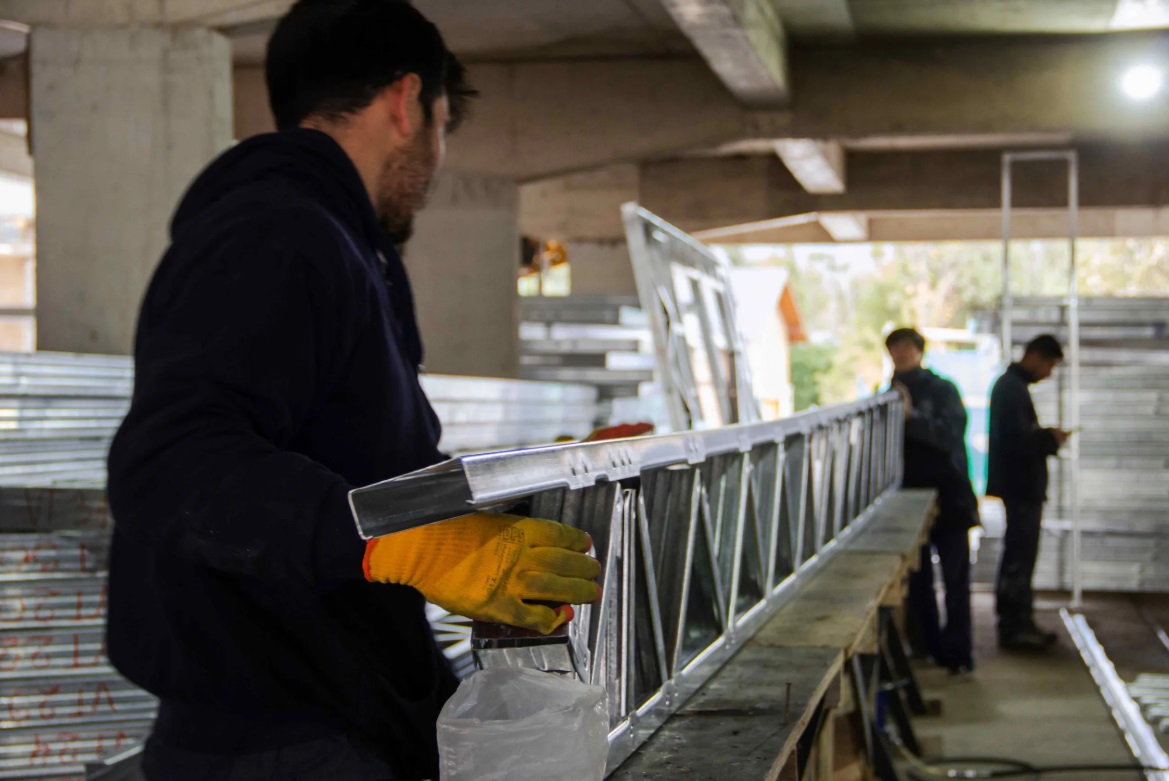
Steel trusses and ceiling systems provide robust support for roofs, ensuring long-term durability
CFS Applications and Uses
Common applications of CFS framing systems include:
- Load-bearing walls and floors: Steel framing is ideal for creating strong, load-bearing walls and floors that can support significant weight
- Curtain walls and facades: CFS systems are ideal for constructing curtain walls and facades, offering both structural support and aesthetic appeal
- Roof trusses and ceiling systems: Steel trusses and ceiling systems provide robust support for roofs, ensuring long-term durability
- Internal partitions and room dividers: Lightweight steel framing systems are excellent for creating internal walls and partitions, allowing for flexible room layouts
- External cladding and sheathing: Steel framing can be used as a base for various cladding and sheathing materials, enhancing the building’s exterior
CFS Performance Characteristics
“One of the standout benefits is steel framing’s exceptional structural integrity, ensuring buildings remain robust and stable over time,” the Scottsdale article says. CFS offers:
- Minimized Waste: Steel components are pre-cut to precise specifications, reducing construction waste and environmental impact
- High Seismic Resistance: Steel’s flexibility and strength absorb and dissipate earthquake energy, enhancing safety and durability in earthquake-prone areas
- Superior Wind and Weather Performance: Steel framing creates durable, weather-tight envelopes, maintaining structural integrity in various environmental conditions
- Versatility: CFS is suitable for a wide range of applications, from residential to large commercial and industrial buildings, with customizable cladding options for aesthetic and functional needs
Future of Steel Framing
“The steel framing industry is poised for significant technological evolution, driven by advances in manufacturing, materials science, advanced design software, and construction techniques,” says Scottsdale’s “Complete Guide for Modern Construction in 2025.”
“Smart manufacturing technologies are revolutionizing production processes, with AI-driven optimization and quality control systems ensuring unprecedented levels of precision and consistency,” the article adds.
Construction technology is rapidly advancing, with robotics and automation increasingly enhancing installation and quality control. Digital tools such as Scottsdale design software, Building Information Modeling and augmented reality systems are streamlining the construction process and improving accuracy.
Scottsdale’s “Complete Guide for Modern Construction in 2025” is thorough and includes sections on steel framing design considerations, components, installation, cost analysis, ROI and more. Read the full Scottsdale Construction Systems article.
About Scottsdale Construction SystemsScottsdale Construction Systems is a global company focused on research and development and the innovative development of light gauge steel technology for the house building and construction industries.
Scottsdale Construction Systems has been providing world leading solutions for the manufacture of steel frames and trusses for both the residential and commercial construction markets since its inception in 1995.
We are based in Australia and have North American operations and a rich history in the United States and North America. We have an established network here in North America and also in almost 100 countries worldwide.
For more information, visit scottsdalesteelframes.com.
Additional Resources
- SFIA’s Executive Director Highlights Cold-Formed Steel Innovations at Scottsdale-Sponsored Conference
- Australian Research Council and Scottsdale Fund CFS Floor Truss Research
- ICC-ES and Scottsdale to Appear on ‘Viewpoint with Dennis Quaid’