
To construct buildings that balance sound control, structural integrity and fire resistance, cold-formed steel (CFS) framing can play a pivotal role. However, understanding how this versatile material affects the architectural acoustics of a structure can be challenging.
A recent paper released by the Steel Framing Industry Association (SFIA) and authored by Robert Grupe, SFIA’s general manager of architectural services and a 40-year industry expert, sheds light on this topic. Titled “Frequently Asked Questions Regarding Architectural Acoustics and Cold-Formed Steel (CFS) Framing” (SFIA A101-24), the paper* breaks down key considerations for optimizing sound control in CFS-framed structures.
Here are some key takeaways from SFIA A101-24, Architectural Acoustics and Cold-Formed Steel (CFS) Framing.
“Architectural Acoustics and Cold-Formed Steel”
Acoustics and Steel Framing
The Sound Performance of Walls
The ability of a wall to block sound is measured by its Sound Transmission Class. This performance hinges on the entire wall system, including the framing, sheathing and insulation. In CFS systems, variables like steel thickness and stud spacing significantly influence sound isolation.
“STC performance of a wall is dependent on all elements of the wall system and the configuration of those elements,” Grupe writes in the architectural acoustics and steel framing paper.
Interestingly, while increasing steel thickness and reducing stud spacing can improve structural capacity, doing so may diminish STC performance. For this reason, decoupling elements — like resilient channels — need to be incorporated, Grupe says. These components can reduce the sound traveling directly through a framing structure and effectively improving the wall’s acoustic properties.
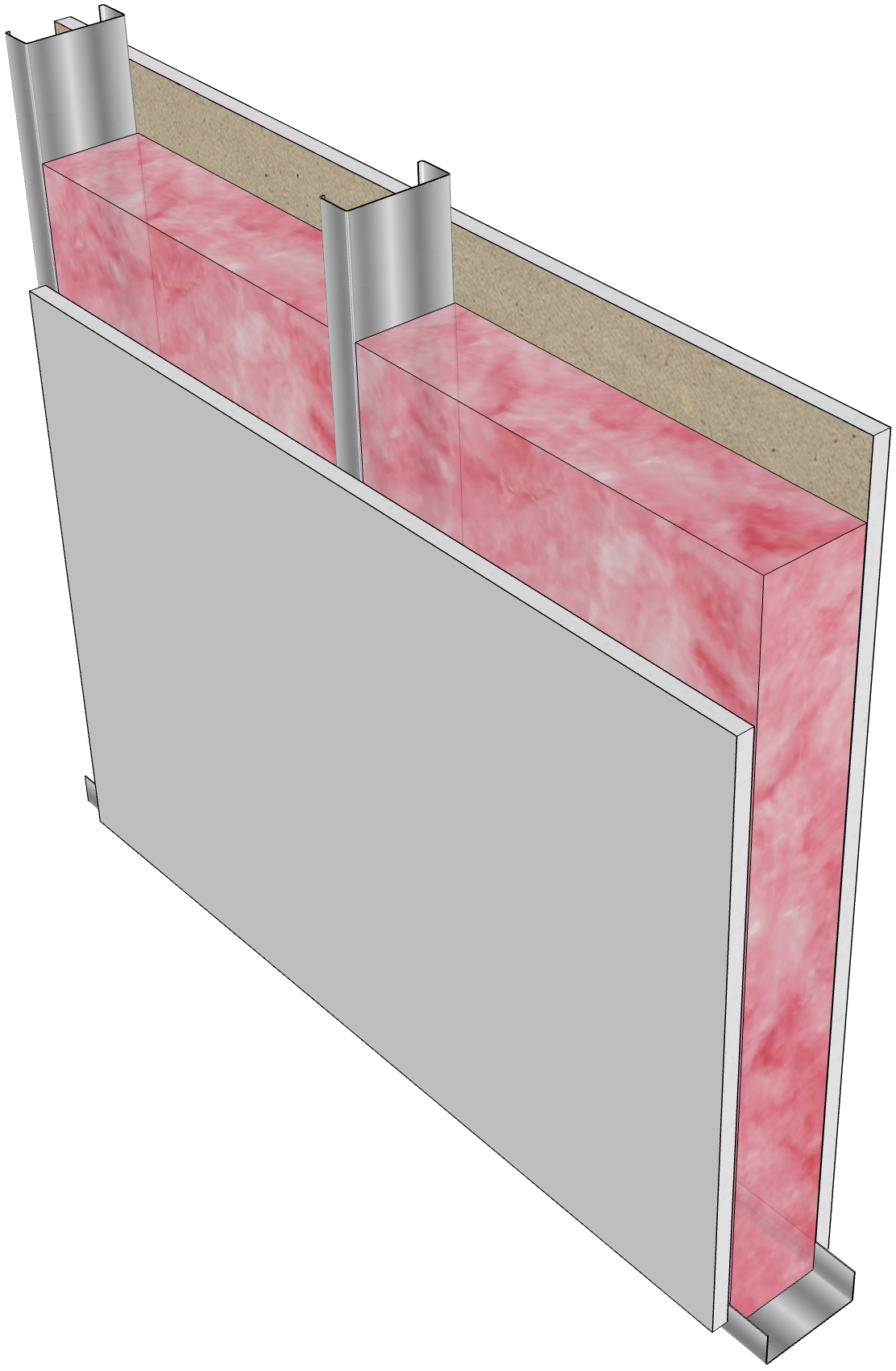
SFIA A101-24 includes tables highlighting the acoustical performance of various cold-formed steel (CFS) assemblies, such as this 3-5/8” CFS stud, 5/8” Type X gypsum board insulated assembly.
Airborne vs. Structure-Borne Sound
Sound can travel through air and through solid materials. In construction, airborne sound is regulated using STC ratings, while structure-borne sound is addressed with Impact Insulation Class ratings. Both metrics rely on rigorous testing methods defined by ASTM standards.
For example, classrooms adjacent to hallways or residential units in multi-family housing require specific STC or IIC values to meet International Building Code or LEED standards. In general, higher STC ratings (ranging from 40 to 60) ensure better sound isolation.
Designers can enhance the acoustic performance of CFS-framed walls in several ways. The “Architectural Acoustics and Cold-Formed Steel” paper helps identify what to do.
Take Advantage of Resources Available
Besides the “Architectural Acoustics and Cold-Formed Steel” paper, other resources can be helpful to designers and contractors.
- The SFIA Technical Guide for Cold-Formed Steel Framing Products provides detailed information on the interplay between sound and the structural requirements of steel framing
- Product manufacturers are a valuable resource in helping to specify steel framing systems that optimize good architectural acoustics
“Recognized testing facilities have provided the required data to assist both the designer and contractor to determine systems that meet the fire, sound and structural performance levels needed for a successful project,” Grupe says. “There are multiple sources available for both the designer and contractor to review to determine the proper system.”
“Architectural Acoustics and Cold-Formed Steel”
Robert Grupe
SFIA General Manager, Architectural ServicesRobert Grupe is General Manager, Architectural Services at the Steel Framing Industry Association (SFIA), managing the SFIA’s Architectural Services Team nationwide. Grupe is a 40-year-plus industry veteran and popular seminar and webinar presenter. He spent over 38 years with United States Gypsum Company in various technical and management positions, including product and system design and technical consultation to the AEC community.

About SFIA
The Steel Framing Industry Association (SFIA), a unique organization representing steel mills, coil coaters, stud and connector manufacturers, component fabricators, Cold-Formed Steel Engineers Institute (CFSEI) members, suppliers/distributors, contractors and others, provides members with exclusive access to technical cold-formed steel (CFS) framing services, including CFS certification, environmental product declarations, market data and analysis, technical design guides, specification review services, architectural services, the Steel Framing Learning Portal , the SFIA Awards and more. SFIA is an accredited ANSI Standards Development Organization. Follow SFIA on LinkedIn, Facebook, Instagram and X.

Additional Resources
- FAQ: Where and How Do You Install Cold-Formed Steel (CFS) Resilient Channels?
- FAQ: What Are Resilient Channels, and What Is Their Purpose?
- Designers: Update to SFIA’s 2024 Tech Guide for the Latest CFS Load and Span Tables