
Image: South Valley Prefab’s Wayne Munro, and SFIA member, assembles cold-formed steel (CFS) panels with studs rolled in-house.
Off-site construction is revolutionizing the building industry, and cold-formed steel (CFS) framing has emerged as a pivotal technology driving this change. Lightweight and versatile, CFS prefabricated panels streamline construction schedules, reduce labor demands and improve coordination.
CFS framing also reduces building mass in mid-rise structures, significantly influencing “the design of the lateral force-resisting system to resist lateral forces,” says the article “Off-site Construction: CFS Load-Bearing Prefabricated Panels” by STRUCTURE Magazine.

The Metreau Apartments in Green Bay, Wisconsin featured 11,508 lineal feet of prefabricated cold-formed steel (CFS) wall panels. By panelizing the entire job, the owner received the building earlier and saved $250,000 in construction and carrying costs.
8 Factors for CFS Panel Success
Understanding the benefits of off-site construction with prefabricated steel-framed panels requires examining 8 factors:
1. Early Considerations
Key considerations for adopting CFS panels include project size, layout, schedule, budget, site constraints and labor availability. Early selection of panel suppliers enables seamless coordination, such as proper placement of anchorage plates and integration with the lateral force-resisting system.
2. The Panelization Process
CFS panelization includes interior and exterior load-bearing walls, with segments manufactured for transport and installation. Roofs, floors and non-load-bearing walls can also be panelized. Special design attention is required to manage temporary loads and bracing forces during construction.
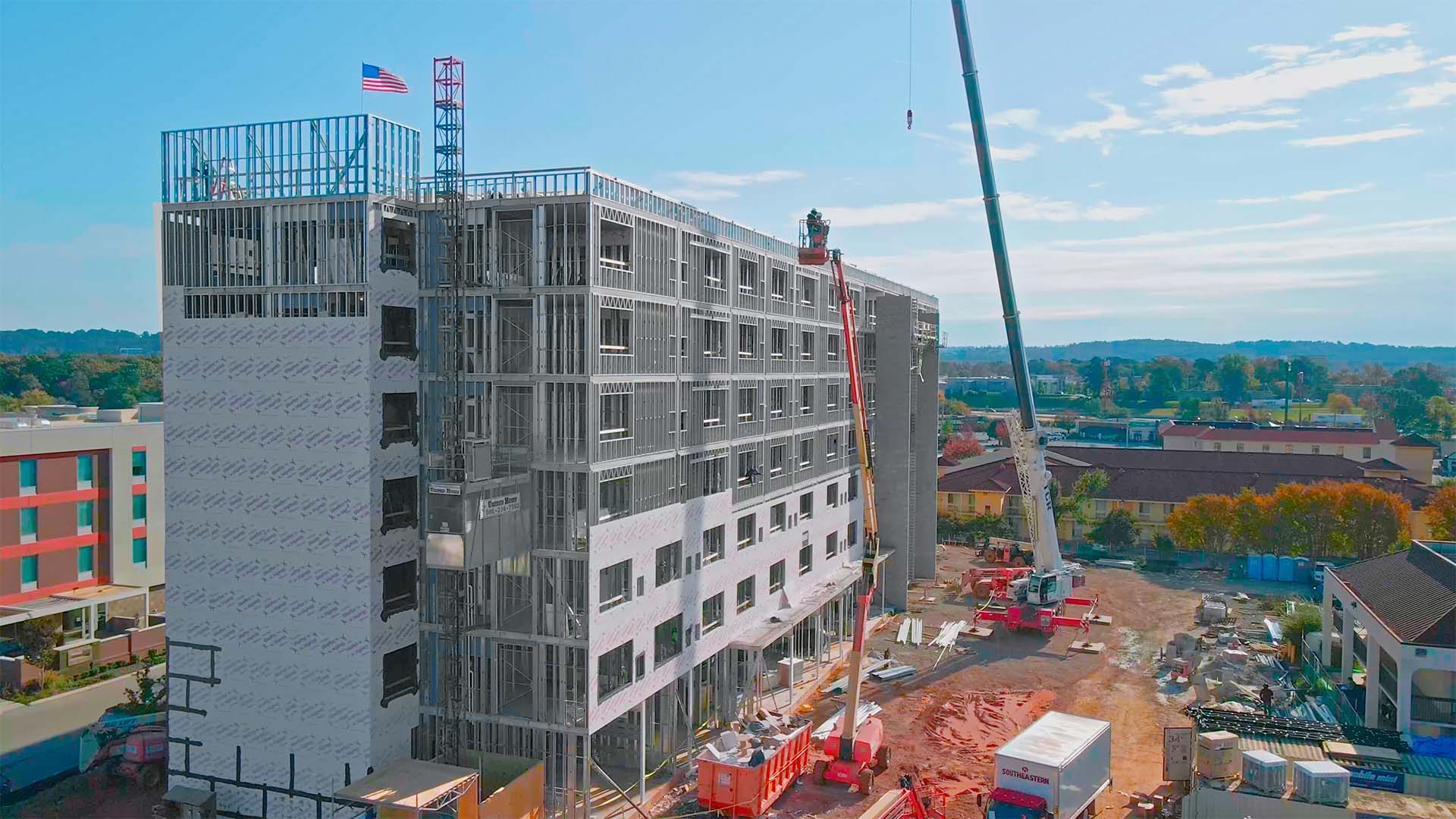
SFIA member The Steel Network supplied load-bearing cold-formed steel (CFS) framing for the construction of the Element by Weston Hotel in Chattanooga, Tennessee, saving 3 months of construction time.
3. Structural Design
CFS systems maintain traditional vertical load paths while accommodating challenges like misaligned framing members. Secure connections between wall and floor systems — i.e., using screws, welds or fasteners — are vital for structural stability and compliance.
4. Integration with Other Materials
Structural steel and other components, like clips and hold-downs, are integrated as needed to support high load demands. These materials enhance performance in situations such as concentrated axial loads or limited shear wall configurations.
5. Lateral Load Path
CFS panels are compatible with various lateral force-resisting systems and must meet seismic design requirements, including reinforced connections and anchoring for drag and overturning forces. Proper designs ensure safety and stability in high-seismic areas.

Just a few workers install prefabricated panels on a job site. Prefabricated steel-framed panels can decrease reliance on skilled labor and optimize costs. Image Credit: FRAMECAD
6. Trade Coordination
Early coordination with MEP, fire protection and other trades ensures seamless integration and avoids costly adjustments. Tools like Building Information Modeling can resolve potential clashes and maintain project efficiency.
7. Fabrication, Transport and Installation
Panels are fabricated to exacting standards, with secure connections ensuring durability. Transport and installation require careful planning to comply with load regulations and achieve precise alignment on-site. Properly installed base panels are critical for overall project success.
8. Quality Control
Fabrication facilities should adhere to stringent quality protocols by following standards such as “ICC/MBI 1200-2021-Standard for Off-site Construction: Planning, Design, Fabrication, and Assembly.” Pre-approved facilities can streamline their inspections. At the same time, on-site verification ensures strong interconnections and compliance with building codes.
Transforming Mid-Rise Construction
Prefabricated CFS panels offer a game-changing solution for mid-rise construction, improving efficiency and addressing labor challenges. Early coordination, quality control and precise execution make them a key component of off-site construction’s future.
The Steel Framing Advantage
Cold-formed steel (CFS) leads the way as the preferred framing material for prefabricated structures for multiple reasons. CFS is:
- A pre-engineered material that can be cut to exact lengths
- Dimensionally stable and does not expand or contract with changes in moisture content
- Lightweight compared to wood and concrete
- Resilient and will not warp, split, crack or creep when exposed to the elements
- Sustainable and 100% recyclable
- Durable and has a high tensile strength
- Non-combustible and is a safeguard against fire accidents
Additional Resources
- Prefabricated Steel Framing Drives Cost-Efficiency, Reduces Labor Expenses
- Modular Steel Units Elevate Supportive Housing Project in Los Angeles
- Cold-Formed Steel Framing Supports Shift to Modular Construction in Healthcare