
The self-storage market size hit $54.6 billion in 2022 and is expected to reach $74.8 billion by 2028, growing 5.3% annually on average. Americans’ attachment to their belongings while undergoing various life transitions are the primary drivers behind the growth in self-storage.
With a hefty average profit margin of 41%, investors continue entering this lucrative market and are building new units at a rapid pace. For new construction, steel is the predominant material used for structural and exterior material applications, sources say.
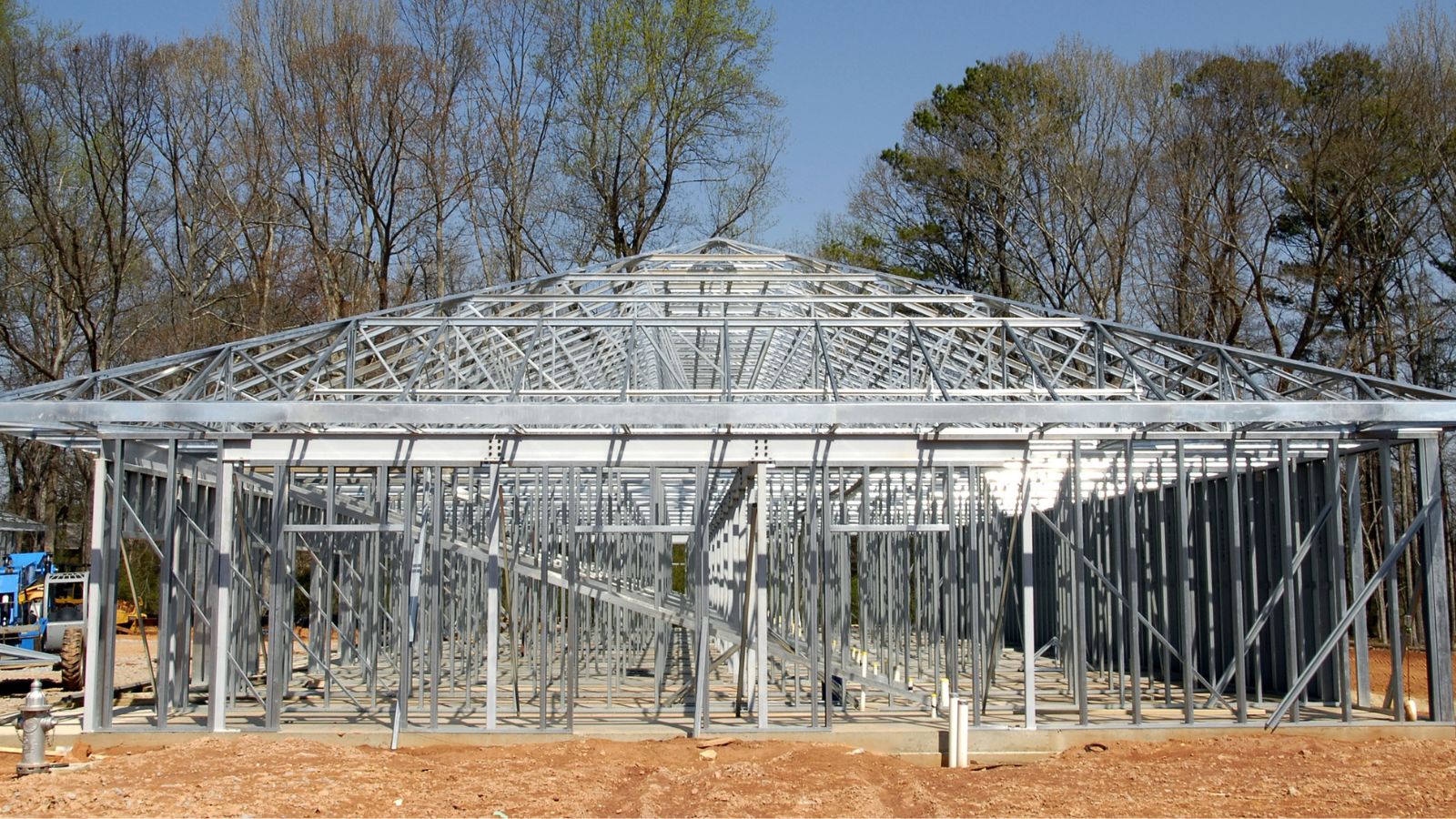
Cold-formed steel (CFS) framing is an ideal framing material for self storage due to its lightweight, high strength, ease of installation and non-combustible nature.
Steel Options for Self-Storage Construction
According to Inside Self Storage, an architect or structural engineer may consider a variety of steel options for the design of a self-storage facility. Some materials are selected primarily for their look, while others for the building to be structurally sound. The options include:
Framing
1. Cold Formed Steel (CFS) Framing
CFS, also called light-gauge steel or metal stud framing, is made from quality sheet steel, which is formed into C-sections and other shapes, usually by roll forming the steel through a series of dies. No heat is required to form the shapes (unlike hot-rolled steel), hence the name cold-formed steel.
CFS is an ideal framing material for self storage due to its lightweight, high strength, ease of installation and non-combustible nature
2. Structural Steel Framing
Structural steel is hot-rolled. It is much thicker, and considerably stronger and heavier, than CFS. “Hot-rolled” means the member is shaped while the steel is molten hot. Because it is thicker and heavier than CFS, hot-rolled steel fastening methods employ welding, bolting and riveting.
Structural-steel members can be implemented into a self-storage design to provide additional support when the span is too far for a light-gauge member, says Inside Self-Storage. If the building has more stories than what’s allowed for using CFS, then a structural-steel podium on the lower floor may be required.
Steel Framing Advantage
Steel framing provides several key advantages to self-storage building developers, satisfying the requirements of both single and multi-story self-storage structures:
- Prefabrication: Steel framing is the ideal choice for prefabricated construction, because it may be cut to precise specifications
- Urban Infill: Steel framing is effective for urban infill projects, because it is lightweight and strong. Compared to concrete, steel framing reduces building load and can achieve cost savings on footings and foundations
- Complex Design: For multi-story structures, steel framing can solve complex design challenges, including complex curves, angles and unique visual features

Metal panels for the exterior walls and roof provide a durable and sustainable option for self-storage units.
Roofing, Wall Panels
When designing the look of a self-storage building, there are several materials to consider, says Inside Self Storage. It’s quite common to use metal panels for the exterior walls and roof, but there are various options to consider:
3. Exposed-Fastening Panels
- Cost-effective
- Commonly used for interior and exterior walls
- Screw fasteners are visible
- Not recommended for roof systems
4. Concealed-Fastening Panels
- Screws fastened to the roof or framing are hidden
- Provides a sleek, modern look
- Standing-seam is a common concealed panel option
5. Insulated Metal Panels
- Energy efficient
- Provides the most diverse palette of finishes, including composite texture for exterior aesthetics
- High price point
Experience Matters
Material decisions are typically made during the design phase of a project. Therefore, finding an architect and structural engineer with experience with self-storage facility design is vital, Inside Self Storage says.
One note of caution: If a design team is not familiar with self-storage construction, the team may include elements to a project that are unnecessary or costly both in time and money.
Additional Resources
- As Self-Storage Market Grows, Developers Favor Steel for Its Speedier Construction and Longevity
- Investors Favor Steel Framing for Self-Storage Construction
- Self-Storage Market Growth Creates Opportunities for Steel Framing