
U.S. prices for hot-rolled steel coil have fallen nearly 45% from their peak of $1,480/ton following the outbreak of war in Ukraine to approximately $820/ton. But will the lower prices remain? A shift in supply and demand and higher interest rates may provide answers.
High Interest Rates, Stronger Headwinds
“With higher interest rates and the prospect of slower economic growth, including the construction sector, I anticipate an easing of demand for steel,” says Larry Williams, executive director for the Steel Framing Industry Association, in an article by Pit & Quarry.

Rising interest rates are impacting steel demand in the construction and automotive sectors, the two largest end markets for North American steel.
Alan Kestenbaum, executive chairman and CEO of Stelco Holdings Inc., Hamilton, Ontario, said it should not be a surprise to anyone that rising interest rates are impacting steel demand in the construction and automotive sectors, the two largest end markets for North American steel, as reported in an article on S&P Global Commodity Insights.
“We are faced now with even stronger headwinds, including the sharply negative reversal in pricing trends that began early in the quarter with benchmark CRU pricing declining by over 40% since the recent peak in late-April and inflationary pressures on some of our key inputs such as natural gas, coal and alloys,” Kestenbaum said in a report on the company’s second quarter 2022 results. “Of course, we will work tirelessly to mitigate and overcome some of these challenges.”
Landmark US Bill Could Increase Global Metal PricesThe Inflation Reduction Act of 2022 was signed into law by President Biden on August 16, 2022. The nearly $740 billion package includes $369 billion for climate and energy-related funding, much of it aimed at high-tech solutions to lead the United States towards a greener future.
Representatives of the American Iron and Steel Institute told Fastmarkets (subscription required) that steel would benefit from many measures in the bill. More steel would be needed to build clean energy generation facilities and electric vehicle charging infrastructure, as well as the vehicles themselves.
“This bill is good for steel, EVs are good for steel,” an AISI spokesperson said.
The legislation offers tax credits and funding for electric vehicles, which could cause global metal market prices to rise for some metals used in electric vehicles (EVs), according to Fastmarkets.

Steel Supplies Now Steady
Dan Smith, an analyst at Fastmarkets, says the recent angst over steel supplies has subsided. Smith and others note:
- Cuts to Russian steel exports have not been as deep as originally anticipated
- Angst is shifting the larger threat of a possible recession
- American steel mills have now alleviated many supply chain problems
“Certainly, the Russian invasion of Ukraine has created some issues with exports of raw materials,” says Tim Gill, chief economist at American Iron and Steel Institute. “However, domestic steel companies are very innovative and, after a period of time, they have been able to find workarounds for most problems.”
“While it’s always hard to project what supply is going to look like,” Gill adds, “there’s nothing out there that would suggest availability issues.”
Free On-Demand Webinar: Cold-Formed Steel in Mid-Rise ConstructionCold-formed steel (CFS) framing has a proven track record of providing energy-saving and sustainability benefits for buildings of all shapes and sizes. CFS framing can also be the primary structural element in mid-rise construction and meets all of the required building codes and standards.
Larry Williams, executive director, the Steel Framing Industry Association (SFIA), explores the use of CFS assemblies in mid-rise construction and the capacity of CFS framed assemblies, both structural and non-structural applications, in such buildings.

Demand Continues for Steel Framing
With the Inflation Reduction Act signed into law, and anticipated increases in construction activity generated by the 2021 Bipartisan Infrastructure Law (Infrastructure Investment and Jobs Act), can American steel mills keep up with demand?
That appears to be the case.
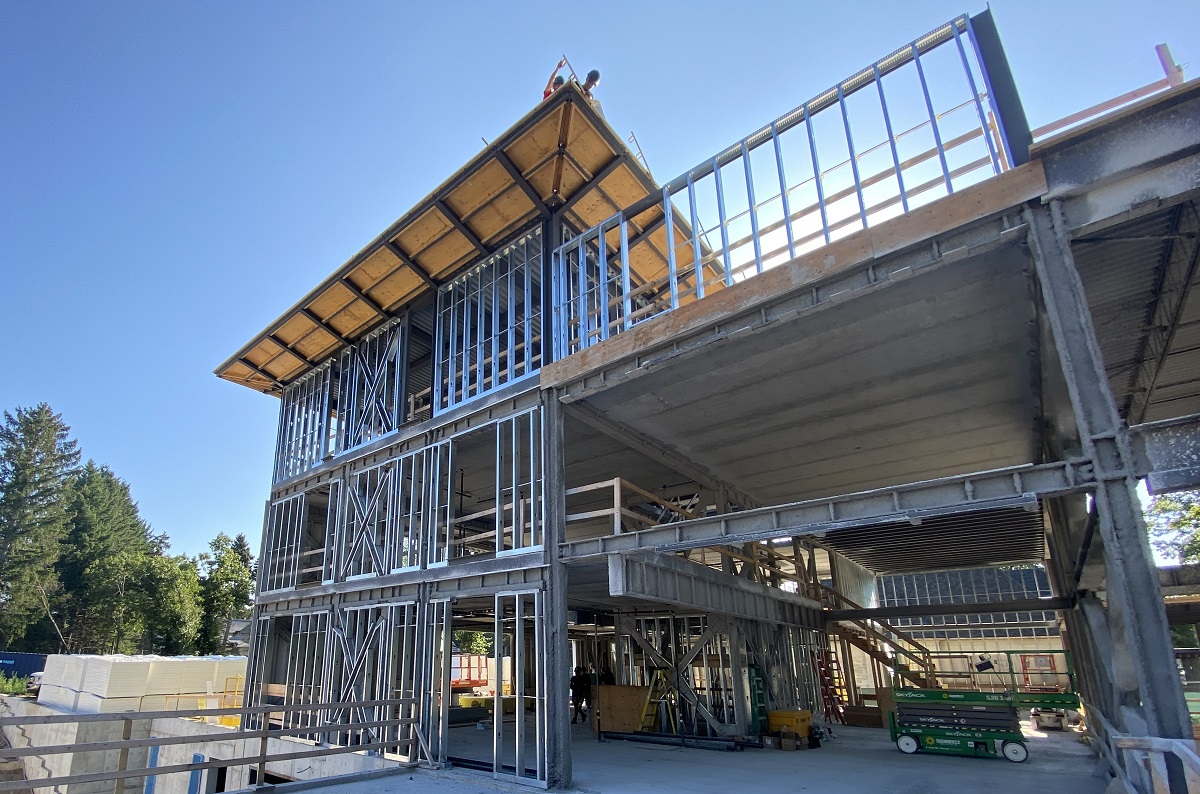
Demand is expected to continue in the long-term for the use of cold-formed steel (CFS) to frame residential, low-rise and mid-rise buildings.
“It’s getting easier to get steel more quickly,” Gill says.
Through the robust building period that recently occurred in the commercial and residential building markets, steel mills have managed to maintain a capacity utilization percentage in the low 80s.
Demand is expected to continue in the long-term for the use of cold-formed steel (CFS) to frame residential, low-rise and mid-rise buildings.
“There is not a sense that demand is easing from contractors who use our material,” Williams says. “This is a level that keeps their rolling mills busy but still allows enough slack time to enable the maintenance and servicing of equipment.”
Additional Resources
- Manufacturing Volume of Cold-Formed Steel Framing Products Up 11.2% in Q2 2022
- Economists Project a Busy 2022 for Construction
- 9 Ways Construction Firms Are Dealing with the Labor Shortage