
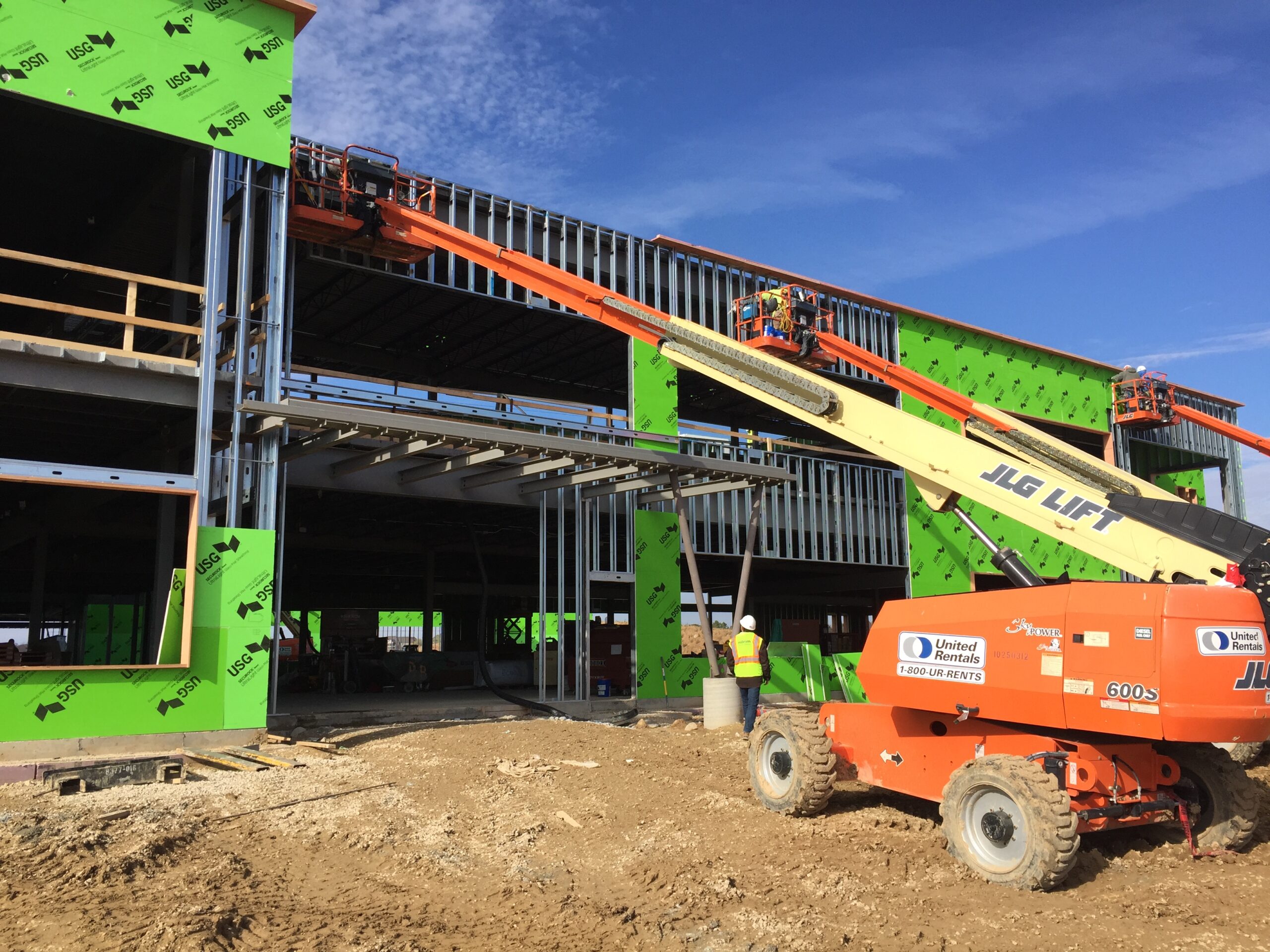
Harmony School of Innovation in El Paso, Texas, features cold-formed steel (CFS) framing throughout the structure.
The designs of modern K-12 schools are far different from the institutional school buildings of the past.
“They build them as pods, and they have different functions in different areas,” says Patrick W. Ford, technical director of the Steel Framing Industry Association (SFIA) and senior project manager at raSmith in Brookfield, Wisconsin. “The buildings are more complex. They’re more feature packed.”
Here are five K-12 school design trends and the role CFS framing can play:
1. Use of sustainable materials
“Sustainably designed schools place a high priority on using green building materials,” says write for Andrew Biro, writer for gb&d. “[The schools] place a high priority on using non-toxic, low-VOC materials and products in place of mass-produced, non-renewable building materials.”
Steel is the most recycled material on the planet — more than all other materials combined. CFS meets the highest sustainability requirements set in all major green building standards and rating programs, including the Leadership in Energy and Environmental Design (LEED®) from the U.S. Green Building Council.
The Harmony School of Innovation in El Paso, Texas, used recycled steel framing throughout the new 75,000 sq. ft., two-story building.
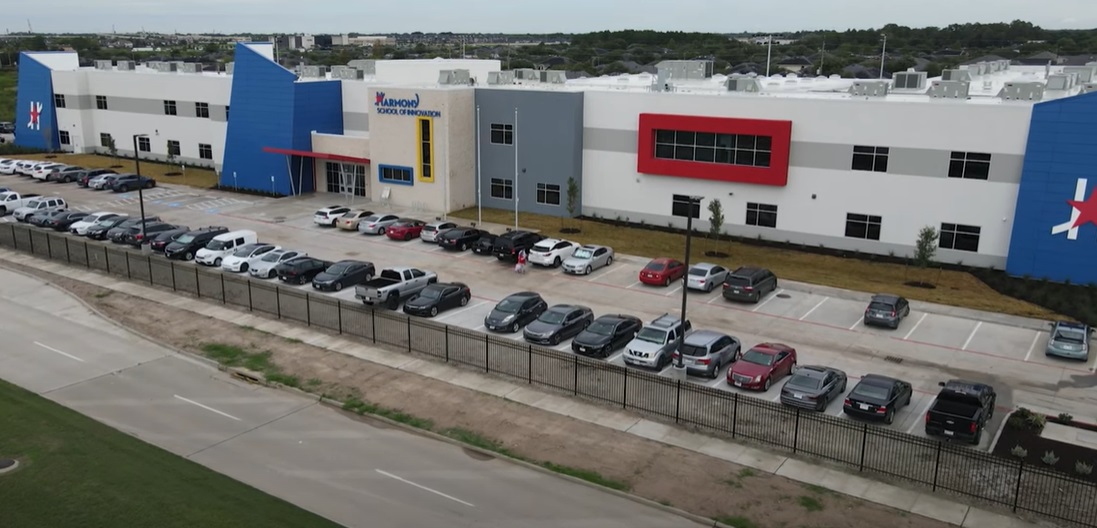
Harmony School of Innovation, El Paso, Texas, features recycled cold-formed steel (CFS) framing throughout the 75,000 sq. ft. structure.
2. Pod-like structures of just one or two stories
“You don’t have a big, rectangular, institutional building with a courtyard in the middle, a few punched openings and a large gymnasium or field house pasted on the side,” says Ford about current K-12 school designs. “The new schools have different wings — one for the K-3 kids, another for grades 4-8, and so on.”
“The new buildings gerrymander all over the place,” Ford says. “And it’s more common to see single stories. Many of these schools are not regularly shaped.”

raSmith designed the exterior CFS framing that supports the geometric finish at Pope Farm Elementary in Middleton, Wis. Photo courtesy of raSmith

Pope Farm Elementary Photo courtesy of raSmith
3. Lots of glass and glazing
The old, institutional-looking school made with masonry and limited punched window openings is giving way to more intriguing structures that have lots of glass, lots of glazing.
“These architectural features can’t be done effectively with masonry,” Ford says. “They require some cold-formed steel, and they use modern finishes.”

Middleton High School in Middleton, Wis., uses CFS framing designed by raSmith to back curtain walls and some extensive window penetrations. Photo courtesy of raSmith

Middleton High School Photo courtesy of raSmith
4. Aesthetic and acoustic design features
The trend in K-12 school design is for the facilities to be feature packed — special feature walls, glass panel facades, lots of interior platforms and elevated stages for young ones to congregate and work on special projects.
“Architects want to express lots of features, including acoustic features, and these require special designs,” Ford says. “The more featured-laden the building, the more CFS framing we see.”

Meadow View Elementary in Sun Prairie, Wis., designed by raSmith, features CFS-framed curtain walls and lots of window openings. Photo courtesy of raSmith

Meadow View Elementary Photo courtesy of raSmith
5. Some masonry, but also CFS framing
Some K-12 buildings use CFS framing for their interior and exterior bearing walls. Once in a while, the schools will frame corridor walls using CFS and top them with a durable wallboard, instead of using Concrete Masonry Units (CMU), Ford says.
“But frankly, that happens more in the private sector — with the academy and private schools,” Ford says. “In the public school arena, you still see a lot of CMU bearing walls for the exterior and for the interior corridors.”
The raSmith designed Token Springs Elementary in Sun Prairie, Wis., features CFS-framed curtain walls. Photo courtesy of raSmith

Token Springs Elementary Photo courtesy of raSmith
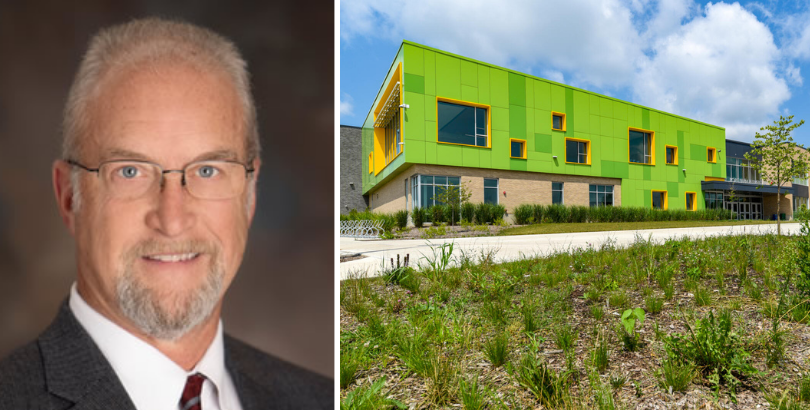
Pat Ford, SFIA technical director (l), and the pod-like Pope Farm Elementary in Middleton, Wis.
Say Goodbye to the Institutional Look
K-12 schools used to be designed purely for durability. However, Patrick W. Ford, technical director of the Steel Framing Industry Association (SFIA) and senior project manager at raSmith in Brookfield, Wisconsin, says that today school districts want more than just durable facilities. They want facilities packed with features.
While many high schools today still follow the institutional-style of design, many K-12 schools today are breaking that mold. They have features such as elevated stage framing, data centers, feature walls and interior wall glazings that can’t be built solely with traditional CMU, but instead also use cold-formed steel framing (CFS), Ford says.
Additional Resources
- Award-Winning SOS Children’s Villages Project Pulls Off Intriguing Geometry with Steel
- Checklist for Architects and Engineers Writing CFS Specifications
- Free SFIA Specifications Review Service